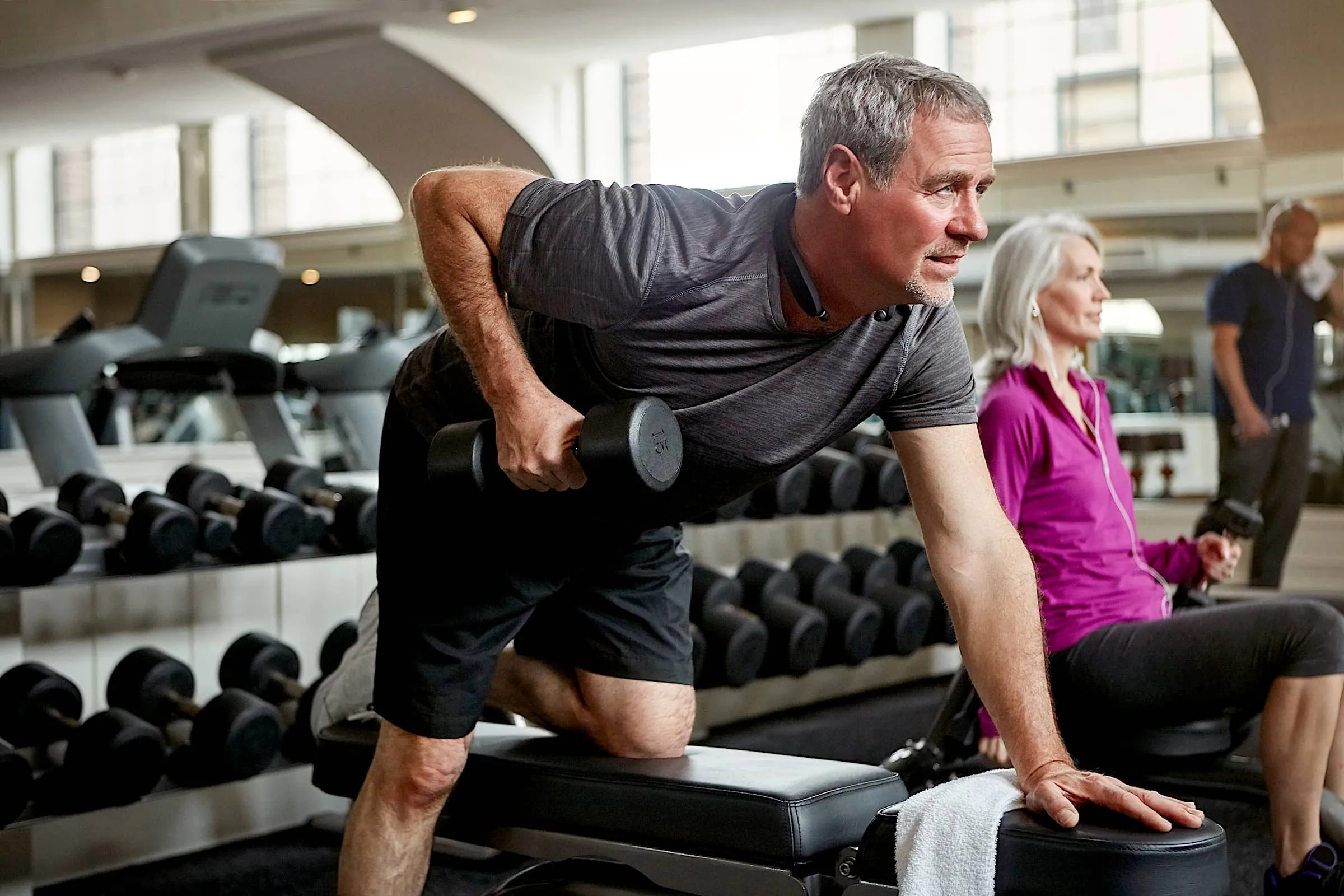
Running, lifting and competitive sport need not come with an expiry date. But as recovery slows and joints become less forgiving, staying active calls for smarter training, appropriate treatment and a clearer understanding of what the body actually needs.
Age presents a biological reality that competitors eventually have to negotiate. We see runners in their sixties setting personal bests and powerlifters maintaining peak strength well into their fifties.
The gap between chronological age and physical capability continues to stretch; it simply requires calculated biological support. Cartilage thins out over decades of impact.
Tendons lose their native elasticity. Structural wear and tear accumulates in the background until a sudden injury forces a hard stop.
We have to look at the tools actually keeping these individuals competitive. These are not weekend-warrior ice packs or basic foam rollers.
We are talking about medical-grade interventions designed to target tissue repair and metabolic function at a cellular level. The clinical goal is to address the root cause of the degradation rather than merely masking the pain signals.
The conversation around joint health for active adults usually revolves around taking a few days off to rest. Rest alone does not regenerate degraded collagen networks or refill depleted synovial fluid. We need active recovery mechanisms to maintain structural integrity under heavy loads.
Longevity in athletic performance depends entirely on managing the rate of tissue breakdown versus tissue synthesis. Cellular turnover slows down drastically as the decades pass.
A major hurdle is the recovery time between training sessions. Older tissues take significantly longer to clear metabolic waste and rebuild micro-tears in the muscle fibres. This delay changes the entire calculus of a training block. You cannot simply push through the fatigue. The physiological environment must be optimised to handle the stress.
Below are the seven primary interventions changing the landscape for these competitors.
- Viscosupplementation and Tissue Scaffolding
We often categorise certain treatments strictly for visual improvement. Medical aesthetics encompasses a broad range of dermal fillers, neurotoxins, and viscoelastic supplements that fundamentally alter tissue structure, hydration, and cellular scaffolding.
These compounds inject volume and heavy lubrication directly into targeted areas to restore youthful tension and structural support. A clinic relies on a reputable wholesale medical aesthetics supplier to source these sterile, high-grade formulations for their inventory. The application of medical aesthetics reaches far past surface-level dermal treatments.
The exact same cross-linked hyaluronic acid matrices used for facial contouring are utilised by sports physicians to lubricate arthritic knees.
Viscosupplementation provides a mechanical cushion for degraded joints. You see the immediate crossover between these cosmetic tools and functional joint preservation. The localised injection of these viscous fluids decreases the bone-on-bone friction that commonly plagues older lifters and runners.
- Platelet-Rich Plasma (PRP) and Cell Signalling
Another critical category involves using the body’s own biological material to force an adaptation. Regenerative and orthobiologic treatments change how we approach chronic tendinopathy and deep cartilage defects.
We bypass the inflammatory suppression of traditional corticosteroids. We stimulate actual cellular healing by reintroducing concentrated growth factors into the damaged zone.
Platelet-rich plasma (PRP) stands as the primary example of this clinical shift. Blood is drawn, centrifuged to concentrate the platelets, and injected directly into the injured tendon or ligament.
A 2021 clinical review published in the American Journal of Sports Medicine found that PRP significantly reduced pain and improved mechanical function in patients with knee osteoarthritis over a twelve-month period compared to standard saline injections.
The alpha granules inside the platelets release localised growth factors. These factors signal local mesenchymal stem cells to begin repair protocols. The tissue physically remodels itself to handle mechanical stress again.
- Sports Medicine Physician Consultation
You cannot inject your way out of poor movement patterns. A sports medicine physician consultation remains the necessary starting point before any needle touches the skin. They evaluate kinetic chain deficits and track structural imbalances. A misaligned hip will destroy a knee regardless of how much concentrated plasma you pump into the joint space.
Sports medicine for masters athletes prioritises biomechanical efficiency over raw power output. A clinical assessment identifies the precise mechanical failures leading to tissue overload. The physician maps out a structural correction plan that dictates every other intervention on this list.
- Physical Therapy and Mobility Work
The objective here goes far deeper than basic stretching. Consistent physical therapy and mobility work address the active range of motion under load. You build a buffer zone against tears and sprains by ensuring the joints track correctly through their full intended paths. Proper joint tracking reduces the shear forces placed on vulnerable cartilage.
Ageing athletes often develop dense fascial adhesions that restrict natural movement. A targeted physical therapy protocol breaks down these adhesions and restores normal tissue glide. This mechanical restoration allows the muscles to fire in their correct sequence during complex athletic movements.
- Strength Training for Joint Longevity
The actual workout has to change to accommodate biological reality. Proper training load management becomes the primary driver of progress. You cannot tax the central nervous system the same way you did at twenty-five. Fatigue masks fitness; if the nervous system is fried, the muscles cannot contract efficiently to protect the joints.
Strength training for joint longevity looks very different from training for absolute maximums. We focus heavily on eccentric control and isometric holds. This specific tension builds tendon stiffness in a positive way. A stiffer tendon transmits force more efficiently during dynamic movements.
Injury prevention for older athletes means knowing exactly when to back off the intensity. The accumulation of micro-trauma will eventually lead to a macro-injury if the load is not periodized correctly. Micro-dosing the training stress allows the body to adapt without breaking down the structural hardware.
- Nutrition and Recovery Supplements
Clinical treatments require a robust base layer of metabolic health. You must provide the biological raw materials for cellular repair. Nutrition and recovery supplements play a distinct role in this equation.
Amino acids, high-quality proteins, and specific omega fatty acids provide the anti-inflammatory pathways necessary for tissue remodelling.
The biological signalling from orthobiologics goes nowhere if the body lacks the building blocks to construct new collagen. Masters and recreational competitive athletes often suffer from subclinical nutrient deficiencies that stall their healing processes. Targeted supplementation with compounds like collagen peptides, vitamin C, and specific amino acid profiles ensures the systemic environment supports the localised clinical interventions.
- Sleep and Recovery Optimization
Adequate sleep and recovery optimisation dictate the entire hormonal environment. Growth hormone secretion peaks heavily during the deep phases of sleep. Without adequate slow-wave sleep, tissue regeneration grinds to a halt. The body simply will not prioritise tendon repair if it is constantly in a state of systemic sleep deprivation.
Rest itself is a highly active process. We have to differentiate between passive sitting and active physiological down-regulation.
- Parasympathetic activation techniques help clear circulating cortisol.
- Targeted cold or heat exposure drives localised blood flow to hypoxic tissues.
These modalities force the central nervous system back into a rest state where the actual physical adaptations occur. The nervous system dictates muscle tension and motor control. A chronically stressed nervous system keeps the protective musculature locked up in a guarded state.
The landscape has shifted dramatically for ageing populations who refuse to slow down. The tools available in modern clinics are precise, targeted, and biologically active.
We have moved past the era of simply taking ibuprofen and hoping the swelling goes down on its own. The integration of specific medical therapies with smart programming creates a sustainable path forward.
We negotiate with the ageing process through science, precise application, and strict load management.