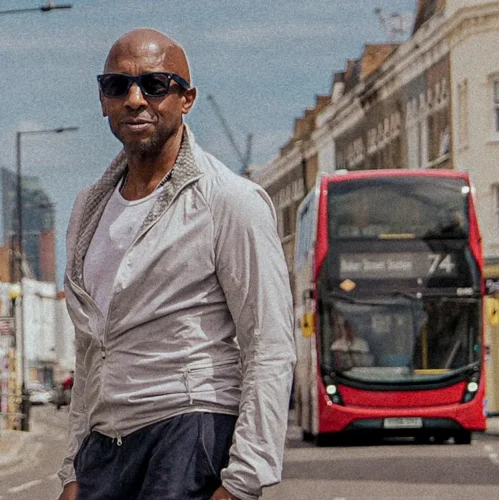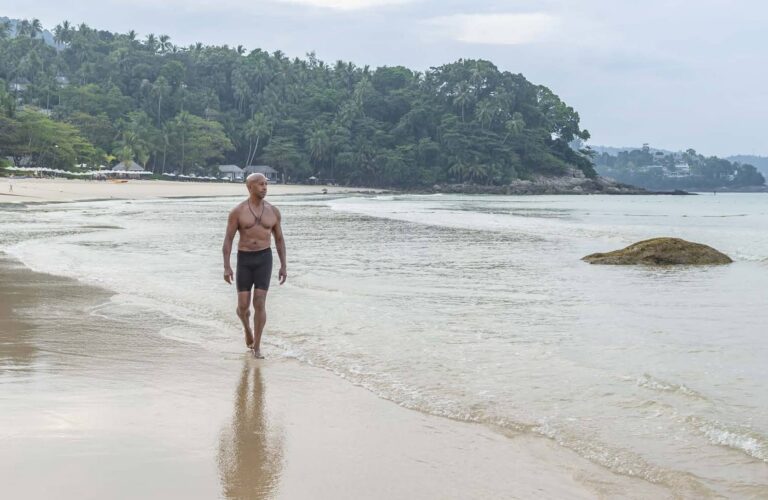
Thirty-year-olds lifting weights at my gym often tell me, “I want to look as lean as you.” The best part is that they don't add, “When I'm your age.”
My measure has always been simple: the same brand of plain white T-shirt. Fashions change, but a lean, muscular body always looks good in a white tee, and photographs from 2016 and 2026 show that my definition is still there.
I say that knowing exactly what my body has endured. I haven’t lifted weights in 35 years. I have a resurfaced hip, four knee operations and a left knee with almost no cartilage remaining. Fifteen years ago, a motorcycle accident left me walking with a pronounced limp.
I wasn’t prepared to surrender to those limitations. Rather than force a damaged body to lift weights, I changed the environment. Drawing on martial arts, fitness and yoga, I developed KunAqua in water and Jumpga on a rebounder. Water gave me resistance without heavy weight-bearing stress, while the rebounder added instability, demanding constant adjustments in balance and control.
My gym’s InBody scale and my Hume scale at home suggested a body age around ten years younger than my actual age, with readings of 15.6% body fat and 32.9 kilograms of skeletal muscle. The men lifting weights told me I looked amazing, and the mirror agreed. But those body-age figures come from proprietary algorithms, and perhaps I had been asking the wrong question. Instead of concentrating on how young my body looked, I wanted to understand what was happening inside it.
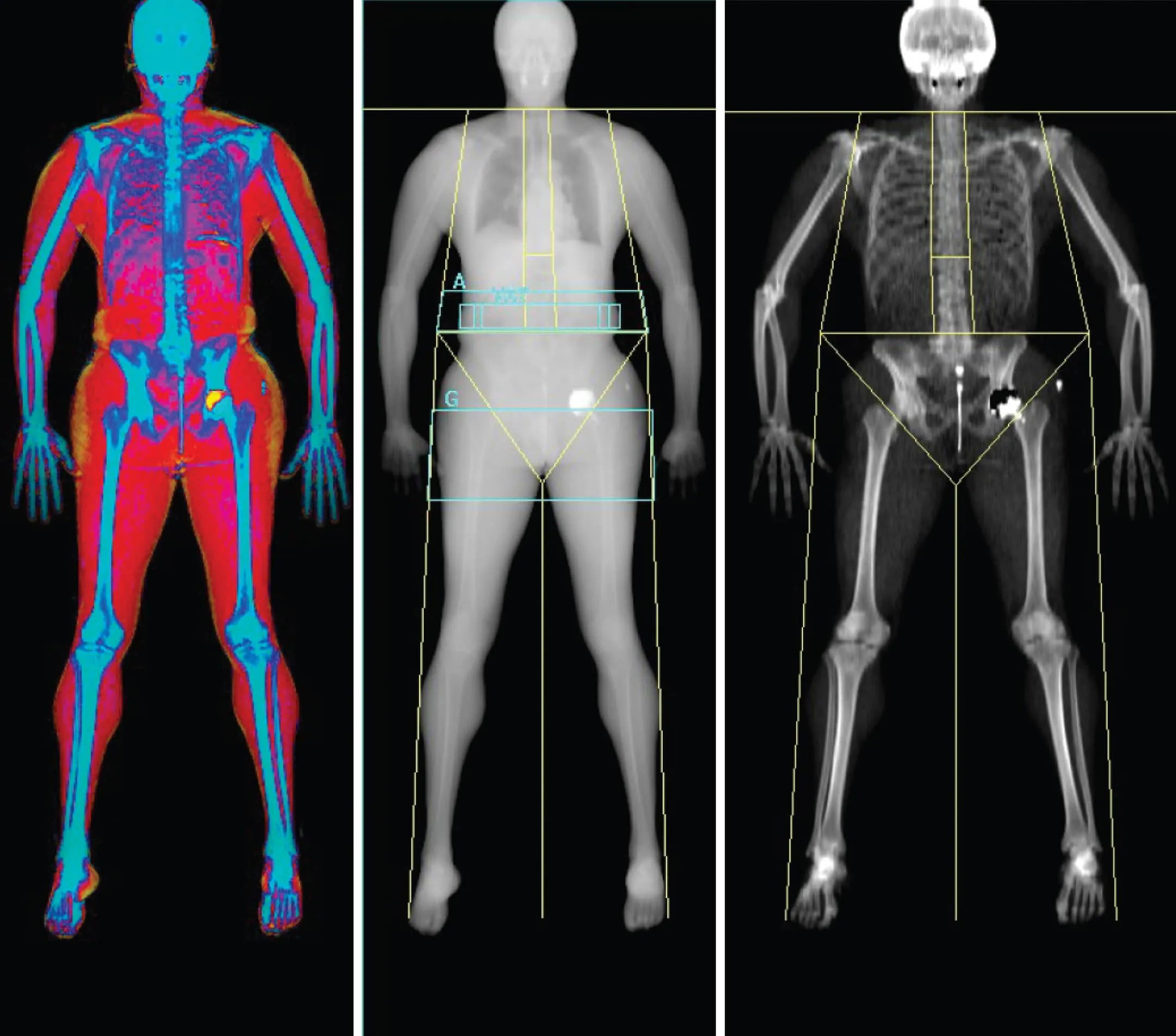
So I booked a DEXA scan at Scanletics on London’s King’s Road.
What the Scan Said
DEXA uses low-dose X-rays to assess body composition and, when performed for that purpose, bone mineral density. My body fat measured 13.6%, classified as optimal, but my lean-mass index was only average, which surprised me.
Looking muscular and having above-average lean mass are not the same thing. DEXA’s lean-tissue measurement includes water and other non-fat soft tissues, while visible muscular definition depends partly on how little fat covers the muscles, not simply on how much muscle exists. I had spent years looking in the mirror at a body I was proud of, and now a machine was telling me something I hadn’t expected.
The bone measurements were more concerning. With the head excluded, my total-body T-score was −1.06 and my Z-score was −0.49, around the 31st percentile for my age and sex. My lowest regional T-scores were in my legs: −1.72 on the left and −1.67 on the right.
These figures are not a diagnosis of osteoporosis. That requires appropriate clinical assessment, usually including bone-density measurements at the hip and lumbar spine. Nevertheless, they gave me a reason to investigate further.
I wasn’t disappointed that the scan had challenged my assumptions. That was why I’d booked it. But I was intrigued that, after everything my body had been through, I had found ways to remain lean, mobile and physically confident while knowing so little about what was happening beneath the surface.
The Argument in the Pool
I put the findings to an AI and got the answer I expected: generic advice on progressive resistance training and mechanical loading if I wanted stronger bones.
After thirteen years of training in water, I knew that resistance increases with movement speed, so I challenged the AI’s reasoning. It pushed back, explaining that making muscles work harder does not necessarily provide the mechanical loading required to improve bone density, because buoyancy reduces weight-bearing forces.
That was an important distinction. My physique demonstrated what my approach had achieved in terms of appearance and movement, but it couldn’t establish that my bones were receiving everything they needed. I wasn’t about to dismiss the science simply because I didn’t like the answer. Equally, I wasn’t prepared to abandon thirteen years of experimentation without asking what more I might discover.
The following morning, I returned to the pool and pushed against the water, faster and faster, with my karate leg kicks. To my surprise, my knee handled a full minute of rapid front and back kicks without screaming, although my muscles certainly made their objections known.
It was a small revelation. I had been working in water for years, yet there was still intensity available to me that I hadn’t fully explored. That didn’t prove I was improving my bone density, because muscular resistance and bone-loading demands are not interchangeable. But it did tell me something about my capacity to challenge myself.
I had been considering loaded squats. After that session, I decided first to explore the untapped intensity in what I already do. If that isn’t enough, the squats are still there.
More Than Appearance
At 68, I’m not trying to recreate the body I had at 30. I’m interested in what this one can still do.
Ageing can bring changes in muscle mass, strength and bone density, but an older body isn’t simply a younger body with more birthdays. It carries the consequences of injuries, operations, habits and years of adaptation. Mine certainly does, and I’ve spent a long time learning how to work with that history rather than treating it as an excuse to stop.
Yet the DEXA scan reminded me that experience has its limitations too. I can feel strong without knowing everything about my bones, look muscular without having an unusually high lean-mass index, and be proud of my body while still having something important to learn about it. Those things are not contradictions. They are reasons to remain curious.
Over the next six months, I intend to explore what happens when I increase the demands of my KunAqua and Jumpga training where appropriate, pay closer attention to recovery and investigate the findings that deserve clinical follow-up. I’ll track what I can do, not simply how I look, and return for another scan under comparable conditions.
I’m not expecting a machine to tell me whether I’ve lived well, nor am I going to ignore useful information because it challenges the story I’ve been telling myself. I booked the DEXA scan because I wanted to see what the mirror couldn’t show me, and now I have.
I’m willing to be shown more.