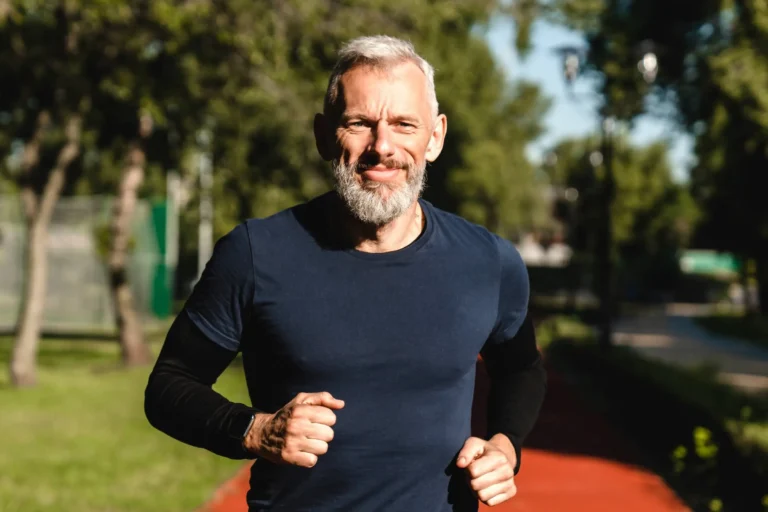
From DNA-based skin treatments to exosome therapies and advanced collagen-supporting formulations, regenerative medicine is attracting growing interest. Six approaches reveal how tissue repair is evolving, although the distance between laboratory promise and proven clinical benefit remains important.
Physical activity places continuous mechanical stress on human tissue. The resulting micro-tears and oxidative load require relentless biological maintenance to prevent structural failure over time.
A 2021 clinical review published in the Journal of Investigative Dermatology found that prolonged physical stress depletes local cellular reserves at an accelerated rate.
This rapid depletion degrades structural proteins like collagen and elastin within the dermal matrix. Active individuals frequently notice these physiological deficits when standard topical creams fail to mitigate joint stiffness or skin laxity.
The focus of intervention recently shifted toward compounds that directly address cellular signalling and extracellular matrix reconstruction. These scientific solutions bypass superficial symptom masking entirely. They alter how cells communicate and rebuild after sustaining acute physical stress.
Sustainable tissue repair relies heavily on these specific molecular mechanisms to prevent long-term degradation.
The Infrastructure of Clinical Supply
The landscape of dermatology relies heavily on medical aesthetics to accomplish this deep-level recovery. Practitioners utilise medical aesthetics to trigger native repair mechanisms rather than relying entirely on synthetic substitution.
Clinics and laboratory researchers source their biological materials from a reputable wholesale medical aesthetics supplier to ensure they possess authenticated, high-grade clinical tools.
Such a specialised procurement hub provides a centralised catalogue of dermal fillers, orthopaedic solutions, and advanced tissue regeneration products required for cellular repair protocols. The distribution of these carefully regulated compounds allows clinics to maintain rigorous safety standards for biologically active skincare formulations and injectable devices.
The continuous advancement of medical aesthetics depends entirely on this type of secured supply chain. Researchers require uninterrupted access to these specific formulations to proceed with their clinical work.
Polynucleotide Matrix Rebuilders
Cellular degradation requires targeted chemical signals to reverse course and initiate the rebuilding phase. Polynucleotides operate at this precise molecular level to initiate sustainable tissue repair.
These polymerised molecules consist of highly purified DNA fractions extracted for rigorous clinical application and laboratory research. They bind to specific cellular receptors on human fibroblasts to stimulate the immediate production of new type I collagen and fibronectin.
Laboratory data demonstrate that consistent polynucleotide application thickens the extracellular matrix significantly over several weeks.
Clinical formulations for tissue repair often feature these specific DNA fractions to treat areas subjected to chronic mechanical movement and intense sun exposure. The resulting dermal layer exhibits improved elasticity and resilience against future mechanical stress.
Scientists view this mechanism as a form of biological reprogramming. The tissue does not just temporarily swell with water; it actually constructs new structural support beams at the microscopic level.
Exosome Signalling Suspensions
Cell-to-cell communication dictates exactly how quickly a micro-injury resolves. Exosomes function as the primary messengers in this complex biological communication system. They are microscopic extracellular vesicles packed with lipids, specific proteins, and messenger RNA.
Regenerative medical aesthetics lean heavily into exosome research because these vesicles possess the unique ability to instruct dormant cells to resume productive activity. Clinical laboratories isolate exosomes from carefully cultured mesenchymal stem cells and suspend them in highly stable liquid solutions.
Laboratory observations indicate that when introduced to damaged tissue in vitro, exosomes upregulate both angiogenesis and cellular proliferation. Active adult skin and tissue recovery demands this precise level of accelerated cell turnover to prevent scar tissue formation. The vesicles act as a direct blueprint for surrounding cells. They carry the exact genetic instructions needed to calm inflammation and begin the proliferative phase of wound healing.
Synthetic Peptide Isolates in Laboratory Environments
Researchers frequently investigate short-chain amino acids to map out future mechanisms of cellular recovery. Peptides serve strictly as research compounds in these analytical laboratory settings to test hypotheses about protein synthesis.
Laboratory studies observe how specific peptide sequences influence protein production and degradation in completely isolated tissue cultures. One prominent focus among biochemists involves copper-binding peptides and their measurable ability to modulate inflammatory pathways during the acute phase of tissue damage.
Investigators apply these synthetic isolates to cellular assays to measure changes in collagen deposition and wound contraction rates. The data gathered from these tightly controlled experiments form the theoretical basis for future high-performance active adult recovery mechanisms.
Scientists note that specific amino acid chains can successfully inhibit the exact enzymes responsible for breaking down the dermal matrix in a petri dish. The application remains confined to controlled assays to establish precise baseline data on protein interactions.
Advanced Cross-Linked Hyaluronic Scaffolding
Standard hydration tools break down rapidly when introduced to the biological environment. Cross-linked hyaluronic acid operates quite differently; it forms a highly resilient physical scaffold within the deep dermal layers. Bioengineers connect the individual hyaluronic molecules with complex chemical bonds to resist immediate enzymatic degradation by hyaluronidase.
This robust structure provides a stable three-dimensional framework where migrating fibroblasts can attach and multiply safely.
Non-surgical tissue repair solutions utilise this specific scaffolding to support structural integrity while the body simultaneously generates its own replacement tissue. The slow and predictable degradation of the cross-linked gel ensures a steady release of deep hydration over several months.
Practitioners rely on these complex gels for deep dermal reconstruction following severe volume loss. The procedure creates a temporary bridge for native tissue to cross.
Recombinant Growth Factor Serums
Fibroblast growth factors direct the critical initial stages of the natural healing cascade. Clinical laboratories now synthesise these powerful proteins using recombinant DNA technology to ensure absolute purity and consistency across batches.
The concentration of these synthetic growth factors into topical gels allows them to mimic the body’s native response to sudden trauma. Post-procedure clinical aftercare protocols utilise these potent serums to speed up epithelialization after controlled clinical injuries like laser resurfacing or deep microneedling.
The application of concentrated growth factors shortens the inflammatory phase through specific biological mechanisms:
- Rapid recruitment of local macrophages to clear cellular debris and neutralise pathogens.
- Stimulation of epidermal stem cells to divide and migrate rapidly across the damaged wound bed.
Clinical skin recovery formulations containing epidermal growth factors show measurable decreases in total recovery time in controlled studies. The local tissue environment stabilises much faster when flooded with these highly targeted biological signals. The resulting tissue demonstrates a much tighter, more organised cellular structure.
Bio-Identical Lipid Barrier Replacements
The outermost layer of the epidermis protects all underlying cellular repair processes from external disruption. Mechanical stress routinely strips away the ceramides, cholesterol, and essential fatty acids that maintain this crucial biological barrier.
Bio-identical lipid formulations replace these exact chemical ratios to halt trans-epidermal water loss immediately. The stratum corneum simply cannot function without this precise chemical balance intact.
Formulators synthesise these specific lipids in laboratories to mirror the exact molecular structure and weight of human sebum. A compromised barrier allows ambient pathogens and free radicals to disrupt the delicate regenerative processes happening below the surface.
Restoration of the lipid matrix stops this chemical interference immediately. Biologically active skincare formulations prioritise this exact barrier repair to ensure that the deeper cellular work remains protected from environmental degradation.