Many people don’t realise that surfing is a bona fide competitive sport, with points scored for manoeuvres, flow and speed.
For anyone who thinks a surfer simply drifts about in the sunshine looking windswept and annoyingly serene, Lakey Peterson and Courtney Conlogue offer a brisk correction: this is a sport of lungs, legs, nerve, timing and repeated public humiliation by moving water.
Surfing may carry the perfume of the laid-back coastal life, all beach hair and soft horizons, but beneath the romance is a brutally technical competitive sport. In the World Surf League, points are not handed out for looking photogenic on a board. They are earned through manoeuvres, flow, speed, control and the ability to make a collapsing wall of ocean look vaguely negotiable.
Peterson and Conlogue know this better than most. Peterson has been ranked number one in the World Surf League, while Conlogue is a Vans U.S. Open of Surfing winner and one of the defining names of the Californian surf scene. Between them, they make the ocean sound like both a playground and a cross-examiner.
Surfing’s Old Soul And Modern Bite
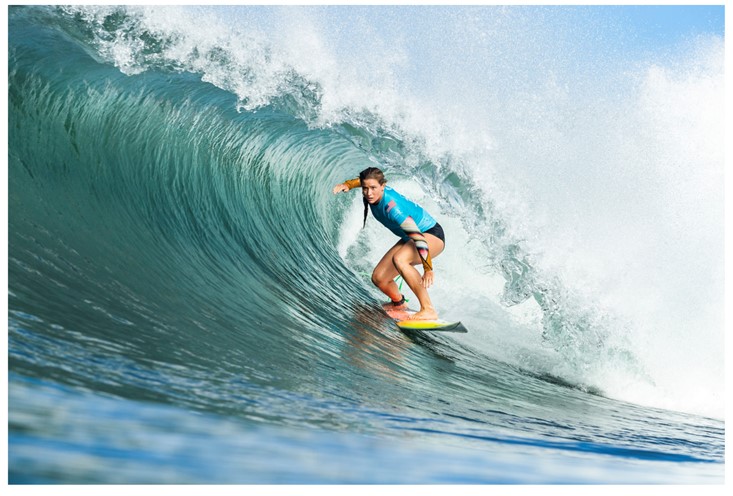
The art of riding waves stretches back to Polynesian communities in Hawaii and Tahiti, where surfing was woven into culture long before it became a lifestyle shorthand for expensive sunglasses and questionable camper van decisions.
Today, it remains all of that and more: heritage, competition, fitness, travel, self-expression and, occasionally, a fairly direct way to discover that your core strength is fictional.
For Peterson, the emotional pull starts close to home.
Peterson: “Rincon Point [in Santa Barbara]. My mum lives on The Point so I grew up surfing it. It’s my home and such an iconic wave.
That line tells you plenty. Elite sport often begins not in a laboratory or a shiny performance centre, but somewhere personal. A beach. A family rhythm. A wave you know so well it becomes part of your handwriting.
How A World-Class Surfer Actually Trains
There is a persistent myth that surfing fitness is simply acquired by being outdoors and owning excellent balance. Peterson’s weekly routine rather spoils that fantasy.
Peterson: “It changes. Right before the season, I try to average four hours in the water per day. Normally I’ll do two in the morning, then I’ll head to the gym, and do another two after that.
“As the [competitive] season starts, I do train, but it’s not as extreme as you’re surfing so much during the events.
“Water time is what it’s all about for me; the more I surf, the better I get. I try to get into the gym six times per week. I do pretty explosive training, with a lot of plyometrics, jumps and cardio. I do some strength exercises too like Bulgarian split squats – but nothing that’s too heavy.”
That is not a hobby. That is a full-time negotiation with gravity, tide and lactic acid.
The gym work makes sense. Surfing demands explosive power to get to the feet, lower-body stability to hold a line, shoulder endurance for paddling, and enough cardiovascular fitness to keep making decisions when the body would rather lodge a formal complaint.
Conlogue takes a similarly broad approach, with endurance work, hiking, paddling and strength training all feeding the same beast.
Conlogue: “I’m definitely an outdoors person so I go out hiking a lot. In my pre-season I’ll get up before the sun and do a nine mile hike, just for endurance. I end up running a lot of it, because I find it fun.
“I’m getting ready to do a 32 mile paddle for Veteran’s Day, so I’m prepping for that by doing a few miles in the water wherever I can.
“At the gym I do box jumps, TRX, medicine balls and deadlifts; a little bit of everything. I think the best athletes train every bit of their life.”
There is the line that separates the committed from the merely enthusiastic: “I end up running a lot of it, because I find it fun.” Some people collect stamps. Some people voluntarily run up hills before breakfast. Sport is a broad church.
Why Surfing Is Such A Complete Fitness Test
The beauty of surfing as a fitness activity is that it refuses to specialise neatly. It is cardio, strength, balance, mobility, reaction time and mental composure, all performed on an unstable surface that occasionally throws itself at your face.
Conlogue is clear about its democratic cruelty.
Conlogue: “It schools everyone. Surfing is one of those sports that’s so humbling; no matter how in shape you are out of the water.
“The lifestyle is so healthy – I think surfing is the fountain of youth. You look at surfers who are 80 years old and they have smiles from ear to ear and they’re loving life.
“The cardio and fitness that’s behind it is immense too. There’s a lot dynamics and you learn to work smarter, not harder, as you progress. I throw curves so I learn to stay on my toes while I surf. It’s the best sport if you want to be in overall good shape – both mentally and physically.”
That humility is part of the attraction. A treadmill does not laugh at you. A dumbbell rarely rearranges your dignity. The ocean, however, has the comic timing of a veteran heckler.
Yet the benefits are obvious. Surfing rewards consistency, patience and physical literacy. It trains the body to move as a unit rather than as a collection of gym-isolated parts. You paddle, pop up, compress, rotate, recover and repeat. Badly, at first. Then slightly less badly. Eventually, if the gods of swell are feeling generous, with something approaching grace.
The Mental Health Case For Getting In The Water
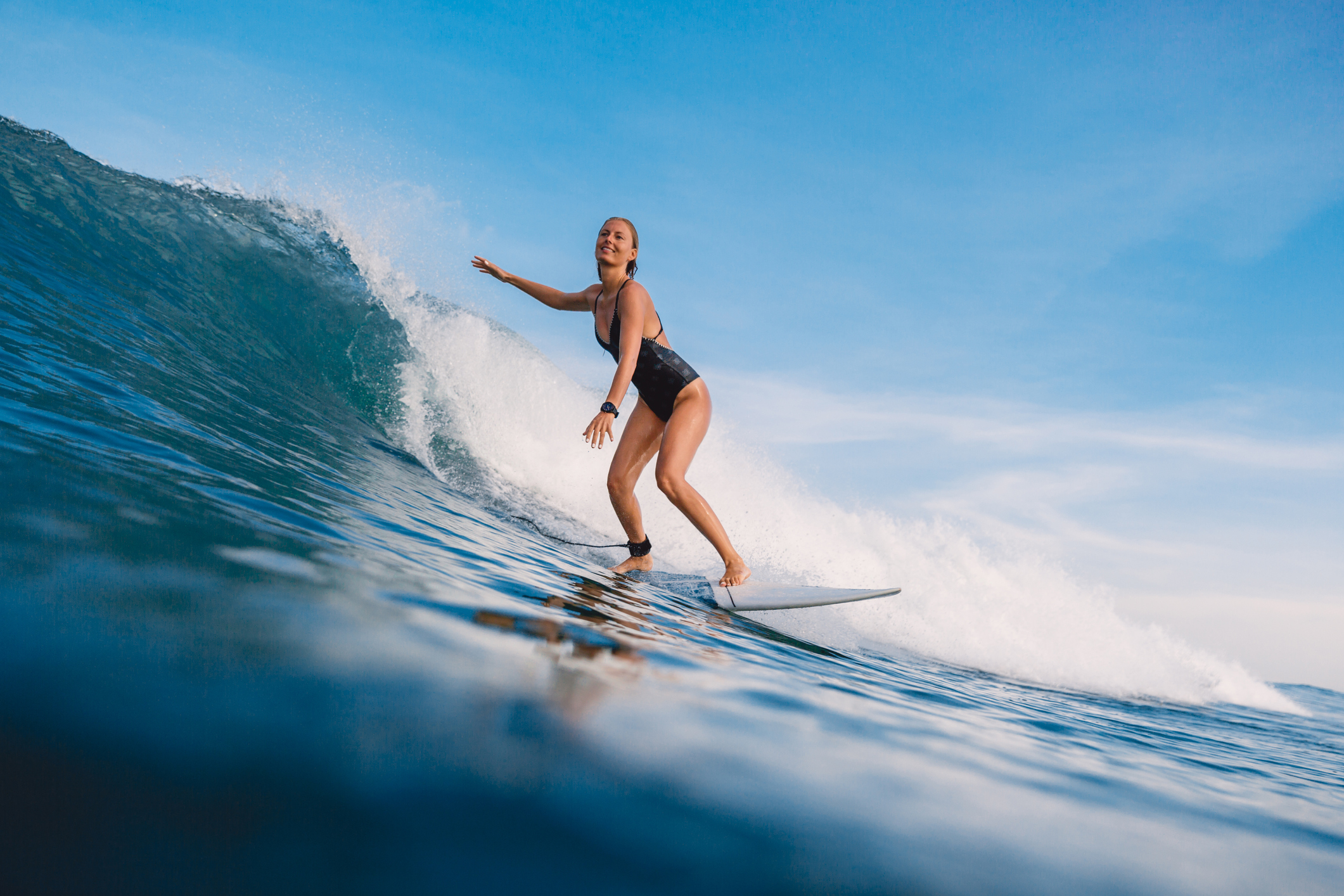
Surfing’s physical demands are only half the story. The mental effect of water, horizon and rhythm is harder to quantify but easy to recognise. Anyone who has stood near the sea after a rotten day knows it has a way of putting human melodrama back in its little box.
Conlogue describes that reset with the authority of someone who has had competitive pressure rinsed off her in real time.
Conlogue: “Whether you’re out catching waves or you paddle out and sit in the ocean on your board, looking at the horizon, there’s something about surfing that grounds you and gets you where you need to be. I lose heats and I go surfing to wash it off. There’s no sport where you lose and you want to do more of it to deal with the stress.
“It’s a really good way to share a sport with your friends too – whether you’re great or not.”
That last point matters. Surfing can look intimidating from the sand, particularly when populated by people who seem to have been born with sea legs and inconveniently good hair. But at its best, it is communal. You do not have to be brilliant to feel the benefit. You just have to be willing to look mildly ridiculous for a while.
Beginner Surfing Tips For Women
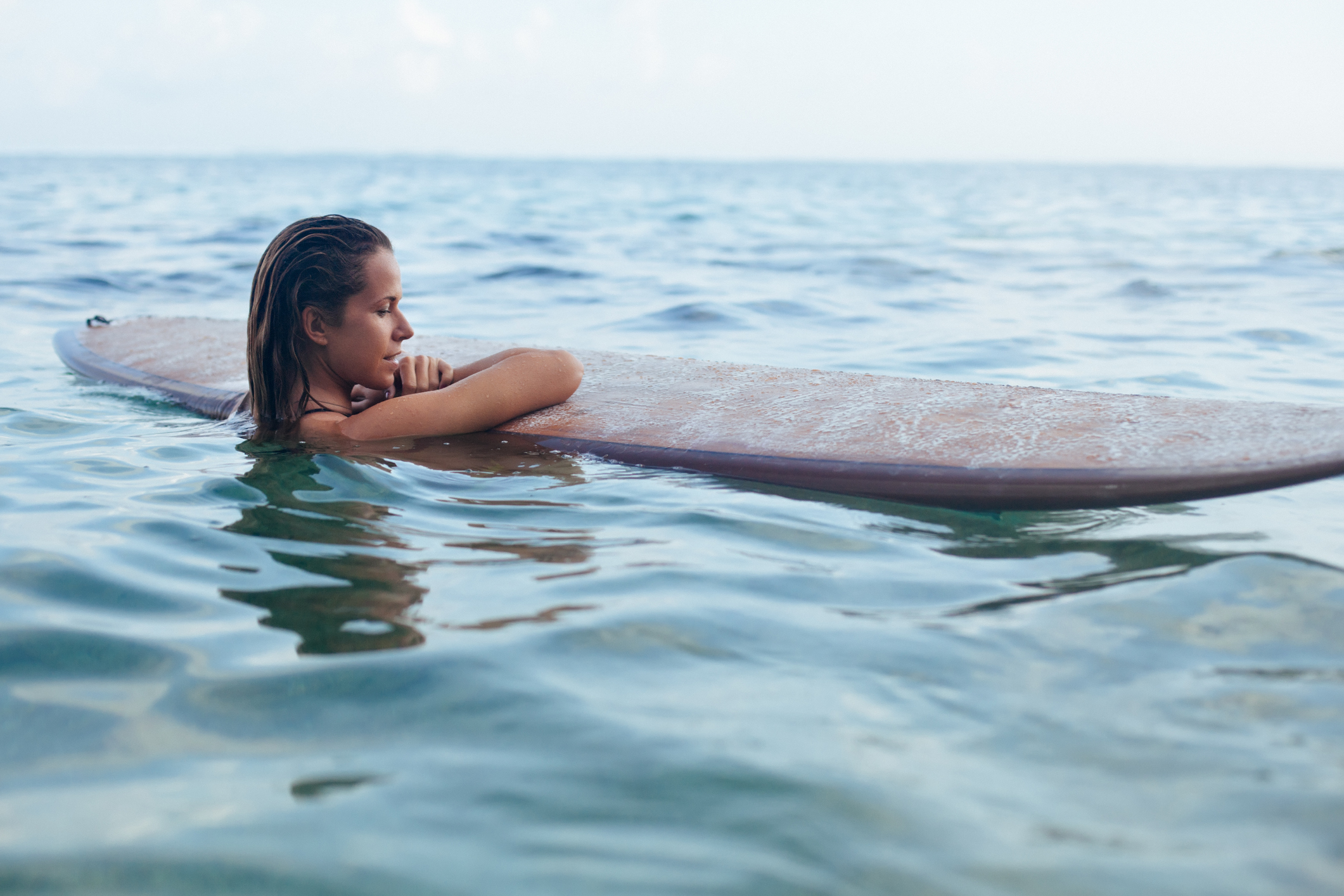
For women considering surfing as a new fitness habit, the message from Peterson is refreshingly sensible: start where you belong, not where your ego would like to be seen.
Peterson: “I would just stay stick with it, enjoy it and go to a beach that’s meant for beginners. Don’t go to an advanced surf spot straight away, because you’ll probably feel out of your depth.
“I think surfing is really hard in the beginning. When people start a little later, it takes time and you have to be willing to fail a lot, and you might get discouraged. But there’s a moment where it suddenly will click. Once it clicks, you’ve got it.”
That is probably the most useful advice in the whole conversation. Choose the right beach. Learn in manageable conditions. Accept the early failures. Take instruction if you can. Do not confuse courage with poor judgment. The ocean has no interest in your personal brand.
Why Surfing Keeps Pulling People Back
Surfing sits in a rare corner of sport. It can be competitive, spiritual, social, technical, exhausting and oddly restorative, sometimes during the same hour. It asks plenty from the body, but it gives something back to the mind.
For Peterson, progress comes from water time. For Conlogue, it is a whole-life practice: hiking, paddling, lifting, surfing, recovering and returning. For beginners, the first goal is simpler. Get in safely. Keep trying. Laugh when necessary, which will be often.
The reward is not just the first clean ride, though that will stay with you. It is the discovery that fitness does not have to happen under fluorescent lights, counted in joyless repetitions.
Sometimes it comes wrapped in salt, fear, sunlight and a wave that lets you borrow its energy for a few glorious seconds before dumping you like an unpaid bar tab.