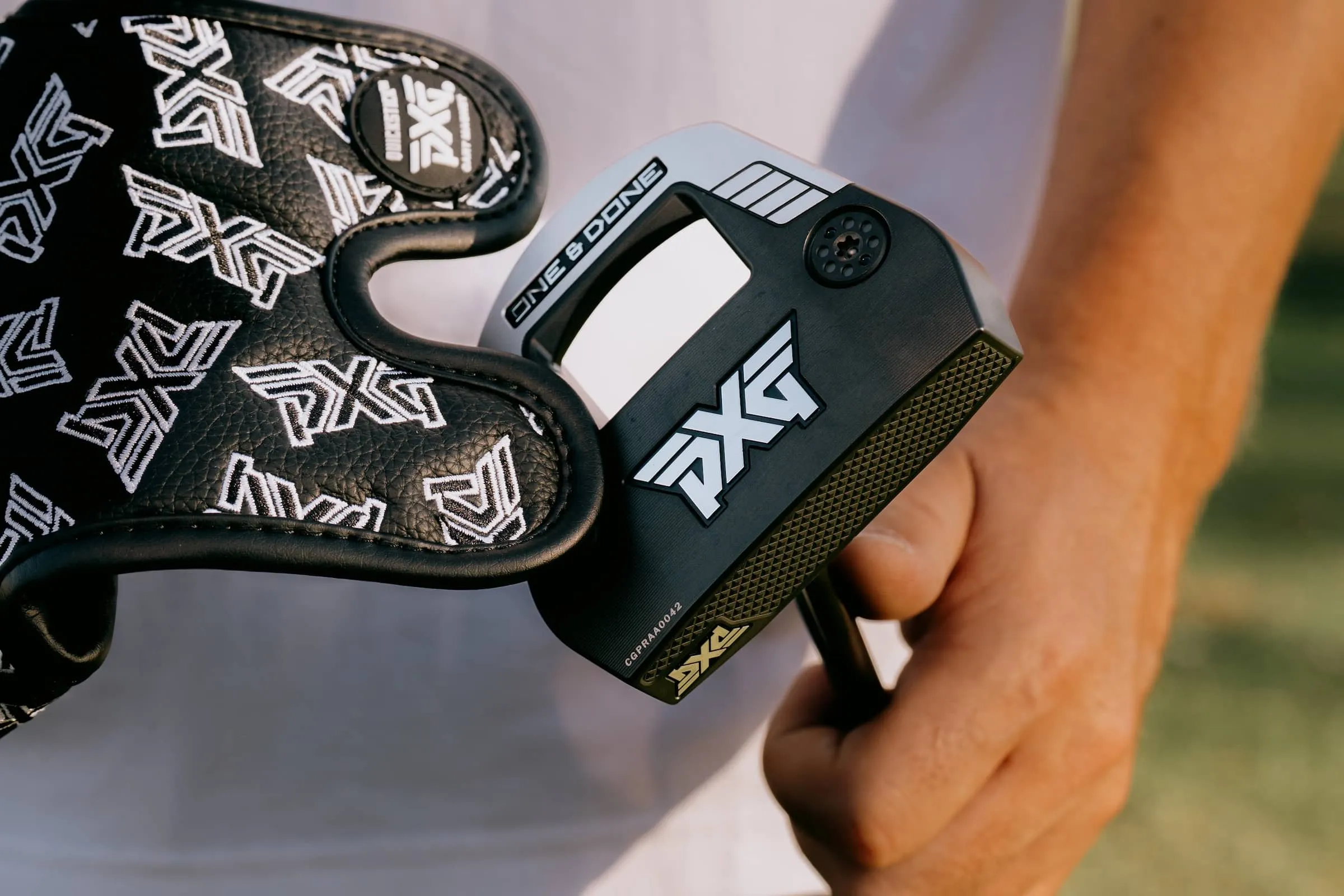
The PXG One & Done ZT Putter uses zero-torque geometry and perimeter weighting to help golfers steady the face and start putts online.
The PXG One & Done ZT Putter has been designed for golfers who would prefer the putter face to behave itself without constant supervision. Built around zero-torque geometry, a hollow stainless-steel body and substantial perimeter weighting, the new mallet aims to reduce unwanted rotation and make the starting direction of a putt more repeatable.
Putting is a small movement with an unreasonable talent for exposing tension. Hands tighten, shoulders stall and the face arrives at impact looking as though it has taken an independent route. PXG’s latest design attempts to reduce the need for last-second correction by creating a head that naturally resists twisting during the stroke.
It costs $449.99 and joins a growing PXG zero-torque range that includes blade-style heads, high-MOI mallets and long-putter options.
Why zero torque matters to the putting stroke
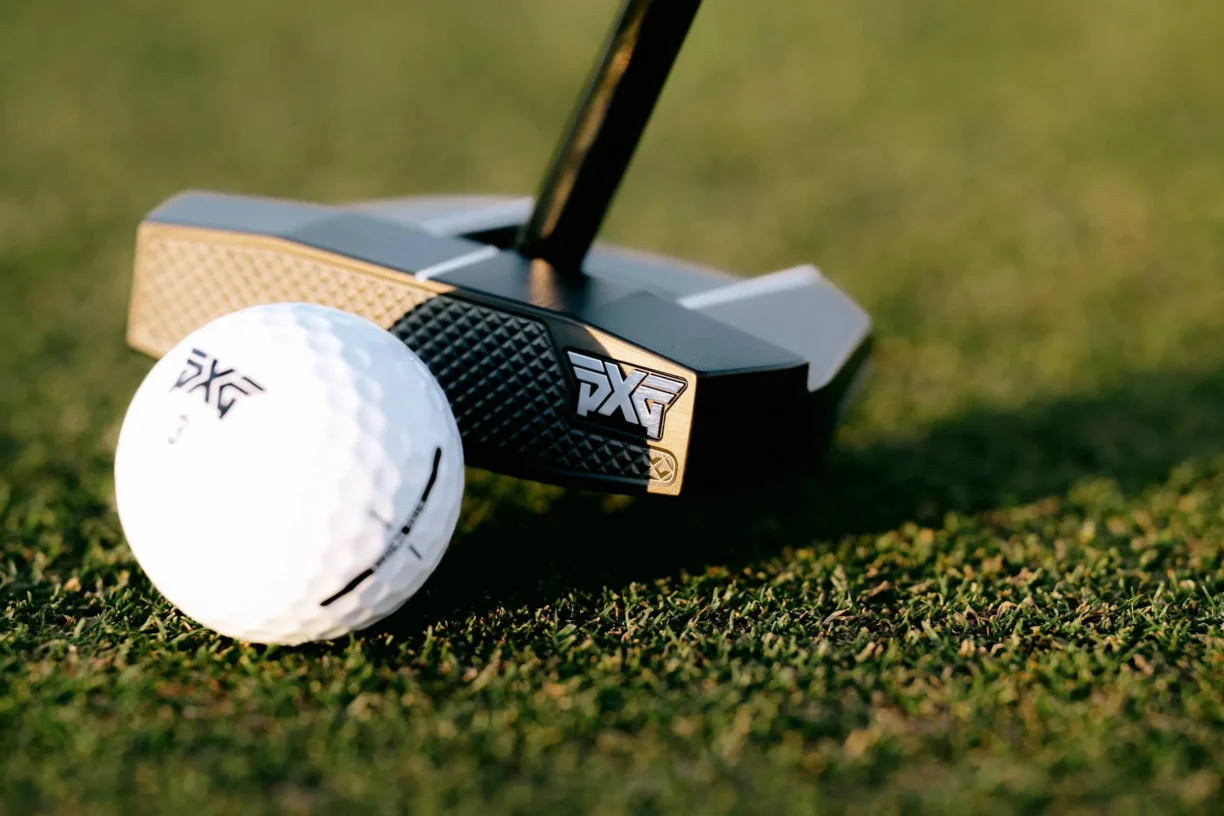
The central idea is straightforward. PXG has positioned the shaft axis just above the putter’s centre of gravity, producing a toe-up balance point intended to reduce the rotational forces acting on the head.
A conventional putter may naturally open or close as it moves. Some golfers manage that movement beautifully. Others spend four hours striking the ball rather well, then reach the green and begin negotiating with their wrists.
By reducing torque, PXG is trying to make the face easier to return square to the path. It cannot read the green, choose the correct pace or prevent a golfer from peeking at the hole halfway through the stroke. It may, however, make face control less dependent on perfectly timed hand action.
“This putter is designed to work with the golfer, not against them,” said PXG Design Engineer Matt Andrews. “By positioning the shaft axis just above the center of gravity, we significantly reduce the torque forces that cause the face to rotate during the stroke. The result is a putter that stays remarkably square to path and helps golfers produce a more repeatable roll.”
The putter also incorporates a built-in forward press, placing the hands slightly ahead at address while retaining effective loft through impact. Golfers already comfortable with that set-up may find it natural. Those accustomed to a neutral shaft position should test it rather than relying on optimism and a credit card.
A hollow body built for greater stability
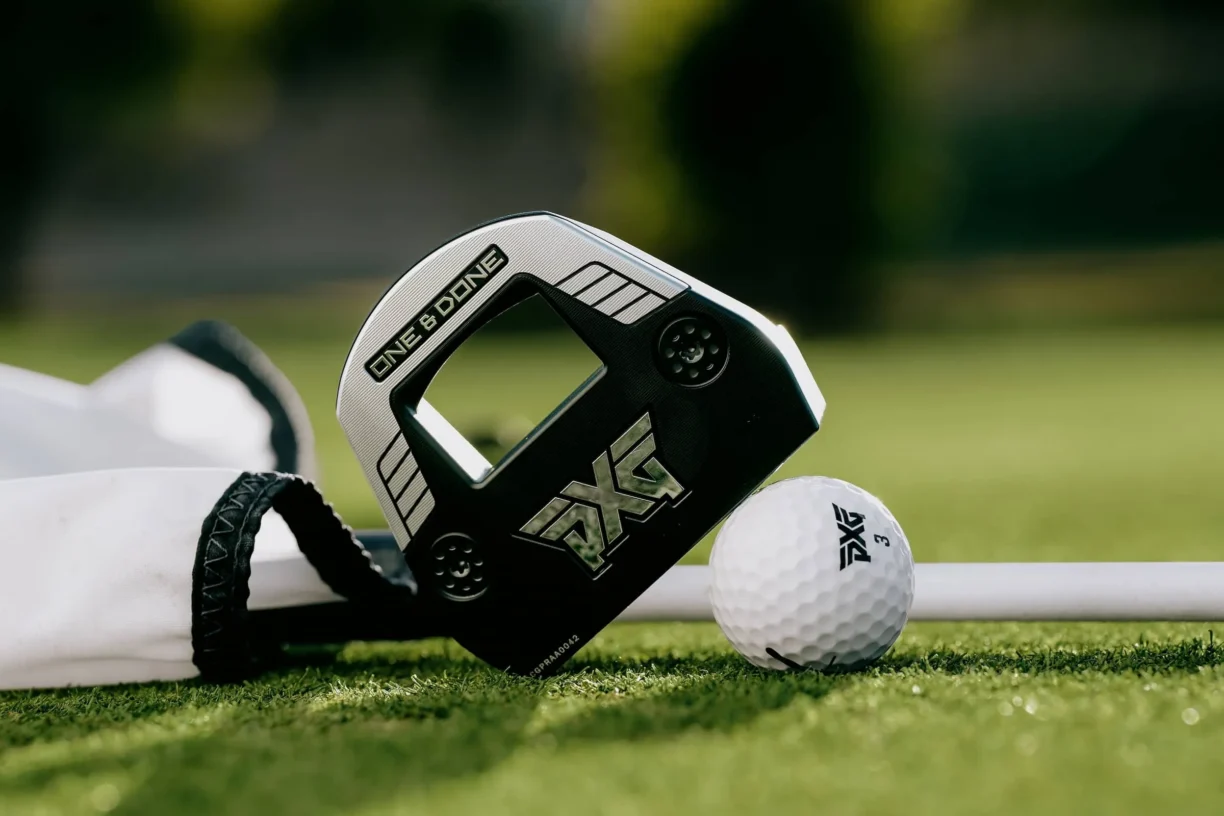
The One & Done ZT uses a hollow body made from 303 stainless steel. More than half of its internal volume is filled with PXG’s lightweight S COR polymer.
That construction allows mass to be removed from the centre of the head and moved towards the perimeter. The result is a higher moment of inertia, or MOI, which should make the putter more resistant to twisting on strikes away from the centre of the face.
For the golfer, the proposed benefit is tighter consistency. A slight mishit should be less likely to send the face turning and the ball wandering away from its intended line.
The polymer also supports the unusually thin face and helps regulate vibration. Sound and feel remain subjective, of course. One player’s “responsive feedback” is another player’s kitchen drawer closing badly.
The face is thin, milled and heavily supported
At 0.055 inches, the face is notably thin. PXG has taken that approach to free additional mass for perimeter weighting, with the internal polymer providing structural support.
A third-generation pyramid milling pattern covers the hitting surface. PXG says the more aggressive geometry has been developed to interact consistently with the dimples of the golf ball, creating more uniform launch, sound and roll across the face.
That is a sensible engineering objective, particularly for golfers whose strike pattern covers more territory than they might admit. It should not be confused with proof of performance, though. Launch consistency, acoustics and feel need to be judged on a practice green, preferably with the ball model a player normally uses.
Adjustable sole weights also allow fitters to alter overall head weight and bias. That is an important feature because putter performance depends on more than head technology. Length, lie, weight and set-up must all complement the golfer’s posture and movement.
Who should consider the PXG One & Done ZT Putter?
The strongest candidate is a golfer who struggles with excessive face rotation or feels the need to manipulate the putter through impact.
Its high-stability mallet shape may also suit players who prefer a substantial head behind the ball and want more forgiveness on off-centre contact. Both right- and left-handed models are available.
Players with a pronounced arcing stroke or a preference for noticeable toe flow may find the sensation less familiar. The onset hosel and integrated forward press also create a distinct address position, so this is not a putter to purchase purely because “zero torque” has become the phrase currently rattling around the equipment industry.
A fitting is particularly valuable here. The design is intended to reduce compensations, but an unsuitable specification can create a fresh collection of them.
Pros and cons
Pros
- Zero-torque geometry is designed to reduce unwanted face rotation
- High-MOI construction should improve stability on mishits
- Adjustable sole weights allow more precise fitting
- Available for right- and left-handed golfers
- The mallet shape provides a substantial, confidence-inspiring profile
Cons
- The $449.99 price places it firmly in the premium bracket
- The onset hosel may look unusual to traditionalists
- A built-in forward press will not suit every address position
- Feel and roll claims require independent on-green testing
- Golfers who prefer toe flow may find the head too resistant
Is the PXG One & Done ZT Putter worth it?
There is coherent engineering behind the One & Done ZT. The shaft position, hollow construction, perimeter weighting, polymer support and thin face all serve the same broad purpose: keeping the putter stable and the face easier to control.
That gives the design more substance than a fashionable label and a peculiar neck. The remaining question is personal.
For a golfer who repeatedly fights face rotation, starts putts offline or becomes overly active with the hands, the technology could offer a useful route towards a simpler motion. For someone who already controls a traditional putter well, it may feel like an expensive answer to a question nobody asked.
The PXG One & Done ZT Putter is available for $449.99 through PXG retail stores, PXG.com and selected fitting and retail partners worldwide.
A putter cannot make a golfer calm. It can, perhaps, give the hands one less excuse to panic.