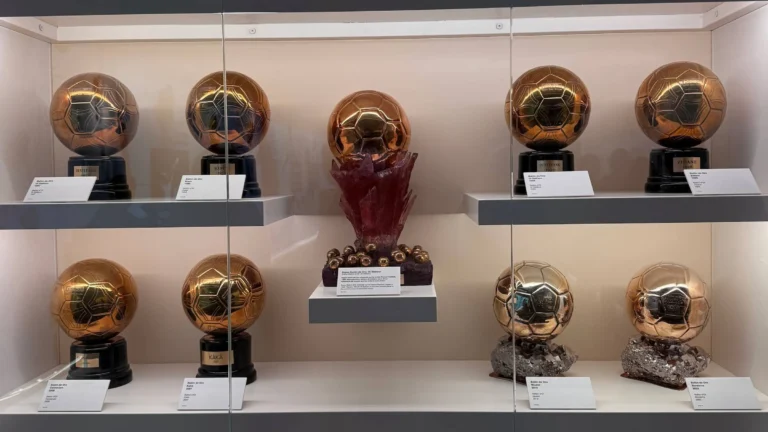
As football’s most recognisable individual prize celebrates 70 years, its first London ceremony brings fresh attention to a Parisian jewellery house that has been making the trophy since 1956.
The Ballon d’Or is heading to London for the first time in its 70-year history, and there is a rather satisfying reason for the change of scenery.
When the ceremony takes place on 26 October 2026, it will honour a connection stretching back to 1956, when English footballer Stanley Matthews became the award’s inaugural recipient.
Seven decades later, football’s golden prize is returning to the country of its first winner. The symmetry is difficult to miss.
Yet behind the familiar trophy, the famous footballers and the annual arguments over who deserves to lift it, there is another story. One involving a jewellery house founded in 1613, a Parisian workshop and craftsmen whose contribution rarely attracts anything like the attention given to the players.
For 70 years, Mellerio has been responsible for creating the Ballon d’Or trophy, bringing techniques associated with fine jewellery and goldsmithing into the rather different world of football.
The names engraved on the prize have changed enormously. The hands responsible for its creation remain part of a much longer tradition.
Why the Ballon d’Or is heading to London
The decision to stage the 2026 Ballon d’Or ceremony in London marks a historic departure for an award that has recognised outstanding footballers since 1956.
Its connection to Stanley Matthews gives the occasion particular significance.
Matthews received the first Ballon d’Or in the year the award was established. Bringing the ceremony to England exactly 70 years later provides a deliberate acknowledgement of where that history began.
It is also a reminder of how much sporting awards can come to represent beyond the individual performances they recognise.
Footballers come and go. Generations of supporters remember different champions, different eras and different arguments about who deserved the honour.
The trophy remains recognisable throughout.
That continuity is particularly interesting when considering the work involved in creating an object intended to accompany achievement at the highest level of the sport.
The unusual craftsmanship behind football’s golden prize
The Ballon d’Or might look relatively straightforward from a distance. A golden football resting on a distinctive base is hardly a complicated visual proposition.
Its construction, however, belongs to a world more commonly associated with high jewellery than football.
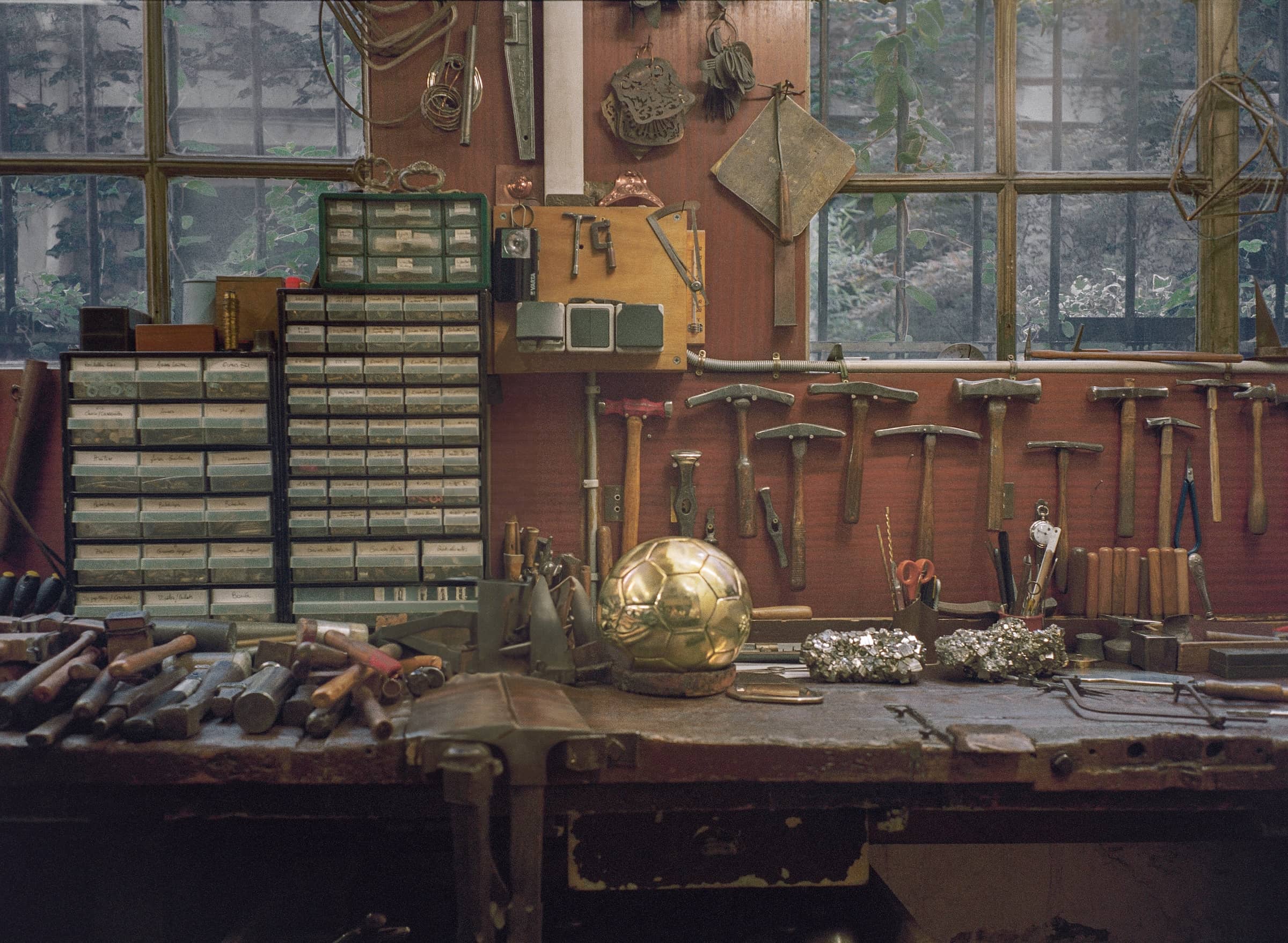
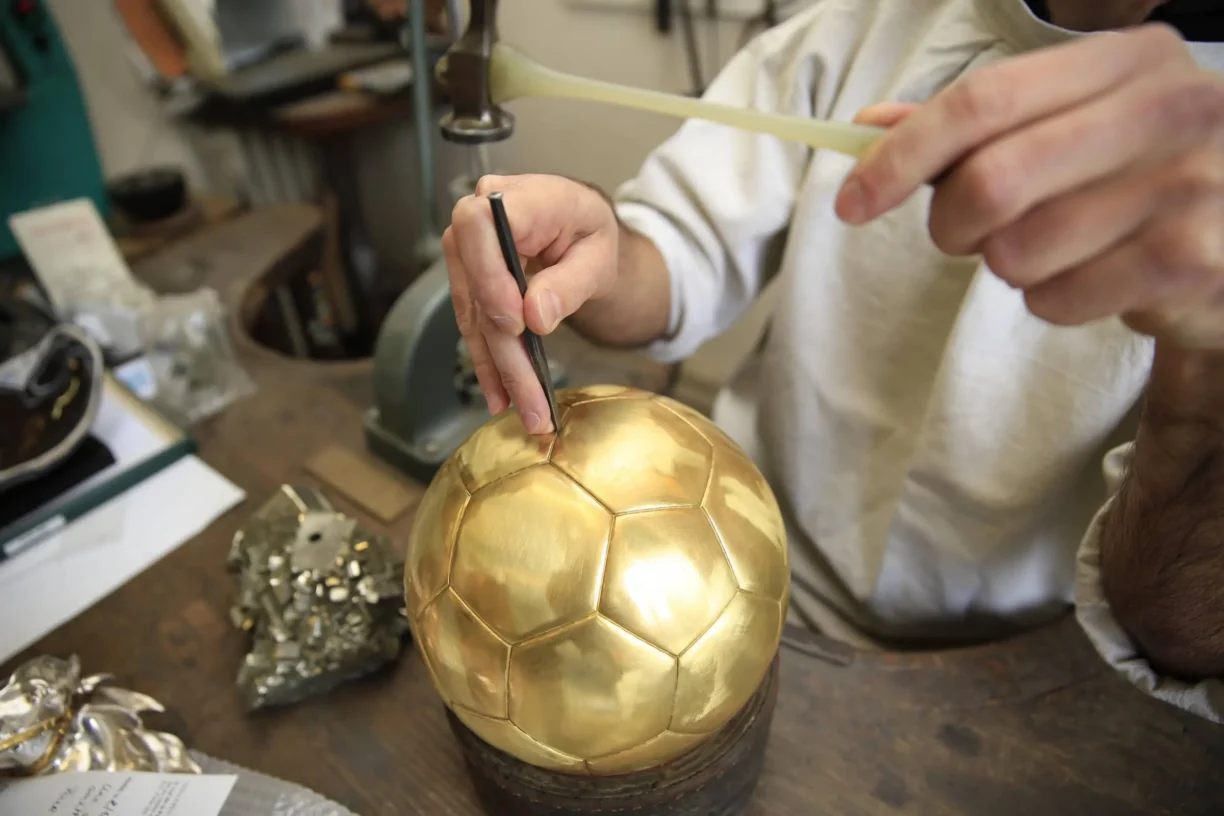
Mellerio draws on traditional techniques including hand engraving, stone setting, gem selection and meticulous finishing. These are skills also used across the house’s jewellery collections, with the same attention to detail applied to the trophy.
One particularly interesting feature is the material beneath the golden ball.
The Ballon d’Or rests on a base made from pyrite, which is selected and shaped with the care normally reserved for precious stones.
It is the sort of detail that can easily disappear beneath the significance of the person holding the finished award.
The engraving carries its own responsibility. Adding a winner’s name is a relatively small physical task compared with producing the complete trophy, but it gives that particular award its lasting identity.
Precision matters. There is little room for casual workmanship when the finished object is supposed to preserve a moment in sporting history.
For Mellerio, these methods are part of an established craft rather than techniques introduced specifically for football.
A jewellery house with more than four centuries of history
There is an extraordinary difference in scale between the histories of the Ballon d’Or and the company that makes it.
The award dates to 1956. Mellerio traces its origins to 1613.
The French jewellery house has spent more than four centuries developing its reputation through jewellery-making and goldsmithing, including work associated with European royalty.
Its relationship with football is therefore a comparatively recent chapter in a considerably older story.
That contrast gives the Ballon d’Or an unusual place in the world of sporting trophies.
The prize is built to recognise contemporary achievement, yet the methods behind its creation draw on skills that have been preserved and handed down across generations.
Mellerio’s Parisian workshop connects those traditions with modern football.
Ahead of the anniversary ceremony, the house is inviting the press into its atelier to explore that relationship and examine the expertise involved in producing the award.
It provides an opportunity to look beyond the finished object and consider the specialist work that makes its continued production possible.
Seventy years of football, one enduring design
Part of the Ballon d’Or’s appeal lies in its familiarity.
Its distinctive shape has accompanied generations of footballers, becoming closely associated with the recognition of individual excellence.
That recognition also creates an unusual challenge for its maker.
Each award must preserve the character of something already recognised around the world, while becoming a personal record of a new recipient’s achievement.
The design has to carry both continuity and individuality.
For Mellerio, maintaining that relationship across seven decades is a substantial part of the trophy’s story. The work is repeated, but the significance changes with each name that is added.
London’s ceremony on 26 October will understandably concentrate on the footballers and the honours being presented.
The trophy’s maker is unlikely to command quite the same attention.
Then again, after 70 years, Mellerio has become rather good at making something designed to put somebody else in the spotlight.