A sharp look at ageing well, midlife habits and why longevity is really about protecting independence.
One of the greatest misconceptions about healthy longevity is that it belongs to a niche audience. That it is something reserved for wealthy wellness tourists, elite athletes, biohackers, or people with endless time and money.
But after decades of travelling the world, training clients inside five-star spas, and working with people from completely opposite ends of society, I came to realise something very different:
Healthy longevity is universal. Because eventually, every human being arrives at the same question:
How do I hold onto my independence for as long as possible?
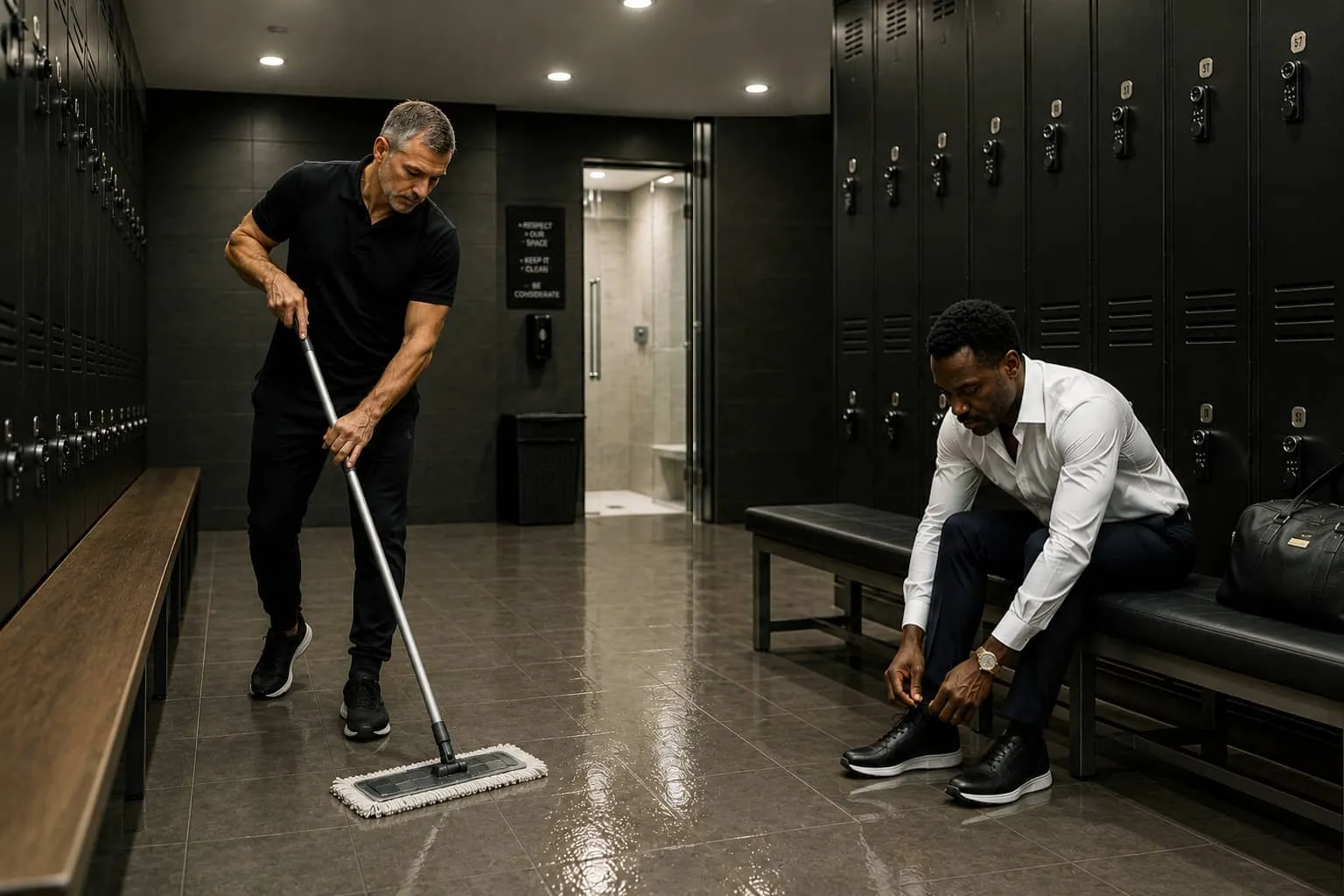
Two men, one question
I remember training a billionaire in Ko Samui who had access to every luxury imaginable. Private healthcare. Nutritionists. Therapists. Wealth beyond comprehension.
Yet despite all of it, he asked me a surprisingly human question: “How should I live my life going forward?” Not how to make more money. Not how to build another business. But how to protect his body, mind, energy, and quality of life as he aged.
Around the same time, back home, I watched the cleaner at my gym walking with a pronounced limp. He moved cautiously through every shift, carefully managing discomfort with each step. He was not interested in optimisation or longevity science.
He simply wanted less pain. Better movement. The ability to get through the day more comfortably.
Two completely different lives. Different starting points. Different opportunities. Different financial realities.
Yet beneath it all, both men wanted exactly the same thing:
Independence.
That was the moment I fully understood that healthy longevity is not about status, aesthetics, or wealth. It is about preserving your ability to live life on your own terms.
The wellness industry got it backwards
Over the years, the wellness industry has packaged health as a luxury product — wrapped in expensive memberships, supplements, gadgets, retreats, and optimisation culture. But the more I travelled, the more I realised that the true foundations of healthy longevity were never complicated.
Movement. Strength. Recovery. Purpose. Sleep. Connection. Accountability.
And what I noticed repeatedly was that the real separator between people was rarely money or opportunity.
It was behaviour.
God’s waiting room
The clearest example of that came years later in my late mother’s nursing home.
There was a group lounge area I privately called “God’s waiting room.” A difficult name, perhaps, but it reflected what I saw every time I walked in. Around 90% of the residents sat silently for most of the day. Physically present, but disconnected from life around them. Waiting for meals. Waiting for medication. Waiting for visits. Waiting for time itself to pass.
But scattered among them was a small minority who felt completely different.
They were still mobile. Still conversational. Still mentally alert. Still socially engaged. Still determined to maintain some level of independence.
And in that moment, the answer to longevity became as clear to me as day.
Those residents never left me.
Years later, after I created Meta-Age, I realised they represented everything I would come to define as a Meta-Ager. Not because they were perfect. Not because they had avoided ageing. But because they had managed to hold onto something incredibly valuable: their independence, engagement with life, mobility, curiosity, and sense of self despite growing older.
In many ways, they became the standard. The type of older person I realised I wanted to become myself.
The uncomfortable truth
That experience changed me deeply because I realised something I had not wanted to admit:
Most people do not suddenly arrive at old age. They slowly rehearse it.
Years of inactivity. Years of neglect. Years of sitting more, moving less, withdrawing socially, losing strength, losing balance, losing purpose, and disconnecting from their own bodies. Ageing itself was not always the greatest threat. Passive living was.
That moment in the nursing home triggered another thought I could not shake: What if ageing worked like a bank account?
What if every walk, every squat, every healthy meal, every good night’s sleep, every act of movement, every moment of resilience, and every decision to stay engaged was a small deposit into your future self?
And equally, what if years of inactivity, stress, poor habits, isolation, and neglect were withdrawals?
The framework
That thinking became the foundation of Meta-Age. Not as a fitness trend. Not as another self-help philosophy. But as a behavioural framework built around one simple idea:
The life you experience later is heavily influenced by the behaviours you repeatedly invest in today.
Years later, that philosophy evolved into the Annual Midlife MOT — not a motivational gimmick, but a structured moment for pause. A time to honestly assess where you are physically, mentally, emotionally, and behaviourally in relation to the future you hope to have.
Because the truth is, most people never stop long enough to ask themselves an important question: Is the way I am living today supporting the future I hope to experience tomorrow?
The growing disconnect
Throughout my travels, I also noticed something else. Even in cultures once known for naturally active lifestyles, movement was slowly disappearing from daily life. Walking, squatting, carrying, balancing, socialising, and remaining physically useful were being replaced by convenience, automation, sedentary routines, and screen-based living.
Healthy longevity was no longer something naturally woven into society. It had become something people were desperately trying to buy back later in life.
The universal thread
The billionaire in Thailand, the cleaner at my gym, and the active residents inside my mother’s nursing home. And eventually, me looking in the mirror.
Despite our completely different circumstances, we all wanted — want — the same thing: To keep living life on our own terms for as long as possible.
Because Meta-Agers know the real goal is not simply to live longer. It is to avoid becoming a spectator in your own life before your life is over.