Nike’s one-of-one speed suit for Keely Hodgkinson blends aerodynamics, mobility and personal detail for the brutal demands of the 800m.
Nike has created a one-of-one speed suit for Keely Hodgkinson, shaped around aerodynamics, heat management, mobility and the very particular demands of middle-distance running.
There are easier ways to spend a couple of minutes than racing 800 metres. Few events ask quite so rudely for speed, control, pain tolerance and tactical nerve, all while giving an athlete just enough time to realise exactly how uncomfortable things are becoming.
That is the world Keely Hodgkinson inhabits. And Nike’s new one-of-one Keely Hodgkinson speed suit has been designed for that specific kind of suffering: not the clean, explosive violence of a pure sprint, and not the longer chess match of distance running, but the awkward, brilliant middle ground where every fraction of drag, heat and restriction has somewhere to hide.
Nike has built the suit with Hodgkinson at the centre of the process, combining her athlete insight with sport-science research and advanced product design. The result is a full-body performance system rather than a standard race kit with a louder wardrobe department.
A suit made for middle-distance speed
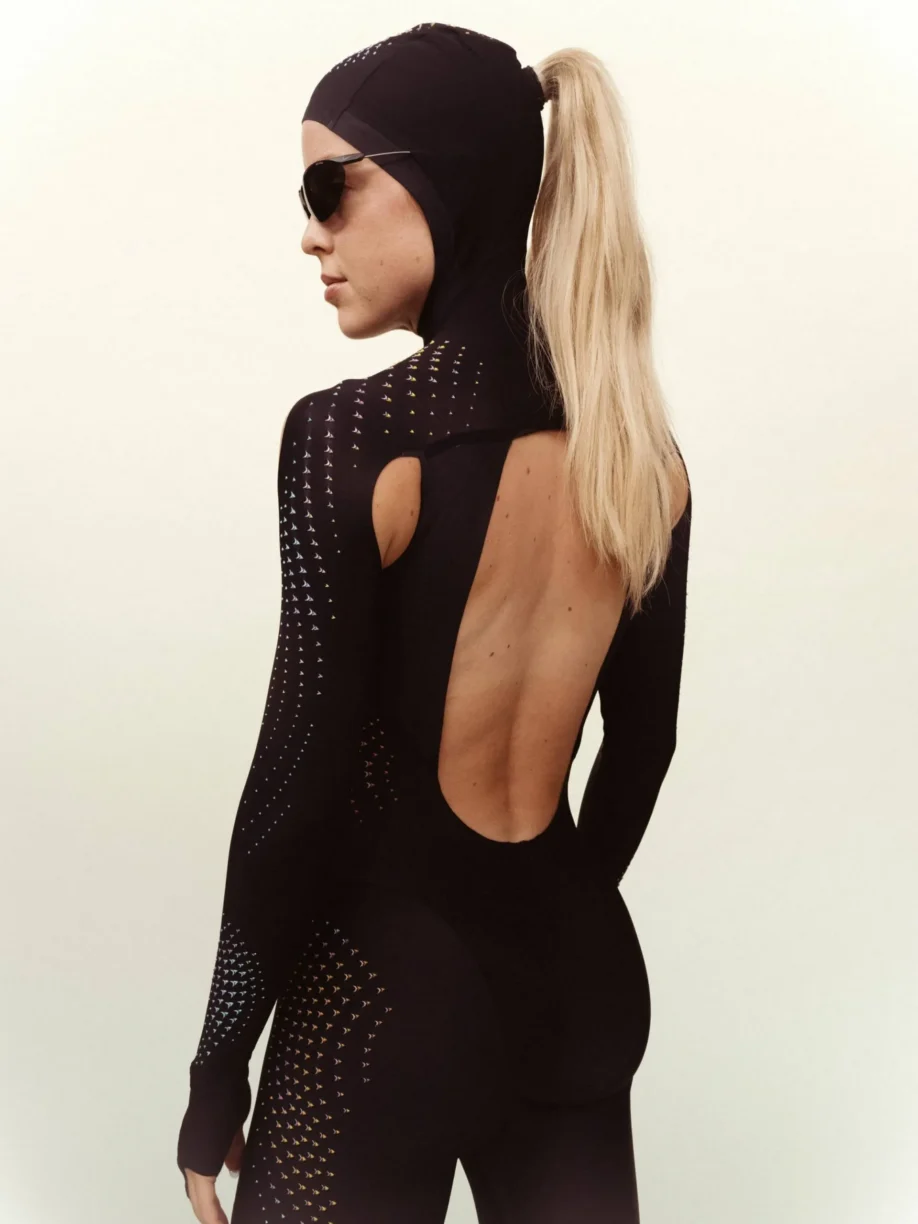
Hodgkinson’s event matters here. The 800m is not simply about who can sprint fastest. It demands speed that can be carried, protected and somehow still found again when the body is beginning to lodge formal complaints.
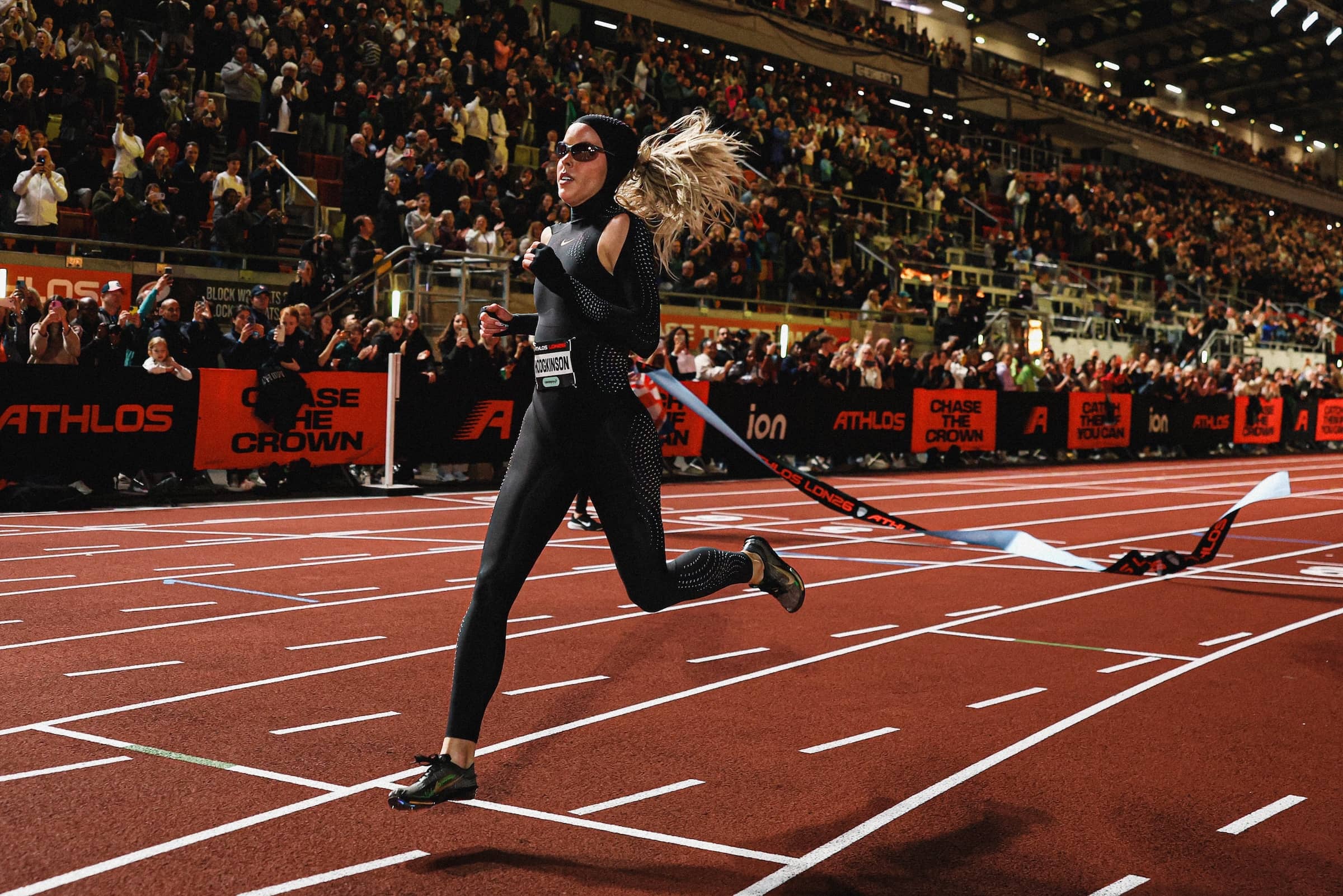
Nike’s answer is an open-back, full-length, hooded speed suit designed to deliver aerodynamic benefit while preserving mobility and comfort. That balance is the interesting bit. A garment can be slippery through the air and still be useless if it fights the athlete. Nobody needs their kit joining the opposition with 200 metres to go.
The suit uses a strategic mix of fabrics, minimal seams and no closures to reduce the different forms of air resistance Hodgkinson meets as she moves around the track. The aim is not decoration. It is to limit drag, reduce energy loss and help her stay free enough to run properly.
“In this speed kit, I feel fast, free-flowing, comfortable and empowered,” says Hodgkinson, a Nike athlete since 2019.
Aerodynamics without turning the runner into a mannequin
The temptation with performance technology is always to talk as though the athlete has been replaced by a wind tunnel with eyelashes. This suit only makes sense if Hodgkinson can still move like Hodgkinson.
Nike has built in an articulated back knee so the fabric can sit smoothly during peak flexion. There is also a patented 4D mobility gusset, along with large openings at the underarm and back. Those openings are not just visual theatre. They also support thermoregulation, which matters when the body is trying to produce speed while getting rid of heat.
That is the quiet tension in this project. Covering more of the body can help with aerodynamic shaping, but middle-distance racing also produces heat and discomfort at a savage rate. The suit has to manage both. Too much restriction and the whole idea becomes very expensive fancy dress.
Nike describes the final fit as couture-level, built almost like a second skin. The garment was handcrafted by Nike teammates, primarily within the LeBron James Innovation Center at the Philip H. Knight Campus.
The small devices doing the odd-looking work
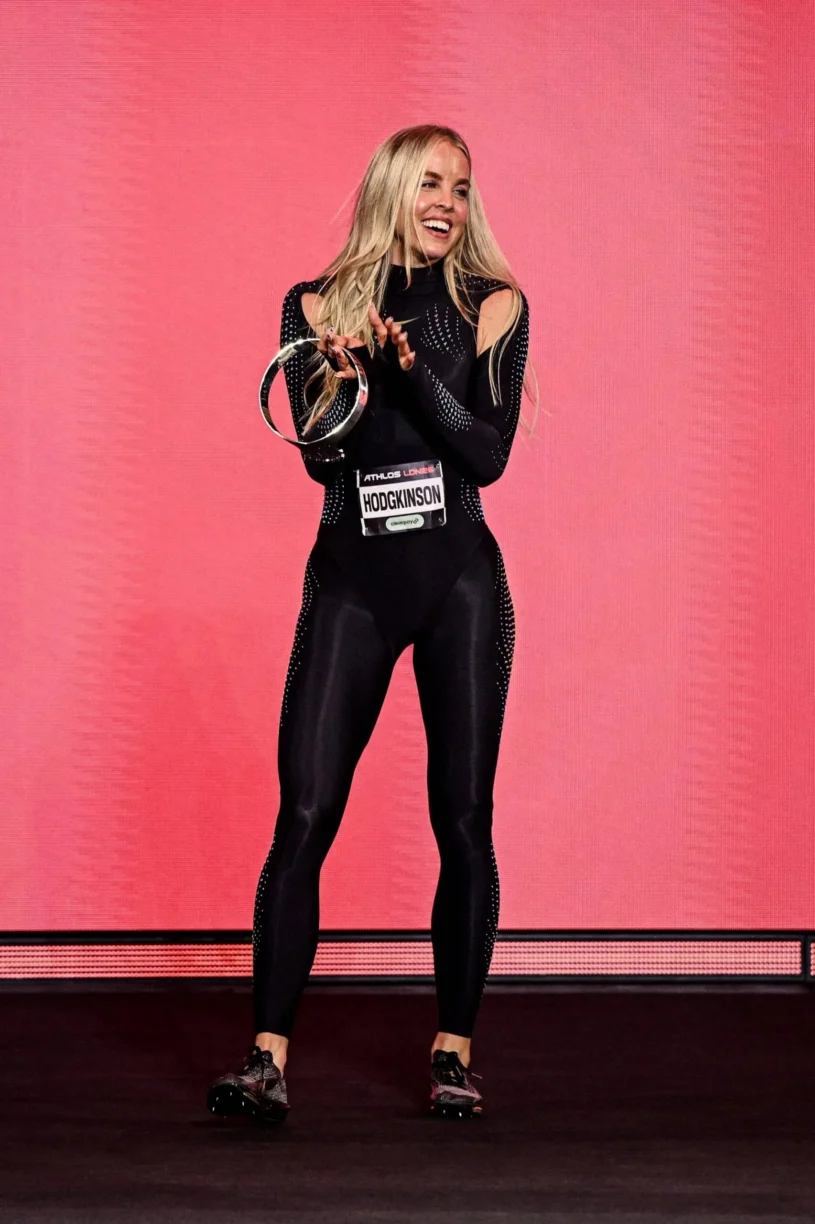
The most technically striking detail is not the hood or the open back. It is the use of Nike’s fastest vortex generators to date: colour-shifting, 3D-printed aerodynamic devices placed around the suit.
These delta-shaped pieces vary in size and orientation and are computationally tuned for different areas of Hodgkinson’s body. Their job is to influence airflow. Nike says they create small vortices that help fast-moving air mix with slower air sitting close to the body, reducing the low-pressure wake that forms behind an athlete.
In less laboratory language: they are there to make the air behave better. Air, naturally, does not tend to do this out of politeness.
For an 800m runner, the appeal is obvious. The event is long enough for small inefficiencies to matter and fast enough for aerodynamics to be more than a marginal afterthought. The suit is not promising to remove the brutality of the race. It is trying to make Hodgkinson pay slightly less for travelling through the air at speed.
Performance kit with a personal edge
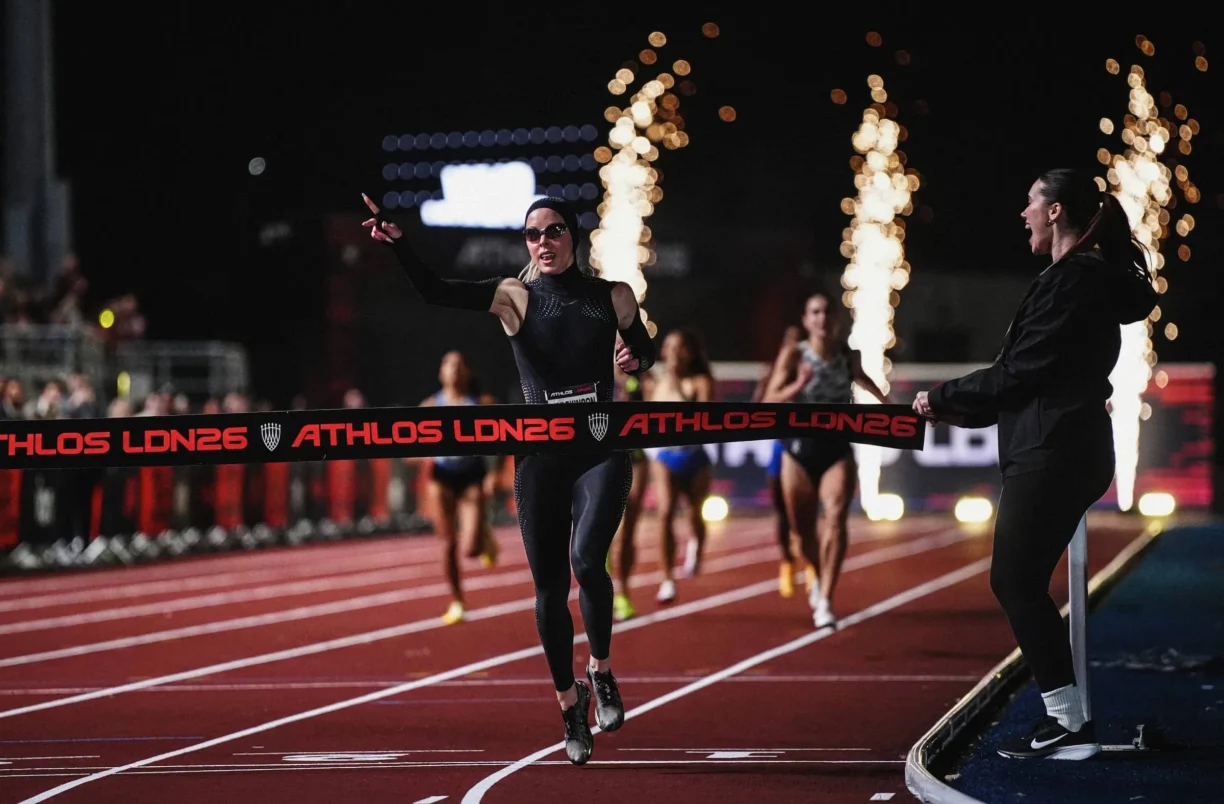
The suit has a striking black base, but the design is not anonymous. Nike has included details such as a ponytail opening and Nike Vision Airelon Force E sunglasses, elements intended to keep Hodgkinson feeling like herself rather than merely sealed inside a technical experiment.
“As much as we’re designing for peak performance, we’re also designing for pinnacle expression,” says Dan Farron, VP, Innovation Apparel Product Design. “Keely’s an athlete who’s unafraid to take risks; she’s bold and vivacious. This speed suit is a reflection of who she is. It’s sport and style in equal measure.”
That line matters because elite kit is rarely just kit. Athletes have to feel ready in it, not simply measured in it. Confidence is not a fabric technology, but it is one of the few things nobody wants to lose on the start line.
The spikes beneath the suit
Nike has also placed Hodgkinson’s footwear into the same performance conversation. The Victory 2 has been her preferred spike for the 800m, and Nike says designers worked with athletes including Hodgkinson to create the Victory Elite as the next step in the Victory franchise.
The new spike keeps the broader system approach. It features a full-length carbon-fibre top plate, a taller tuned forefoot Air Zoom unit, a lighter carbon outsole plate with titanium pins and an upper made from lightweight yarns. The Victory Elite uses six pins, with traction coming from the spikes themselves rather than the supplemental elements commonly found on a standard spike plate.
Visually, it follows the same black treatment as Hodgkinson’s suit and signature collection, with gold highlights across the upper and spike plate. Subtle it is not. But then subtlety has never won much in the final 100 metres of an 800m race.
What the suit really says about performance design
The obvious story is that Nike has made a bespoke suit for one of track and field’s most compelling middle-distance athletes. The more useful one is that performance design is now being treated as a whole-body system: fabric, airflow, heat, movement, footwear, identity and confidence all folded into the same conversation.
For everyday runners, this is not a shopping-list moment. This is not a practical recommendation to wear a hooded, open-backed, vortex-generator-covered race suit to the local parkrun, unless you are particularly keen on being discussed in the car park.
But it is a glimpse at where elite performance thinking goes when the problem is no longer simply “make it lighter” or “make it tighter”. Hodgkinson’s suit is trying to solve a more demanding brief: help an athlete move quickly, stay cool enough, feel unrestricted and arrive at the decisive part of an unforgiving race with fewer wasted watts than before.
In the 800m, that is about as close to kindness as the event gets.