CELSIUS is betting that zero sugar, fruit flavours and a fitness-first image can tempt people who once avoided energy drinks altogether.
CELSIUS’ zero-sugar energy drinks are attempting something rather more difficult than simply stealing customers from the other brightly coloured cans in the fridge.
The more interesting opportunity is the person who has never particularly wanted an energy drink in the first place — put off by the sugar, the image, or the vague suspicion that consuming one ought to involve a motocross helmet.
A recent visit to the CELSIUS team at their HQ in Dublin made that strategy rather obvious. The company talks about fitness and performance, naturally, but its ambitions now stretch well beyond the gym.
CELSIUS wants to become an everyday energy choice for people heading to work, training, meeting friends or simply trying to prevent the afternoon from winning.
And, increasingly, there are signs that the idea is finding an audience.
The energy drink for people who don’t buy energy drinks
The most persuasive example in my case just happens to live in my own house.
My wife has traditionally treated energy drinks with roughly the same enthusiasm she reserves for servicing the lawnmower. She simply wouldn’t buy one. CELSIUS, however, has somehow made it into the supermarket trolley without debate.
That doesn’t constitute rigorous consumer research, admittedly. Nielsen needn’t panic just yet. But it illustrates something important about the brand.
Its zero-sugar formulation, seven vitamins and fruit-forward flavours present differently from the conventional energy-drink proposition. CELSIUS isn’t trying to pretend caffeine has suddenly become a health food — caffeine remains a fundamental reason the product exists — but the packaging, flavours and nutritional proposition can make the decision feel rather less confrontational for consumers who previously ignored the category.
That audience could ultimately prove more valuable than fighting established energy brands exclusively for the same committed drinkers.
“If Celsius is distinct and has a distinct proposition, then that’s great for retailers because it brings in new consumers who happily pay for this space in the energy drink category. “If all we do is come in and copy our competitors, then all we do is cannibalise something that they already have. We bring no value.” — Garrett Quigley, President of Celsius International
CELSIUS growth suggests the strategy is landing
There are some sizeable numbers behind the change in perception.
The figures supplied by CELSIUS whilst I was there certainly made for interesting reading; year-to-date sales in Great Britain are up 150%, compared with 11% growth for the wider energy-drinks category.
Rapid percentage growth needs context, particularly for a brand still building its presence. A smaller starting base can make an impressive percentage considerably easier to produce.
More interesting, then, is what happens after CELSIUS reaches the shelf.
Over the latest 13-week period, the company says its distribution in Great Britain rose 60%, while its unit rate of sale increased 58%. In other words, the brand isn’t simply being placed in more stores; CELSIUS says it is also selling faster in the places where consumers can already find it.
Getting onto shelves is distribution. Getting back off them is the useful bit.
Zero sugar is becoming a much bigger battleground
CELSIUS has arrived at an opportune moment.
Sugar-free energy drinks are gaining ground as consumers become more interested in products offering function without the sugar traditionally associated with the category.
CELSIUS will tell you that sugar-free is now the fastest-growing part of the British energy-drinks market, which rather neatly places its entire range on the side of the argument currently gaining momentum.
The brand claims it recently contributed around 10% of total sugar-free growth in Great Britain despite accounting for just over 3% of segment sales.
It is the sort of statistic that catches the eye, although the bigger point is simpler: zero sugar is moving from being an alternative choice within energy drinks towards becoming one of the defining battlegrounds.
CELSIUS was built for precisely that shift.
Its range combines zero sugar with fruit-led flavours and seven vitamins, rather than producing a conventional flagship drink and subsequently adding a sugar-free relation for the more calorie-conscious end of the fridge.
Fruit flavours replace some of the old energy-drink theatre
There is also a deliberate attempt to change how an energy drink looks and tastes.
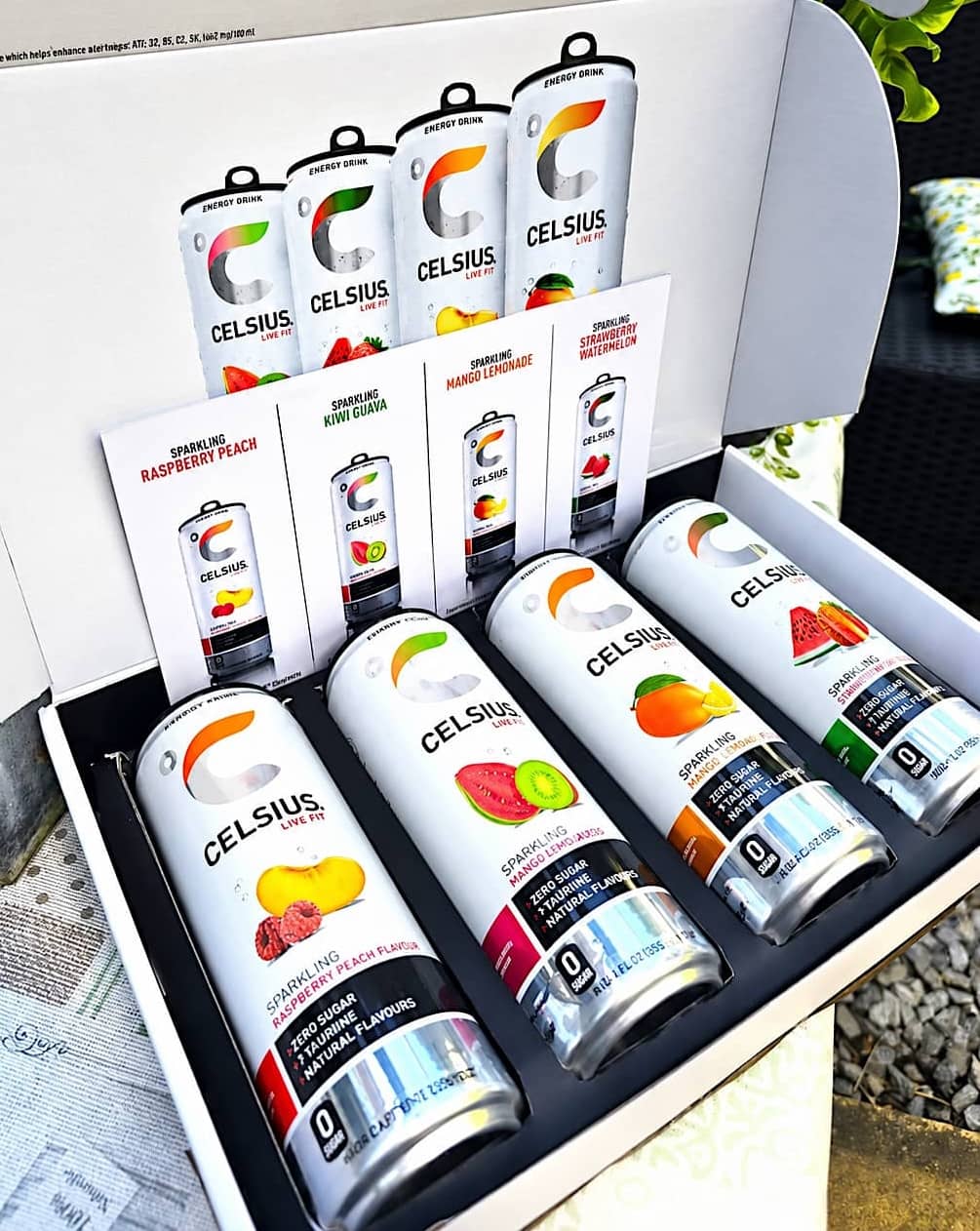
CELSIUS introduced four core flavours into Great Britain and Ireland in January: Sparkling Raspberry Peach, Sparkling Mango Lemonade, Sparkling Kiwi Guava and Sparkling Strawberry Watermelon.
There is nothing accidental about those names.
They sound more at home alongside modern flavoured waters, functional drinks and lifestyle beverages than the vaguely radioactive naming conventions energy drinks have occasionally enjoyed.
The objective is clearly to make flavour part of the reason for buying the product rather than something endured in exchange for caffeine.
Taste matters increasingly in a category where simply promising more energy is no longer much of a differentiator. Nearly everybody in the race can provide caffeine. The interesting question is which brands consumers actually want to drink again tomorrow.
From the gym to the rest of the day
CELSIUS was born in fitness, but remaining trapped there would put an obvious ceiling on its ambitions.
Its LIVE. FIT. GO.™ platform is therefore broadening the definition of an active lifestyle. A workout still fits comfortably within it, but so does a busy working day, a social occasion or almost anything else requiring a little more enthusiasm than the body has volunteered.
That expansion explains a growing collection of sporting and cultural partnerships.
Team CELSIUS includes England footballer Declan Rice and Irish Olympic sprinter Rhasidat Adeleke, who are due to support the next phase of LIVE. FIT. GO.™ in Great Britain and Ireland from September.
Before then, CELSIUS will begin its global partnership with fitness competition ATHX as its Official Energy Drink at the Birmingham event on 22–23 August. The brand has also moved into another extremely current fashionable corner of recreational sport through Soul Padel, where CELSIUS is now a core beverage offering at its UK locations.
Padel, football, athletics, functional fitness: it is not difficult to see the demographic map being drawn.
Formula One puts CELSIUS on a much larger stage
Then there is Formula One.
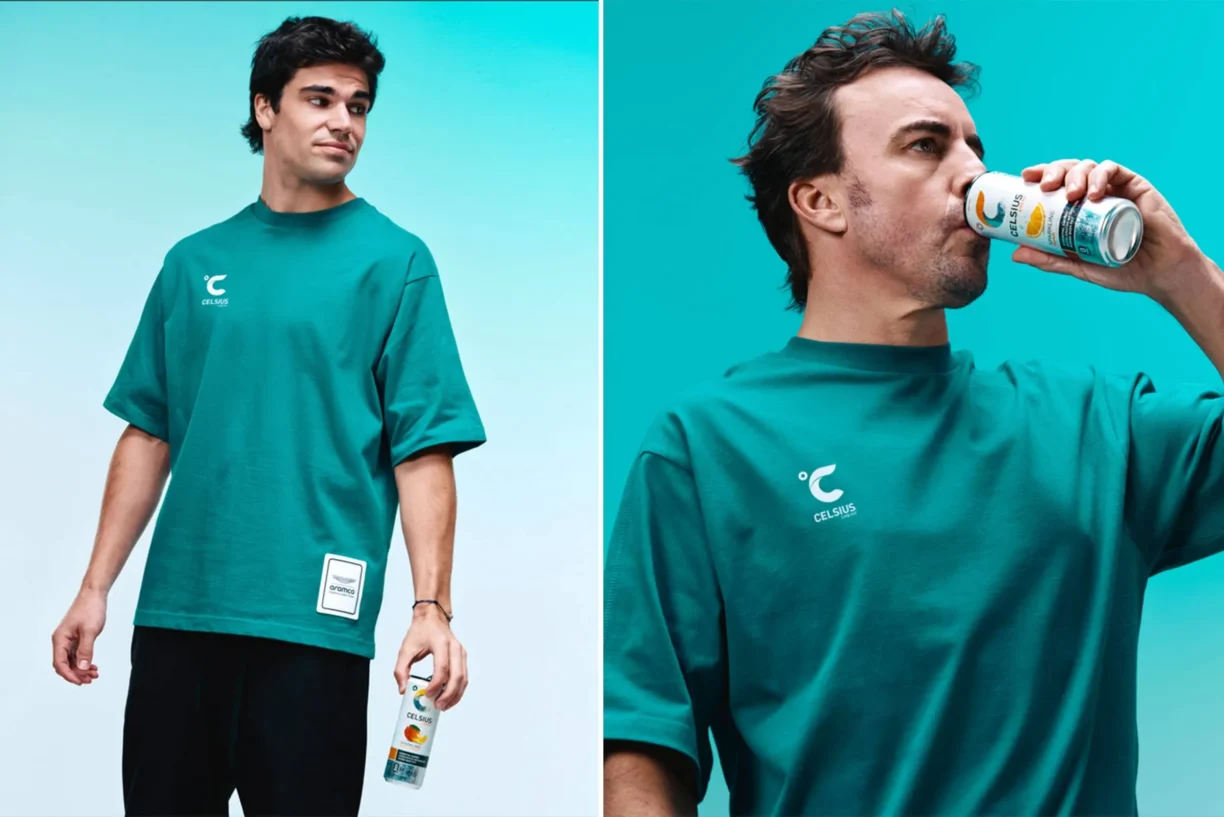
CELSIUS recently became the Official Global Energy Drink Partner of the Aston Martin Aramco Formula One Team under a multi-year agreement, placing the brand inside one of sport’s most internationally visible environments.
On paper, energy drink meets Formula One is hardly a conceptual leap requiring Sherlock Holmes. Performance, concentration, speed and endurance provide enough connective tissue to keep a sponsorship department occupied for years.
The more significant attraction is Formula One’s audience.
Modern F1 has stretched considerably beyond hardcore motorsport followers into fashion, entertainment, social media and lifestyle culture. That makes it a useful platform for a company trying to position itself as something broader than gym fuel.
The real competition is changing people’s minds
CELSIUS clearly has considerable room left to grow in Britain and Ireland. That is both the opportunity and the necessary caveat behind those striking percentage increases.
But the interesting part of the story isn’t really whether one energy-drink company can take a little share from another.
It is whether CELSIUS can expand the pool of people willing to buy an energy drink at all.
The category has historically been very good at appealing to people who already liked energy drinks. CELSIUS is betting that zero sugar, fruit-led taste and a less traditional identity can persuade a different consumer to open the fridge door.
Judging by the numbers, more of them are doing exactly that.
And judging by my wife, some of them still wouldn’t describe themselves as energy-drink consumers even while holding the can.