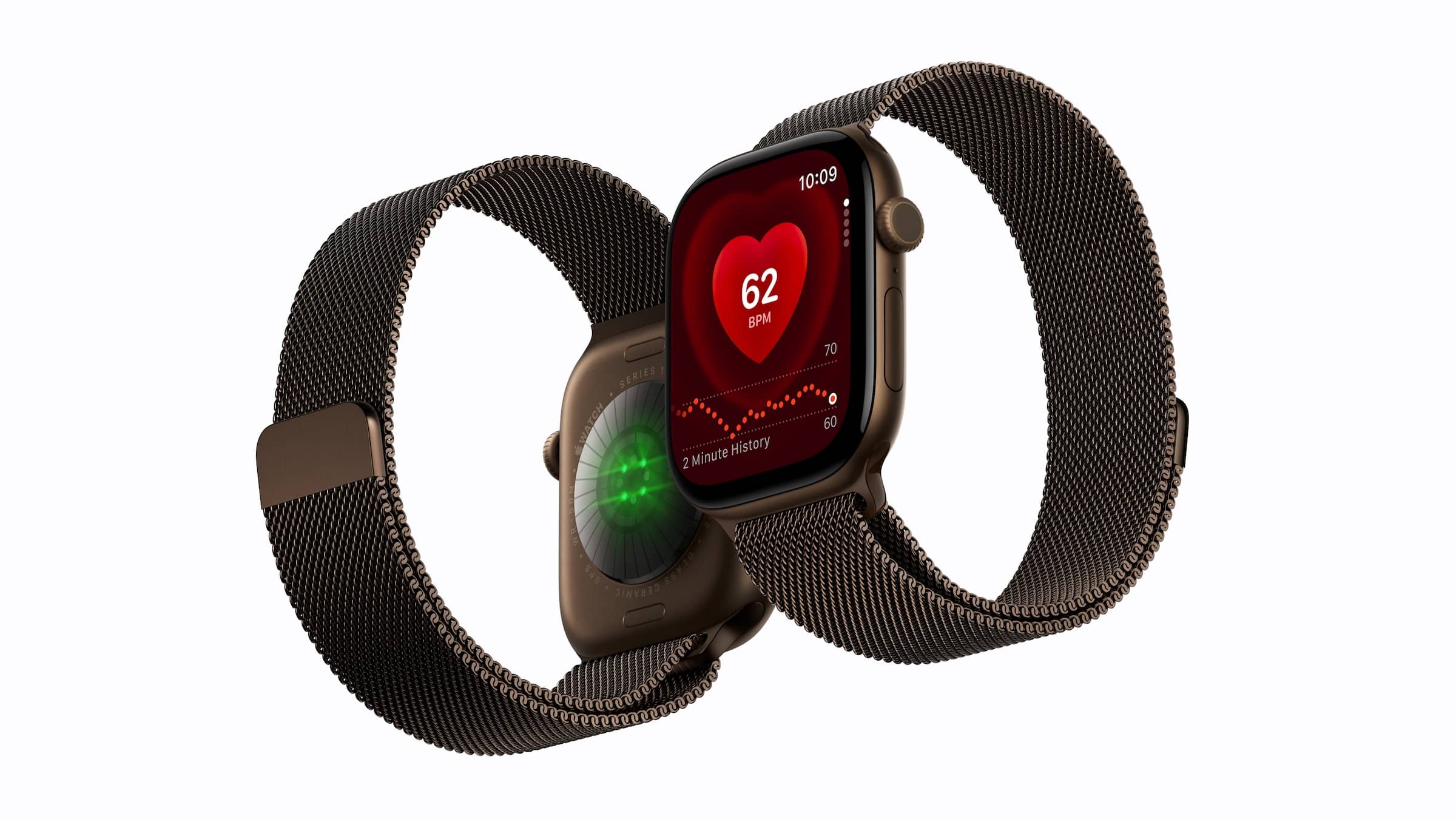
Apple Watch Series 12 gathers more health data and gives it a clearer purpose. We review the 46mm GPS + Cellular model in Dark Bronze aluminium with an Olive Sport Band.
Sunday’s exercise plans can look rather ambitious by Tuesday morning. A poor night’s sleep, a demanding workout and an ordinary working day have a way of renegotiating the schedule.
That is where a fitness watch earns its place. Recording yesterday’s effort is straightforward enough. Helping you decide how much to take on today is a more interesting challenge.
The watch on my wrist is the 46mm GPS + Cellular Series 12 in Dark Bronze aluminium with an Olive Sport Band. Its most interesting development is readiness: bringing activity, training load, vitals and sleep together, then giving that information a practical job.
There are already plenty of numbers competing for attention before breakfast. A clearer steer on what to do with them is welcome.
Readiness gives the measurements a purpose
The readiness score runs from 0 to 10, with four accompanying recommendations: Recover, Pace Yourself, Ready and Go For It.
The words matter as much as the number. A dashboard full of measurements leaves the interpretation to you; a recommendation makes the information easier to act on.
The score changes during the day as further information arrives, including a hard workout or changes in daytime vitals. You can also see which factors are influencing it.
That explanation is the valuable part. A disappointing score is easier to understand when you can see what contributed to it. It gives you something to consider alongside your plans and how you feel, without having to examine every measurement separately.
There is a little groundwork: Apple’s set-up guidance requires at least seven nights of sleep tracking before the first score appears. Readiness also remains guidance. A low score does not establish that you are ill, and a high one should never become an instruction to ignore feeling dreadful.
Heart-rate tracking gets a substantial upgrade
Behind readiness sits Apple’s new Health Sensing System, combining redesigned optical and electrical heart sensors with the S11 chip.
Series 12 takes background heart-rate readings every five seconds. Apple also specifies HRV measurements up to 24 times more frequently than Series 11. HRV, or heart-rate variability, describes variation in the intervals between heartbeats.
There are two HRV views: recovery HRV for shorter-term signals around stress and recovery, and overall HRV for a broader picture over time. Overnight vitals can compare recovery HRV with the wearer’s baseline, while daytime vitals extend the picture beyond sleep.
The useful development is the connection between those measurements and a clearer account of recovery, rather than a longer list of figures to admire.
There is published evidence behind Apple’s comparative accuracy claim. Its September 2026 study included 1,254 participants in the final paired analysis, comparing wearables against a Polar H10 ECG chest strap. Apple reports lower overall heart-rate measurement errors than the other devices tested across workout and daily-living protocols. That gives the claim a documented basis, within the devices and conditions studied.
The wider health and safety features include ECG, sleep tracking, sleep apnoea notifications, heart-health notifications, Fall Detection and Emergency SOS. watchOS 27 also adds perimenopause and menopause support within Cycle Tracking. On a cellular model such as this one, Workout Buddy can operate without an iPhone nearby, using a cellular connection.
Faster charging matters to overnight tracking
A watch built around recovery needs to be available when recovery happens. That makes charging part of the health story.
Apple’s technical specifications rate everyday battery life at up to 24 hours, with outdoor workout use extending to as much as 10 hours. Fifteen minutes of charging can provide up to 12 further hours of normal use.
For day-and-night wear, faster charging is a practical improvement. A top-up while getting ready is relatively easy to accommodate. Discovering an empty battery just as you want to track your sleep is less convenient.
The everyday endurance figure remains 24 hours, so charging is still part of the routine. Making that stop shorter matters when the watch’s most useful recovery features depend on wearing it to bed.
Audio Intelligence brings useful ideas, and a wait
Audio Intelligence gives the S11 chip another job. Sound Recognition can alert users to alarms, sirens, doorbells and a baby crying, with obvious accessibility value.
Two further features are scheduled for beta later in 2026. Live Rewind is designed to display the previous 15 seconds of conversation as text after a double press of the Digital Crown. Siri Recap will provide a high-level conversation summary for later reference.
There is a privacy question whenever a device on someone’s wrist processes a conversation involving other people. Apple’s explanation deserves to be included alongside the features.
Apple says raw audio is protected in a hardware-isolated Secure Exclave and deleted after processing. Live Rewind and Siri Recap also involve the paired iPhone, while Siri Recap uses Private Cloud Compute to generate its summary. Saved text snippets and summaries are end-to-end encrypted when synced through iCloud.
The features are opt-in, and Live Rewind will signal activation with an audible chime and a visible indication. The health and recovery functions remain the stronger reason to consider the watch today; those two conversation tools are still forthcoming.
Dark Bronze keeps things pleasantly restrained
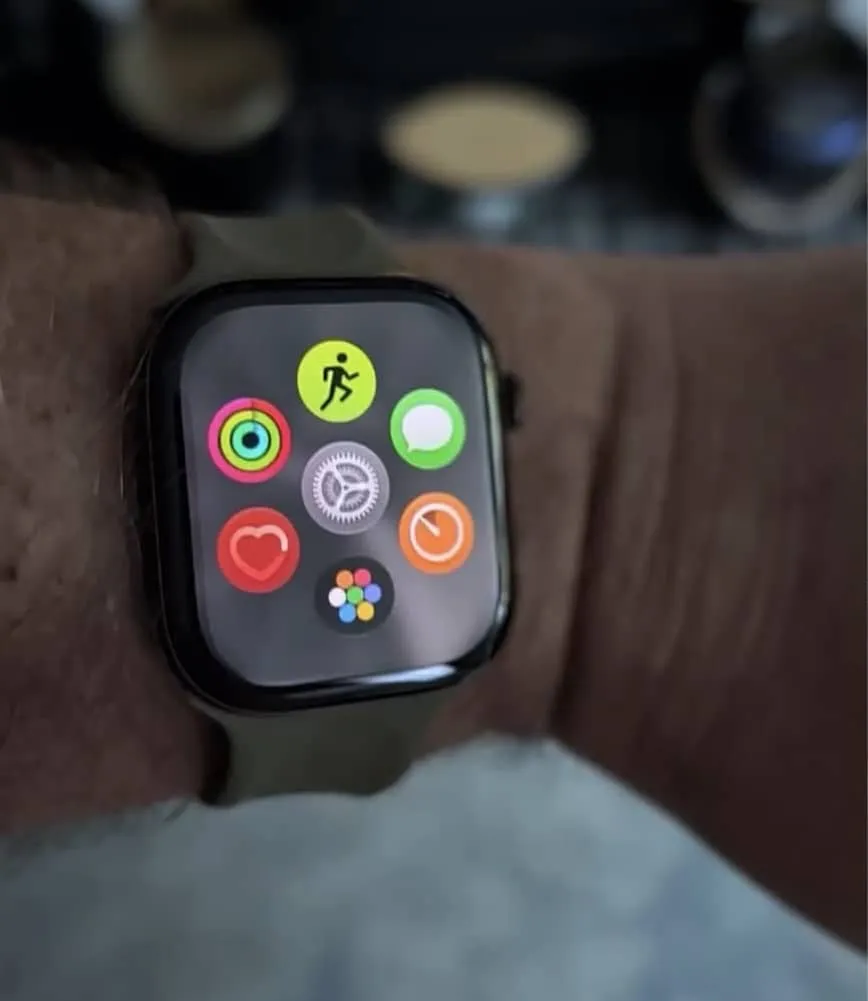
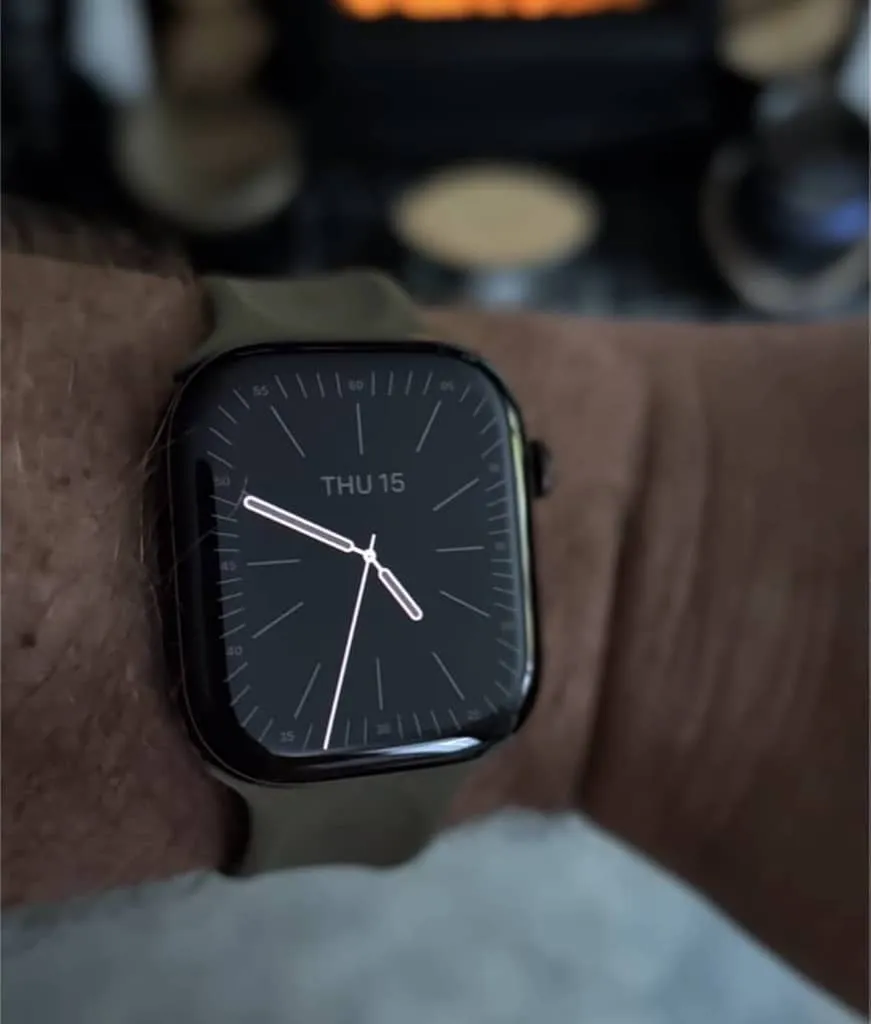
Our Dark Bronze aluminium and Olive Sport Band pairing keeps things understated. The finish avoids looking excessively technical, while the band suits the watch’s everyday fitness character. It is a combination that makes sense across work, exercise and sleep.
The aluminium version also gets Ceramic Shield 2. Apple rates it as 60 per cent tougher than the Ion-X glass on previous aluminium models, adding a durability improvement to the quieter visual changes.
The UK range starts at £369, with that entry price separate from the specification reviewed here.
For me, Series 12 makes its strongest case through readiness and the clearer presentation of recovery data. The extra sensing has a purpose: helping the wearer reach a more useful decision.
Sometimes that will be to train. Sometimes it will be to ease off. There is a certain appeal in a fitness watch that can find a useful sentence beyond telling you to keep going.