A sleep scientist explains how football fans can calm adrenaline and wind down properly before bed after late-night drama.
Knowing how to wind down properly in the evening before bed becomes a serious sporting skill when late-night World Cup knockout matches are sending UK fans’ heart rates skyward, which is why new HONOR research and advice from Dr Sophie Bostock, The Sleep Scientist, arrives at precisely the point where sofa panic meets the morning alarm.
There is, of course, the glamorous version of tournament football: flags, noise, late goals, heroic blocks, the camera finding one supporter who appears to be ageing in real time. Then there is the domestic aftermath. The television is off. The pundits have retreated to their touchscreens. The living room is quiet. And yet your body is still behaving as if it has been asked to mark a centre-forward at a corner.
For many fans, sleep after a tense late match is not simply about turning off the light. It is about persuading the nervous system that the game has actually ended.
Why Late-Night Football Plays Havoc With Sleep
New research commissioned by HONOR among 2,000 UK adults suggests plenty of fans may be paying for late-night World Cup drama the following morning.
Almost 70% of Brits are planning to stay up for late-night knockout matches. More than half expect to struggle to sleep afterwards, with the average Brit spending nearly 40 minutes lying awake after the final whistle. One in five may be unable to drop off for more than an hour.
That is a lot of people staring at the ceiling, replaying a missed chance, a disallowed goal or the national catastrophe of a full-back refusing to cross first time.
Dr. Sophie Bostock, The Sleep Scientist, said: “As a nation, we massively underestimate the physiological impact of watching a tense football match late at night. If you passionately care about the outcome, your body reacts in a similar way to being on the pitch – your adrenaline spikes, heart rate elevates, and you become fired up and ready for action.
If you try to fall asleep when you’re in this state, it will take a long time to fall asleep, and you’re more likely to wake up during the night.
“Without a deliberate cool-down, fans may simply lie in bed replaying the match rather than recovering from it – with real consequences for how they perform the next day. The good news is that with a few simple adjustments, you can fall asleep faster and stay asleep for longer. The Fan Cool Down is designed to promote your body’s natural recovery process and gives fans similar help players get from a post-match cool down.”
The key word is adrenaline. A tight match does not merely occupy the mind. It stirs the body. Heart rate rises. Alertness sharpens. Muscles brace. The sofa may not be Wembley, but the nervous system is not always skilled at spotting the difference.
The Bedtime Mistake Football Fans Keep Making
The obvious move after a late match is to go straight to bed. It looks sensible. It feels grown-up. It is often useless.
If your brain is still sorting through substitutions, stoppage time and the emotional vandalism of a missed sitter, bed simply becomes a quieter venue for the same argument. You have changed rooms, not states.
That is why a proper fan cool-down matters. Professional athletes do not stop abruptly after a match and assume recovery has happened by magic. Supporters have not covered 11 kilometres under floodlights, but two hours of clenching every muscle from eyebrow to ankle is not exactly restorative.
Roger Li, CEO of HONOR UK, said: “Fans really are giving it their all, almost as much as the players are this summer – tackling not just the normal drama of supporting their team in a major tournament; but also grappling with late nights and early mornings. Professional athletes have always known you have to cool down to switch off after a big game.
We’re delighted that Sophie has made that same philosophy available to fans across the country, with the HONOR Watch 6 to help track their body’s transition from match-day stress to sleep.”
The principle is straightforward. Do not ask your body to leap from penalty nerves to pillow in one heroic bound. Give it a runway.
Switch The Room From Match Mode To Sleep Mode
The first step is brutally simple: turn off the television.
Not mute it. Not leave it glowing in the corner while three people in a studio reopen the match like a public inquiry. Off.
Then change the atmosphere. Low-tempo music, classical tracks, lo-fi beats or nature sounds can all help signal that the evening has shifted down a gear. The exact soundtrack matters less than the message it sends: the spectacle is over, the argument can wait, and sleep is now allowed into the building.
This is not about transforming the sitting room into a wellness retreat with a £90 candle and a serious expression. It is about making the space feel less like a broadcast bunker and more like somewhere a human being might plausibly recover.
Stretch The Tension Out Of The Body
Prefer watching? Tap play for the full short without leaving the article.
A tense match can leave the body tight, especially after a long spell sitting down. Five minutes of gentle movement can help nudge the system away from alertness and towards rest.
A simple cat-cow stretch can loosen the back while encouraging slower breathing. Hugging one knee at a time into the chest may help release the hips. Bringing both knees in, lowering them gently to one side and turning the head the other way can ease the lower back.
Finish with legs up against the wall if you can manage it. It is not a dignified position, but dignity probably departed when you shouted tactical instructions at a television from six feet away.
The goal is not fitness. It is decompression. You are not training for the next round. You are telling your body that the danger has passed.
Slow The Breathing Before You Chase Sleep
Slow, controlled breathing is one of the most useful ways to calm the stress response before bed. Lie on your back, rest your hands comfortably, and breathe into the belly rather than the upper chest.
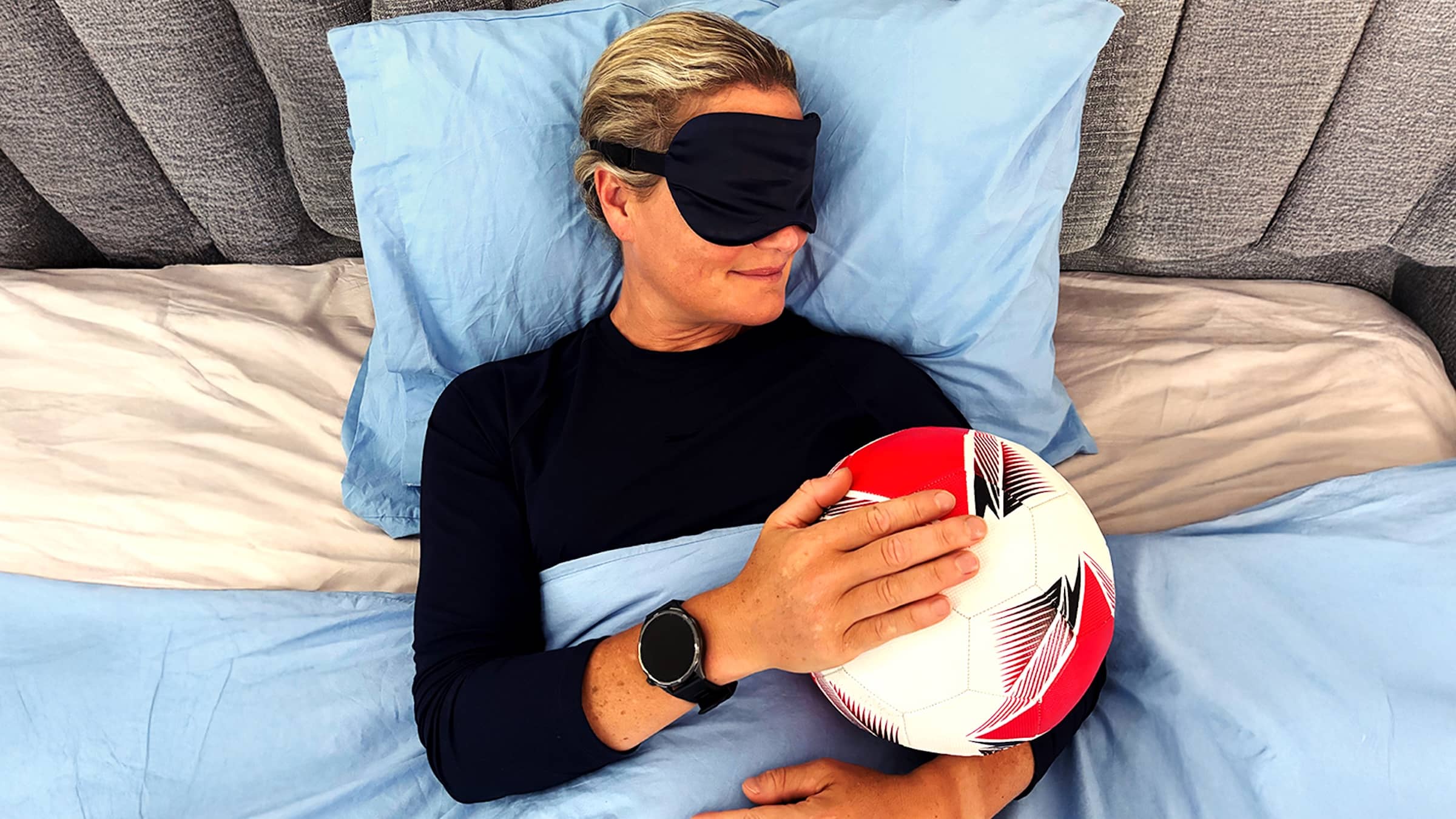
A few minutes of slower breathing can help bring the heart rate down and signal that the emergency is over. For those using a smartwatch, a breathing exercise or heart-rate feature can offer a useful prompt. The HONOR Watch 6 is positioned here not as a magic sleep button, because such a thing sadly remains unavailable to humanity, but as a way to track whether the body is moving from match stress towards rest.
The point is not to become obsessed with numbers. The point is awareness. Many fans will feel mentally ready for bed while their pulse is quietly behaving as though extra time has just begun.
Get The Match Out Of Your Head
If the mind is still spinning, write things down.
It sounds almost offensively simple, but that is the charm of it. A notebook gives the brain somewhere to put the noise: the chance that should have been buried, the work task waiting in the morning, the entirely reasonable suspicion that your team’s left-back has developed a personal objection to forward passes.
Once that is out, write down three things from the day you are genuinely grateful for. Ideally, not all football-related. Gratitude will not change the scoreline, but it can shift the brain away from threat, irritation and forensic analysis.
If sleep still refuses to arrive, try cognitive shuffling. Pick a random word and visualise an image for each letter. The aim is to move the brain out of focused problem-solving and into the looser, stranger mental territory that often comes before sleep.
It is hard to conduct a full tactical inquest while your mind is gently picturing a camel, a teapot and a lighthouse for no apparent reason.
Use Half-Time Like A Grown-Up
The cleverest way to wind down properly in the evening before bed is to begin before the match ends.
Half-time is a useful moment to prepare the landing. Dim the lights. Brush your teeth. Put on pyjamas. Clear away the small domestic irritations that become disproportionately offensive at 12.40am. None of this will make the second half less tense, but it will reduce the distance between the final whistle and bed.
A warm shower before the match may also help. Dr Bostock’s advice notes that a warm bath or shower at 40°C to 42.5°C, one to two hours before bedtime, can support sleep by encouraging a later drop in core body temperature.
Small movement breaks during the game can help too. Stand up occasionally. Try a few chair squats, calf raises or standing knee raises. There is no need to convert the lounge into a training facility. Just remind your body that it is not, despite mounting evidence, part of the furniture.
Caffeine Is Not A Recovery Plan
HONOR’s research found that more than one in three Brits have already booked or are planning to book time off around the summer’s late-night matches, rising to 45% of men. Of those unable to take a holiday, one in four plan to power through on extra caffeine.
One in ten are planning either to pull a sickie or block out fake meetings to catch up on sleep.
At that point, football has stopped being entertainment and become a form of workplace logistics.
Caffeine may get you through the morning, but it does not repay the sleep debt. Nor does staring at a spreadsheet while privately negotiating with your eyelids count as elite performance. A better evening routine may not have the drama of an extra-time winner, but it is considerably more useful at 7am.
The Final Whistle Is Not The End
The real lesson is that bedtime needs a buffer.
After late-night football, especially during major tournaments, the body needs help moving from emotion to recovery. That does not require an elaborate ritual, expensive kit or the solemn atmosphere of a spa brochure. It requires a handful of deliberate signals: softer sound, lower light, gentle movement, slower breathing and somewhere for the mind to empty its pockets.
Football will always do what football does. It will raise the pulse, ruin the plan and make sensible adults behave like village prophets in replica shirts.
But once the final whistle has gone, the next result is sleep. And that one, mercifully, is still partly in your hands.