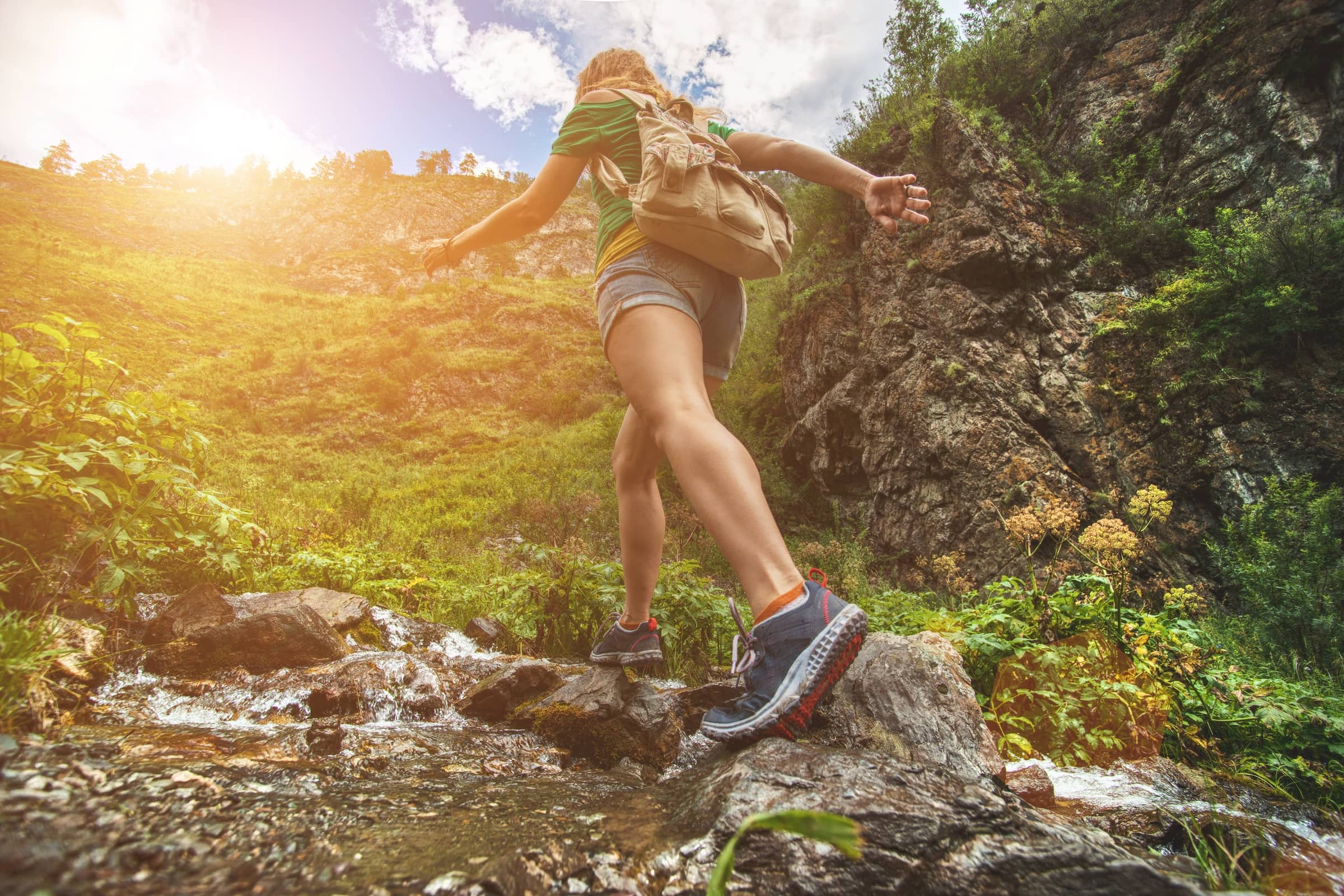
The Cuillin Ridge and Ring of Steall rank among the world’s toughest hikes, while Mount Kinabalu takes the global top spot.
The world’s toughest hiking routes are not simply long walks with grander scenery. According to PureGym’s Hiking Difficulty Index, Mount Kinabalu in Borneo is the most physically demanding bucket-list hike on the planet, while Scotland’s Cuillin Ridge Traverse and Ring of Steall have both forced their way into the global top 10.
That is an impressive result for Britain and a persuasive reason to check the weather, your equipment and your ego before setting off.
The research assessed more than 130 celebrated hikes, combining distance and elevation with less photogenic considerations such as gradient, altitude, wind, humidity and precipitation.
Scrambling was also included, which is only fair. Once hands become involved, a pleasant ramble has usually taken a firm turn towards administrative difficulty.
Each factor received a weighted score before being combined into a final difficulty rating out of 100. The higher the score, the more demanding the route.
How the world’s hardest hikes were ranked

Distance alone is a crude way to judge a hike. Ten flat kilometres beside a lake bear little resemblance to ten kilometres spent climbing through loose rock, exposed ridges and weather that appears to hold a personal grievance.
PureGym’s analysis considered:
- Distance in kilometres.
- Total elevation gain.
- Average gradient.
- Maximum altitude.
- The presence of scrambling.
- Average temperature.
- Wind speed.
- Humidity.
- Precipitation.
That broader approach helps explain why routes in Scotland can compete with considerably higher mountains overseas. The UK may lack Himalayan altitude, but it compensates with exposure, rapid weather changes, steep ground and an occasionally theatrical quantity of rain.
Mount Kinabalu takes the global top spot
|
Mount Kinabalu in Borneo was ranked the world’s most demanding bucket-list hike.
The 25-kilometre summit route climbs Southeast Asia’s tallest peak to 4,019 metres, moving from hot, humid rainforest into freezing alpine terrain. It is less a change of scenery than a complete renegotiation of the terms.
Every hiker requires a permit to enter the mountain. Many complete the route over two days, staying overnight before climbing to the summit for sunrise. A same-day attempt is possible, according to the study, although “possible” and “sensible for everyone” are not remotely the same thing.
The combination of altitude, distance, temperature change and sustained climbing pushed Mount Kinabalu to the head of the international ranking.
Cuillin Ridge is Britain’s hardest hiking challenge
|
The Cuillin Ridge Traverse on the Isle of Skye scored 55 out of 100, placing it first among UK routes and fifth in the global ranking.
It is widely regarded as Britain’s most difficult mountain journey. The route crosses jagged peaks and multiple Munros, with substantial exposure and sections requiring genuine scrambling ability. Depending on the weather and the technical experience of those attempting it, completion can take between 12 and 30 hours.
That enormous variation tells its own story. This is not a route with a dependable finishing time and a conveniently placed café at the end. Conditions can transform progress, visibility and risk.
The scenery is suitably dramatic. The ridge sits among the remains of an ancient volcano active around 60 million years ago. Its dark, broken rock produces one of Britain’s most distinctive mountain landscapes — magnificent to look at and rather less accommodating once you are standing on it.
Technical competence, route knowledge and sound judgement are essential. The Cuillin rewards preparation. It has little interest in optimism unsupported by evidence.
Ring of Steall joins the global top 10
Scotland’s Ring of Steall was ranked ninth in the world and second among the UK’s most physically demanding hikes.
The route is notoriously strenuous, takes approximately nine to 12 hours and involves exposed scrambling. It requires far more than a reasonable cardiovascular engine. Balance, confidence on steep ground and the ability to make sensible decisions while tired all matter.
Ben Nevis completed the UK’s top three with a difficulty score of 50.2. Britain’s highest mountain attracts a broad range of walkers, but familiarity should not be confused with ease. The study also notes that its name translates as “venomous or malicious mountain”, which is a fairly direct piece of local customer guidance.
Together, the Cuillin Ridge, Ring of Steall and Ben Nevis demonstrate why Scottish mountain days resist easy classification. Elevation is only part of the test. Wind, rain, exposure, navigation and rapidly changing visibility can make modest numbers on a map feel considerably larger underfoot.
Britain’s easiest bucket-list hike is no consolation prize
Difficulty is not the only measure of a worthwhile day outdoors. For hikers without technical experience, the UK also offers memorable routes that provide a sense of occasion without demanding a mountaineering résumé.
The Buttermere Circular in the Lake District was ranked Britain’s easiest bucket-list hike, scoring 18.5 out of 100.
The largely flat, seven-kilometre loop circles one of England’s most photographed lakes and includes views towards Haystacks, the favourite fell of guidebook writer Alfred Wainwright. It is an accessible route, but hardly an uninspiring one. Nature does not award extra points for discomfort.
Nine Standards Rigg ranked as the second most achievable UK hike with a score of 21.6. The route is known for the nine large dry-stone cairns standing on the historic boundary between Westmorland and Yorkshire.
The Jurassic Coast and Kimmeridge Circular in Dorset placed third at 24.4. Its steep sections require moderate fitness, but the coastal landscape and fossil-rich surroundings provide ample compensation.
Horseshoe Bend is the world’s easiest bucket-list hike
At the opposite end of the global ranking, Arizona’s Horseshoe Bend Trail was named the easiest bucket-list route.
The short walk leads to one of the most recognisable views in the American Southwest. Its orange-red landscape is coloured by hematite, a mineral also found on Mars.
It is proof that a memorable trail does not need to occupy the entire day, destroy a pair of quadriceps or cause a solemn conversation with one’s socks.
The distinction between easy and risk-free still matters, particularly in hot or exposed environments. Route length is only one variable. Temperature, hydration and local conditions should always shape preparation.
Hiking’s popularity brings a safety problem
The study reports that hiking interest has grown sharply. TikTok contains 8.6 million videos related to the activity, while worldwide searches for “best scenic hikes near me” increased by 300% over the preceding 12 months.
More people discovering the outdoors is broadly good news. More people treating a viral video as a complete route briefing is not.
Mountain Rescue England and Wales recorded a 24% increase in rescues between 2019 and 2024. Experts have linked part of that rise to routes becoming popular on social media and to reliance on mobile navigation applications that may become unreliable in remote terrain.
A mountain does not become more manageable because it has performed well online. Nor does a saved screenshot constitute a navigation strategy.
Phil Carpenter, Personal Trainer and Assistant Gym Manager at PureGym Portsmouth North Harbour, said: “Exploring the great outdoors is one of the best, free ways to get more movement into our daily lives, and the rise in interest in hiking is certainly one to be celebrated. It’s incredibly important, however, to be mindful of our own abilities and to plan carefully when heading off on a hike.
“Adequate preparation – in the form of physical training, research of conditions on the day, appropriate gear, and a reliable route finder – is essential. Never overestimate your abilities and always be prepared to turn back if something doesn’t feel right.”
That final point deserves particular attention. Turning back is not a failed summit attempt. It is often evidence that somebody has correctly understood the assignment.
How to train for a demanding hike
PureGym recommends building an aerobic base for at least six weeks before attempting a major route.
Begin with one or two shorter hikes each week, lasting between 30 and 60 minutes. Gradually progress towards outings of two to four hours across varied terrain. The objective is not merely to accumulate distance but to condition the body to keep working over uneven ground.
Include at least one high-intensity cardiovascular session each week. Hill sprints or fast incline walking can develop the ability to handle steeper sections.
That should be balanced with a longer, lower-intensity session lasting between 60 and 90 minutes. A treadmill at a low incline, stair-climbing machine or cross-trainer can be useful when outdoor training is impractical.
Two full-body strength sessions each week should concentrate on single-leg strength, stability and upper-body endurance. Suggested exercises include:
- Bulgarian split squats.
- Trap-bar deadlifts.
- Walking lunges.
- Pull-ups.
Two shorter core sessions can improve stability under load. Dead bugs, farmer’s carries, Russian twists and Pallof presses all train the trunk to resist unwanted movement — particularly useful when carrying a pack across broken terrain.
At least once each week, train outside wearing the boots, socks and backpack intended for the trip. Practise walking both uphill and downhill. Descending places a different strain on the legs, and tired knees have a cruel sense of timing.
How to manage effort on the trail
Equipment should be tested before the serious walking begins. New boots worn for the first time on day one are less a footwear choice than an advance booking for blisters.
Use a simple layering system:
- A moisture-wicking base layer.
- An insulating middle layer.
- A waterproof outer layer.
Hydrate steadily rather than waiting until thirst becomes urgent. The guidance recommends sipping every 15 to 20 minutes and aiming for around 500 millilitres per hour during moderate effort.
Eat small amounts regularly. Slow-release carbohydrates can support prolonged activity, while trail mix or energy gels can provide faster fuel when required.
Take a break every 45 to 60 minutes to remove the pack, eat, drink and check the route. A navigation check made early is generally less tiring than an unplanned additional mountain.
Most importantly, begin at a pace that still allows conversation. Starting too quickly is an excellent way to feel heroic for 20 minutes and deeply philosophical for the following six hours.
A bucket list should not become a bravado list
The appeal of these routes is easy to understand. Mount Kinabalu offers a journey through radically changing climates. The Cuillin Ridge delivers one of Britain’s great mountain skylines. Ring of Steall combines scale, exposure and sustained effort. Even the gentler routes at Buttermere and Horseshoe Bend offer landscapes that linger long after the boots have dried.
The rankings are useful because they place beauty and difficulty in the same conversation. They also underline that reputation, popularity and dramatic photographs do not tell hikers everything they need to know.
Choose a route that matches your experience. Train for the demands it will place on you. Study the conditions, carry reliable navigation and retain enough good sense to retreat.
The finest hiking story is not always the one that ends on the summit. It is the one whose author gets home to tell it.
The full Hiking Difficulty Index and global results are available from PureGym.