Somatic yoga may help you notice and ease the physical signs of stress. Lisa Woods shares three slow, body-focused movements to try.
Stress is often treated as a problem of the mind, but the body can register it first. Somatic yoga offers a slower way to notice and release physical tension.
A clenched jaw. A headache that refuses to move on. Shoulders creeping towards the ears. Stress does not always announce itself as worry. Sometimes, the body gets there first.
That may help explain why people spend so much time searching for answers. More than 1.8 million Google searches were made by Brits over the past year about whether symptoms including headaches, chest pain and muscle tension could be linked to underlying health issues.
New analysis from Yoga-Go suggests that physical techniques remain underrepresented in stress-management advice from professional health institutions. Just 13% of recommendations focused on the body, despite the way stress can show up physically.
For Lisa Woods, a yoga teacher and integrative wellness practitioner with Yoga-Go, that makes body awareness an important part of the conversation.
Why stress can feel physical
“Somatic yoga focuses on your internal experience of the movement, and your body’s ability to sense what’s happening to it in that moment,” Woods says.
“Where other yoga and fitness practices tap into flexibility, intensity, or performance, somatic yoga uses slow, mindful movements to encourage greater awareness of physical sensations. Rather than pushing the body into positions, it invites people to notice areas of tension and explore movement in a way that feels supportive.”
That distinction matters. There is no requirement to stretch further, hold a pose for longer or turn the session into a test of flexibility. The emphasis is on noticing what is happening and moving with enough control to stay connected to it.
The following movements are designed around that principle. They should feel slow and manageable rather than forced.
Three somatic yoga movements to try
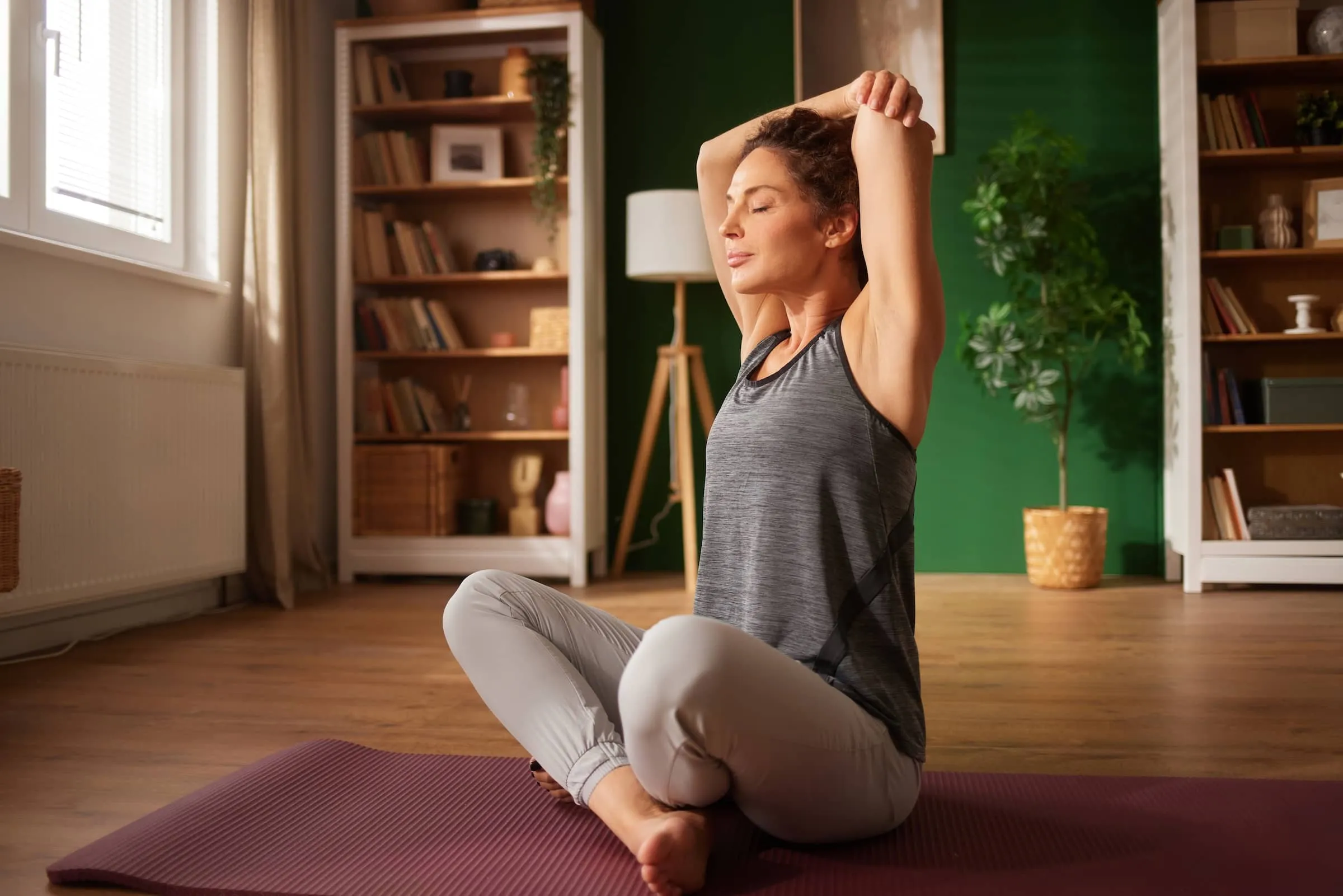
1. Seated torso circles
“This gentle movement helps release tension in the lower back, hips, and shoulders while improving spinal mobility. As a sensory-focused practice, it also helps connect your breathing to slow rhythmic circular movements.”
How to do it:
- Sit comfortably with your legs crossed.
- Place your hands on your thighs or knees and close your eyes.
- Begin drawing slow circles with your torso.
- As you inhale, sweep your chest forwards, allowing it to open while gently dropping your belly.
- As you exhale, round your spine, drawing your belly button back and lowering your chin towards your chest.
The pace is the point here. A slower circle gives you more opportunity to notice where the movement feels easy, where it feels restricted and whether your breathing changes as you move.
2. Cactus arms hips flow
“This combination of movements helps release tension in the lower back, engage the glutes, and open the chest. The slow, conscious movement also encourages relaxation by bringing awareness back to the body.”
How to do it:
- Lie on your back with your knees bent and your feet flat on the floor, about hip-distance apart.
- Bring your arms out to the sides at shoulder height and bend your elbows to create a cactus shape.
- Take a deep inhale.
- As you exhale, press firmly into your heels, gently engage your core, and lift your hips and lower back from the floor.
- Hold the pose as you take a deep breath in, then slowly roll your spine back down as you exhale.
This is less about lifting as high as possible than staying aware of the movement through the spine and hips. The breath provides a steady rhythm, while the controlled return to the floor keeps the exercise grounded.
3. Cobra pose
“Cobra pose is designed to retrain the nervous system through slow, mindful movements, rather than forcing your body into uncomfortable positions.”
How to do it:
- Lie face down with your forehead resting on the mat, your legs extended and the tops of your feet pressing down.
- Place your hands flat on the floor beneath your shoulders, keeping your elbows close to your ribcage.
- As you inhale, engage your back and core to lift your head and chest from the floor.
- Hold for a few seconds, then slowly lower yourself back down as you exhale.
The movement should remain gentle. A smaller lift performed with attention is more consistent with somatic practice than pushing into a position that feels uncomfortable.
The value of noticing tension earlier
Stress can be difficult to manage when it stays abstract. It becomes more tangible when you notice that your jaw is clenched, your shoulders are raised or your breathing has become shallow.
That does not mean every physical symptom has a single explanation. It does suggest that paying attention to the body may provide useful information about how stress is affecting you.
“Stress may start in the mind, but it rarely stays there,” Woods says. “It can show up in the chest, jaw and shoulders before we’ve even noticed why. Recognising that connection is the first step, and practices that support both the body and mind may be the best way to manage it.”
Somatic yoga does not ask you to overpower tension. It asks you to notice it clearly enough to meet it with a little more patience.