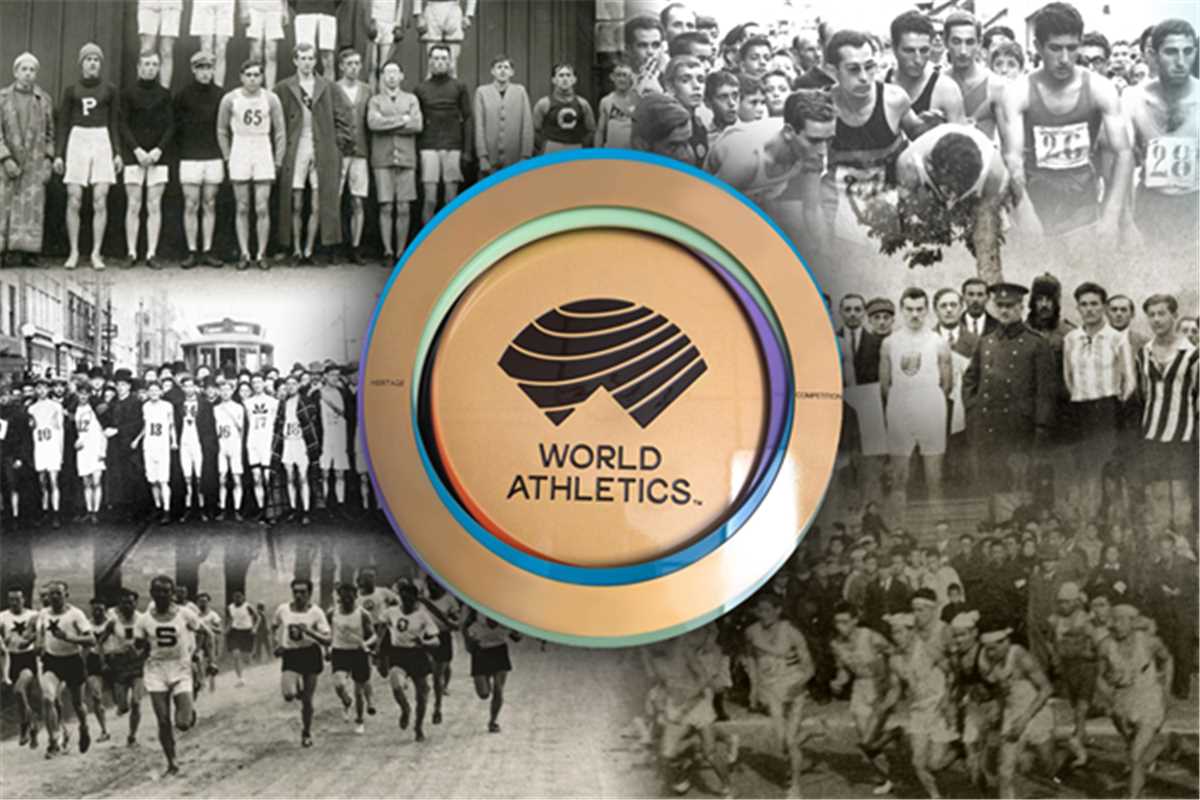
Six of the world’s oldest footraces have been awarded the World Athletics Heritage Plaque for their historic impact.
The World Athletics Heritage Plaque has been awarded to six of the oldest footraces on the planet, a tidy little nod to the sort of events that were lacing up and setting off long before running became a mass-participation industry with carbon plates, gels and watches bossier than a headmaster.
With two weeks to go until the World Athletics Half Marathon Championships Gdynia 2020 on 17 October, World Athletics has added six historic road races to its heritage roll call. Between them, they form a marvellous old map of endurance: Hamilton, Buffalo, Prague, Sicily, Kosice and Fukuoka. Not so much a calendar as a family tree with blisters.
Six Road Races Join Athletics’ Heritage List
The World Athletics Heritage Plaque is a location-based recognition, awarded for “an outstanding contribution to the worldwide history and development of the sport of track and field athletics and of out-of-stadia athletics disciplines such as cross country, mountain, road, trail and ultra-running, and race walking”.
This latest group joins 54 previous recipients of the plaque, an honour inaugurated on 2 December 2018. The new additions are not modern pop-up events with inflatable arches and a sponsored smoothie station. They are old bones. Proper institutions. Races with history in the kerbs.
The six recognised events are:
- Around the Bay Road Race, Hamilton, Ontario, Canada — founded 1894
- YMCA Turkey Trot, Buffalo, New York, USA — founded 1896
- Běchovice 10k, Prague, Czech Republic — founded 1897
- Giro Podistico di Castelbuono, Castelbuono, Sicily, Italy — founded 1912
- Kosice Peace Marathon, Kosice, Slovakia — founded 1924
- Fukuoka International Open Marathon Championship, Fukuoka, Japan — founded 1947
That is a formidable little club. Entry requirements appear to include endurance, stubbornness and the ability to survive several generations of people declaring that sport has changed forever.
Sebastian Coe On The Value Of Running History
World Athletics President Sebastian Coe framed the announcement as a celebration not only of champions, but of everyone who has kept these races alive.
“These six footraces represent some of the oldest sports events, let alone running races, in the world,” said World Athletics President Sebastian Coe.
“They join others such as the marathons in Athens, Boston and Seoul, the Saint Silvester São Paulo, and Hakone Ekiden which we recognised last year.
“Together these races ooze athletics history. They represent what running is truly about: the record-breaking feats of the many great champions and the personal triumphs of the countless recreational and charity runners.
We should also not forget the dedication and hard work of the officials and volunteers of the local clubs and organising committees which have kept these historic events on the roads for decades,” concluded Coe.
There is the point, really. A race is never just the people at the front, all elbows, singlets and impossible lungs. It is also the marshal in a waterproof, the club official with a clipboard, the local committee still arguing about road closures, and the charity runner discovering at mile nine that enthusiasm is not quite the same as preparation.
Around The Bay And Buffalo’s Turkey Trot Lead The North American Story
The Around the Bay Road Race in Hamilton, Ontario, first raced in 1894, carries the distinction of being the oldest long-distance race in North America. That alone gives it a handsome claim on athletics history, though its record comes with a small asterisk: unlike Buffalo’s YMCA Turkey Trot, founded two years later in 1896, it has not been continually held.
The YMCA Turkey Trot has that rare quality in sport: continuity. Plenty of races are old. Fewer can say they have kept turning up year after year, like a hardy uncle in racing flats who refuses to acknowledge winter.
Together, these North American fixtures show why the World Athletics Heritage Plaque matters. It does not simply reward spectacle. It recognises roots.
Prague, Sicily And The Beauty Of Races With A Sense Of Place
Prague’s Běchovice 10k, first run in 1897, is another footrace to have been held every year since its inauguration. That sort of longevity is easy to type and rather harder to comprehend. Empires wobble, borders shift, shoe companies rise and fall, and still the race goes on.
Then there is the Giro Podistico di Castelbuono, first staged in 1912 and annually run around a loop course in a 14th-century Sicilian town. You do not need to over-polish that image. A historic race circling an old Sicilian town has enough romance in it already; add too much prose and you risk putting a bow tie on a racehorse.
In an era when many events fight for attention with noise, novelty and a bigger medal than last year, these races have something more durable: place. They belong to their roads.
Kosice And Fukuoka: Classic Marathons Before The Mass Running Boom
The Kosice Peace Marathon, founded in 1924, is Europe’s oldest marathon. That is a serious line in any running curriculum, and its inclusion alongside the Fukuoka International Open Marathon Championship underlines the global spread of classic road racing before the modern participation boom turned marathon weekends into civic festivals.
Fukuoka, first celebrated in 1947, sits among those original classic marathons established before mass running became the vast, democratic movement we know now. Before charity places, social feeds and finish-line selfies, there were races built on competition, ambition and the simple, unreasonable act of covering a long distance faster than the next person.
The World Athletics Heritage Plaque gives those events a formal place in the sport’s memory. More importantly, it reminds the rest of us that running history is not stored only in stadiums or record books. It lives on public roads, in town squares, beside barriers, under grey skies, and in the legs of people who keep coming back.
Why This Recognition Still Carries Weight
Sport has an unfortunate habit of worshipping the new. New formats, new shoes, new broadcasts, new language for old pain. Road running, though, has always had an argument with time. It measures it, fights it, celebrates it, and occasionally ignores it completely.
That is why these six races feel worth more than a ceremonial plaque. They connect the elite and the everyday, the champion and the club runner, the city and the start line. They are proof that a good race can become part of a place’s identity, provided enough people care enough to keep painting the lines and pinning on numbers.
Information about all recipients of the World Athletics Heritage Plaque can be found through World Athletics’ heritage plaque listings.
For now, six more races have been given their place on the wall. Or, more appropriately, their place on the road.