
Nike Pegasus Plus 2 adds visible Air Zoom and ZoomX foam, promising a faster, smoother daily trainer without a carbon plate.
The Nike Pegasus Plus 2 arrives with a rather conspicuous piece of engineering under its forefoot. Nike has added an exposed, curved Air Zoom unit, paired it with a ZoomX foam midsole and set about giving its long-running Pegasus family more of the sensation associated with race-day footwear. The intriguing part is what Nike has resisted adding: there is no plate.
That matters because the running-shoe industry has spent several years discovering increasingly elaborate ways of putting things between a runner and the pavement. Nike’s approach here is slightly different. The Pegasus Plus 2 is meant to feel fast without becoming a disguised racing shoe.
Air Zoom becomes the main event
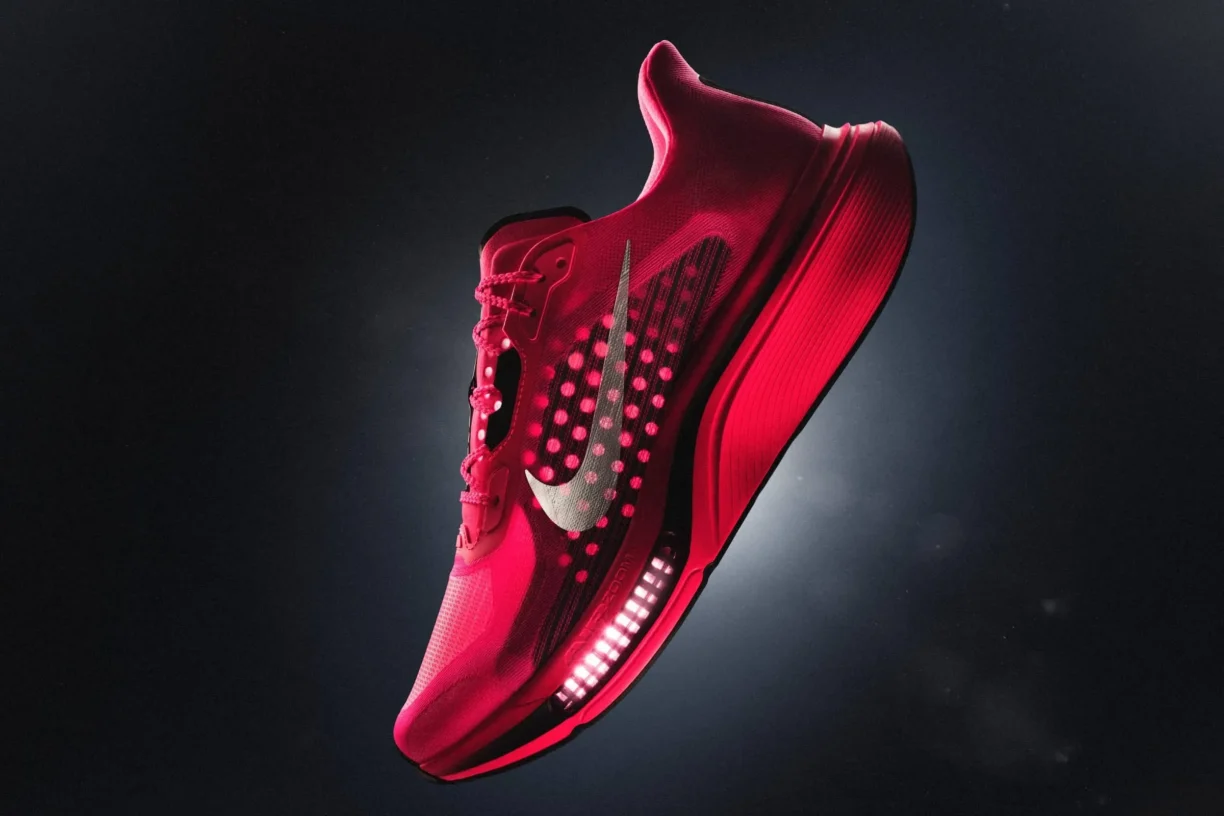
The visible Air Zoom unit is the defining change.
Positioned in the forefoot and curved through the shoe, it is designed to ease the transition from one stride into the next. Internal tensile fibres behave like preloaded springs, according to Nike, working alongside the ZoomX foam to return more of the energy being put into the shoe.
Nike says the new system delivers at least 18 per cent more energy return than the inaugural Pegasus Plus.
It is an eye-catching number, although it remains Nike’s own performance claim rather than an independently verified comparison supplied with the launch. Still, it tells us where the engineering effort has gone. This is not merely a new upper draped over familiar machinery.
Race-shoe influence, without turning it into a race shoe
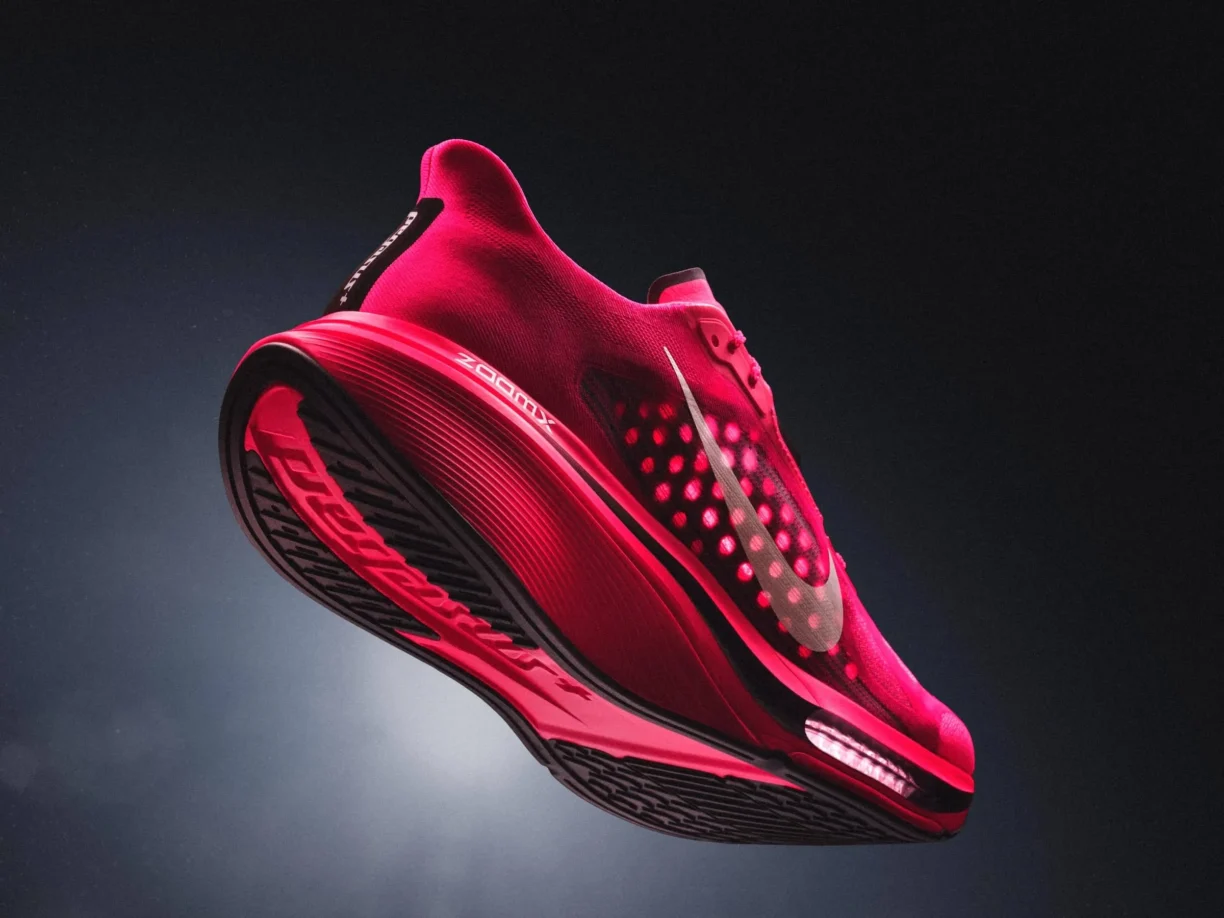
Nike openly says the Pegasus Plus 2 takes inspiration from the feel of its road-racing footwear.
The distinction is important. Rather than installing a plate, the company is relying on the interaction between Air Zoom and ZoomX to create the smoother, more propulsive sensation associated with faster shoes.
Deepa Ramprasad, senior director of Nike Running footwear, puts the intention plainly: “Our goal was simple: speed without sacrifice,” says Deepa Ramprasad, senior director, Nike Running footwear. “We spent years obsessing every ingredient in this system.
Nothing more and nothing less than what a runner needs to feel fast, comfortable and confident to push their pace. This is a revolution for the Pegasus franchise, bringing inspiration from race-day sensation into a daily trainer.”
“Revolution” may be setting the ceremonial bunting out early, but the change in construction is significant for Pegasus.
Nike is positioning the shoe across daily mileage, longer runs and faster sessions rather than restricting it to one narrow purpose.
Nike has also changed the shape around the foot
The most visible technology will receive the photographs. The fit changes may prove just as important.
The Pegasus Plus 2 uses Nike’s MR10 2.0 last, first introduced in the Pegasus 42. It is designed to provide more room through the forefoot and toe box, while a midfoot system is intended to keep the foot secure without making the shoe feel cumbersome.
Materials around the ankle have also been upgraded, while reflective elements and a modern version of Nike’s waffle outsole complete the design. Flex zones in the outsole are intended to preserve a more connected feeling with the road.
None of that is as easily photographed as a transparent air unit, which is the eternal problem faced by sensible improvements.
More than 30 elite athletes were involved in testing
Nike says the Pegasus Plus 2 was tested by more than 30 elite athletes drawn from different running disciplines, including marathon and track athletes.
Its Sport Research Lab also evaluated runner movement and feedback during development. Nike says the pressure inside the Air Zoom unit was precisely tuned and that its construction changes across sizes in an effort to provide consistent energy return.
Among those involved was Nike athlete Cameron Myers, who described the intended ride in rather fewer words than the engineers:
“I love a run where I’m locked in but still enjoying every step,” says Cameron Myers, Nike athlete and world leader in the 1,500 meter. “That’s the feeling I get from this shoe. Easy, fast, smooth. It just flows.”
Where the Pegasus Plus 2 fits in Nike’s running line-up
Pegasus remains Nike’s responsive-cushioning family within its road-running range. Vomero occupies the maximum-cushioning end of the line-up, while Structure is built around greater support and stability.
The Plus 2 pushes Pegasus further towards pace.
That makes the decision to avoid a plate particularly revealing. Nike is clearly chasing some of the character of its faster racing footwear, but it also wants the shoe to retain enough breadth to function as an everyday option.
The Nike Pegasus Plus 2 will be available in late August through selected retail partners and nike.com.
The important question after launch will be whether runners feel the benefit Nike says it has engineered into that visible Air Zoom system.
For now, at least, the Pegasus Plus 2 has achieved something increasingly rare in modern running footwear: it has added more technology without apparently deciding that absolutely everything must go in the shoe.