MLB pitcher Tyson Ross on golf, recovery, resilience, fatherhood and how life after baseball reshaped his approach to performance.
Former MLB All-Star Tyson Ross has discovered that golf offers many of the same physical and psychological challenges as pitching — only with rather more time to contemplate the mistakes.
He talks about recovery, resilience, fatherhood, community sport and learning to enjoy being a beginner again.
MLB Pitcher Tyson Ross spent years trying to repeat an explosive, technically demanding movement while keeping his emotions under control when it went wrong. These days he does much the same thing with a golf club, except nobody is paying him to locate the fairway.
For an athlete who reached Major League Baseball, earned a National League All-Star selection and struck out more than 800 batters during a 10-year MLB career, becoming a fairly ordinary golfer has proved unexpectedly useful.
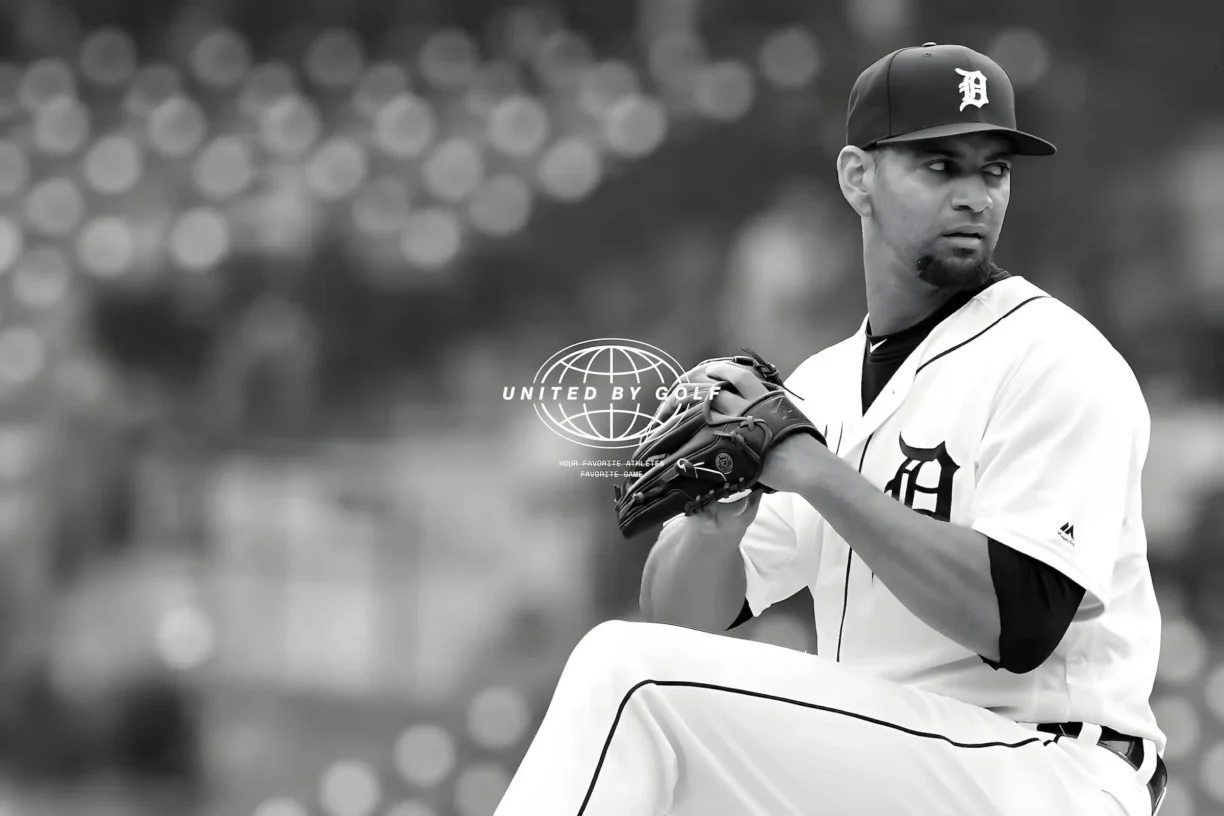
Golf returned to Ross’s life during one of the hardest periods of his baseball career. After undergoing surgery for thoracic outlet syndrome in 2016, including rib removal, he found himself rebuilding physically while confronting a far less predictable professional future.
His solution was not another training drill. It was to take up something at which he was considerably less accomplished.
I started golfing as a kid. My dad’s two loves were coaching me and my brother in baseball and playing golf. So he got me out on the course early.
I wasn’t patient. I played until I was about 13, and then kind of stepped away from the game and just focused on playing baseball for a long time. And I came back in 2017. I was coming off a rehab year – just had a major surgery.
My career kind of fell off, and I decided to pick up golf figuring I needed to suck at something other than baseball right now.
And that’s when I kind of fell in love with it. It was the camaraderie of getting out there with some friends, the constant challenge of trying to improve. It reminded me a lot of pitching, except I didn’t have a lifetime of experience, and I was basically starting at zero.
There is something unusually healthy in that admission.
Professional athletes build their lives around measurable competence. Their bodies are analysed, their performances recorded and their mistakes replayed. Starting again at zero can be liberating.
For Ross, golf became both recreation and another laboratory for understanding performance.
Why golf feels familiar to a Major League pitcher
Physically, the connection is obvious. Baseball pitching and the golf swing both rely on sequencing, rotation, force transfer and precise timing.
But Ross is more interested in what happens between the ears.
So many things. Baseball is a rotational sport, and so is golf. This ability to have some hand-eye coordination from my youth translates to the game, but the mental side of the game is something that I really enjoy. And that’s the part of baseball that I really loved – the ability to try and repeat your best effort over and over again.
When you do something bad, how quickly can you bounce back from your mistake? Pitching and golf are really similar in those ways, and that’s something that I really enjoy. I wish I was better at it, but it makes me appreciate the game, just because even though I shank a shot, I can still recover. It’s not how good my best shot is, but how bad my worst ones are that determines exactly the day on the course.
That last observation could comfortably live in a sports psychology textbook.
Elite performance is rarely determined by how impressive an athlete looks when everything works. The separator is often how little damage follows when it does not.
Golf provides the lesson mercilessly. One poor shot is inconvenient. Allowing frustration to turn it into four poor shots becomes expensive.
Ross understands the distinction because pitching demanded the same discipline. A missed location could not be retrieved. The next pitch still required total commitment.
The strike zone still wins
There are, however, limits to athletic crossover.
Ask Ross whether he would rather locate a baseball or a golf ball and the answer arrives without much soul-searching.
Strike zone. And a lot of times the batter helps bail me out and chase something. But getting off the tee is definitely the bane of my existence in golf right now, and it’s hard to slow down when you’re big and strong and you know you can hit it far, but it’s more about placement and distance.
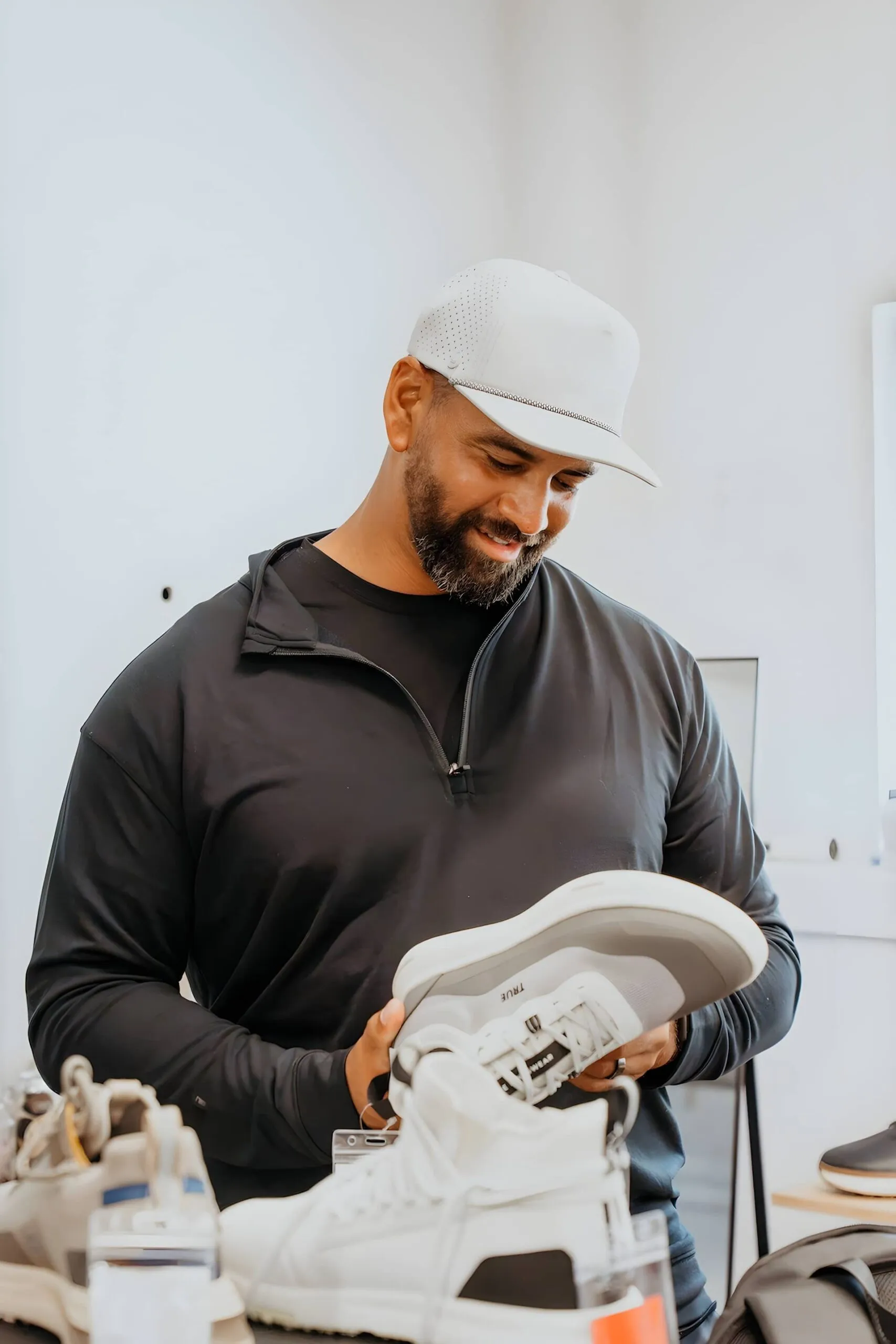
At 6ft 6in and 280lb during the period described in the interview, Ross has rarely suffered from a shortage of horsepower.
Golf presents the more irritating task of persuading powerful athletes not to use all of it at once.
That conflict between capacity and control is familiar across sport. Producing force is valuable; producing the correct amount of force, in sequence, while remaining balanced is rather more useful.
Watching tour professionals has sharpened Ross’s appreciation of that difference.
I have such a deep appreciation for how easy they make it look. The elite of the league, whether you’re watching the NBA or baseball up close or golf on TV, their misses are so minimal.
And even if they do miss, they’re able to have a safe miss. And so I think watching some of the times you hear things miked up in little clips, and I really appreciate their process of how they approach a shot, what they’re looking at, how they determine what they’re trying to do, and all the factors that go into it. And then to see them execute.
Whereas I get a bad read on a rangefinder and just take a hack with my 7-iron. I know how big the gap is between how they’re playing the game and what I’m doing. But it’s pretty cool to see the pros do it, and it’s amazing.
The humour disguises a useful insight. Experts do not simply hit better shots. They manage risk better.
Recovery became part of Tyson Ross’s education
Ross grew up in a medical household in California. His father is a paediatrician, his mother worked as an emergency-room nurse and his sister later became a paediatric doctor.
He initially imagined sport and medicine might become intertwined in his own career.
I loved sports growing up. And obviously our home was a big medical household, so I figured I would blend in too. I was interested in sports medicine through high school. And I took the basic sports medicine class we had at Bishop O’Dowd High School.
And then as my career went on, my natural curiosity allowed me to kind of look into different training modalities and working with high-level physical therapists to try and be physically prepared and recovered to play my best.
So I think having that medical background at home allowed me to see the game differently and really invest in my body along the way. But my sister followed my parents’ footsteps. She’s a pediatric doctor. I don’t think it’s genetic; I think she just worked incredibly hard.
His own career eventually made recovery less an intellectual interest than a professional necessity.
After establishing himself with the San Diego Padres, Ross produced his All-Star season in 2014, recording a 2.81 ERA and 195 strikeouts across 195⅔ innings. The following year he made 33 starts and struck out a career-high 212 batters.
Then surgery intervened.
Ross later returned to pitch for Texas, San Diego again, St Louis and Detroit before finishing his MLB career with a 44–70 record, 4.04 ERA and 816 strikeouts.
His post-playing career has continued to revolve around athlete development. He completed his American Studies degree at UC Berkeley and moved into player-development work with the Los Angeles Dodgers.
The fascination with how athletes prepare, recover and cope with pressure never really disappeared. It simply changed job description.
From elite sport to community health
Ross has also pushed that experience back towards the communities where his sporting life began.
Through Loyal to My Soil, the non-profit he founded during the pandemic period, he has helped provide free baseball and softball opportunities for young people in underserved Bay Area communities.
The motivation is rooted in what Ross remembers from growing up around youth baseball in Oakland: parents coaching, older children umpiring, informal games developing alongside organised competition and a sports club acting as something close to a neighbourhood meeting point.
As pay-to-play sport has expanded, that kind of access can become harder to preserve.
Ross’s response has been to help create opportunities where household income is not the entry ticket.
His work also intersects with The Players Alliance, an organisation involving current and former Major League players working to increase opportunity and representation within baseball.
It’s a fantastic group of current and former major league players, mostly of colour, who are working to grow the game in their community. They’ve been doing tremendous work since its inception.
They support programs like Loyal to My Soil with grant money and equipment, and it’s just a fantastic way of players taking charge and giving back to the younger generation.
That work matters beyond discovering future professional players.
Accessible community sport can provide movement, routine, social connection, adult mentorship and somewhere for young people to feel they belong. Professional sport understandably obsesses over the tiny percentage who reach the top. Community sport works because reaching the top was never supposed to be the only point.
Golf, fatherhood and three generations in one cart
Ross now has two young children and a job that involves extensive travel, so golf has to squeeze itself into the available gaps.
Four rounds in a month, he says, constitutes a successful spell.
His favourite golf memory offers some indication of why he keeps making room for it.
That’s a good question. Two weeks ago, we went on a family vacation to Oahu, with my kids and then my parents. I played Ko Olina Golf Club with my dad and my six-year-old. Just the three of us, three generations hanging out in the cart. That was a good time.
It is difficult to improve upon that as an argument for recreational sport.
His father first put a golf club in his hands. Years later, after college baseball, Major League stadiums, an All-Star appearance, surgery, rehabilitation, retirement and fatherhood, Ross found himself sharing a cart with his father and his own son.
No box score required.
Golf may never surrender as easily to Tyson Ross as pitching once did. That appears to be part of its appeal.
After a career built on controlling the baseball, he has found a game that occasionally refuses to be controlled — and discovered that learning how to deal with the next shot may be the useful part.