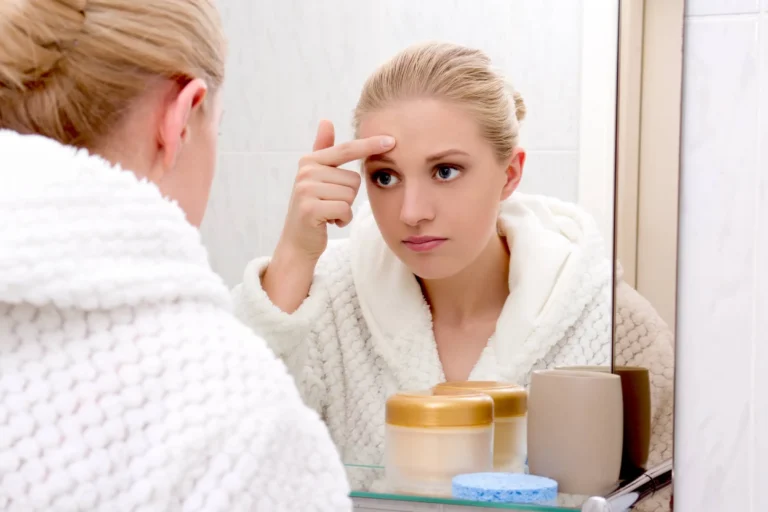
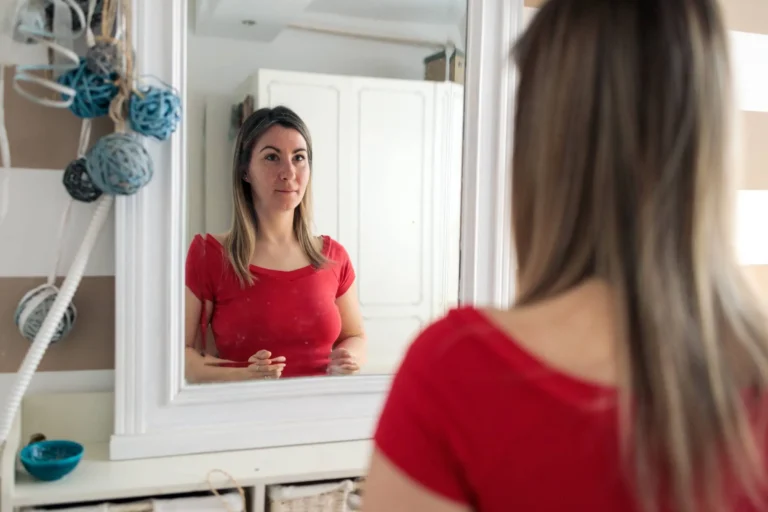
One major area of our lives that is affected heavily by social media is how we feel about our body and appearance.
Confidence and happiness can look suspiciously immaculate on Instagram, but a survey of 459 men and women found some of the lowest body-confidence scores among women aged 25–34 and men aged 18–24. Behind the polished holidays, careful lighting and apparently effortless physiques sits a less photogenic reality: constant comparison can make perfectly ordinary people feel as though they are failing at being themselves.
Instagram was designed for sharing pictures, not administering a daily psychological examination. Yet that is often how the feed operates.
The platform presents life as a procession of flattering angles, attractive meals, agreeable sunsets and people who appear never to have encountered poor lighting. Sadness, boredom and domestic chaos rarely make the edit. When life becomes less presentable, posting slows or an old holiday photograph is sent back into service.
Everyone else’s existence can therefore look curiously complete, even when it is being held together with the same loose screws as our own.
The perfect life, carefully cropped
Social comparison is hardly a digital invention. Television, advertising and magazine covers were shaping ideas about attractiveness long before the first influencer found a ring light.
The difference is proximity.
Those older images arrived at intervals. Social media carries them in a pocket, places them beside the bed and serves them before breakfast. Comparison is no longer confined to actors, models or the conspicuously attractive person next door. It now includes an apparently inexhaustible international field.
Clinical psychologist Rachel Andrew commenting in the Guardian said: “I think what social media has done is make everyone accessible for comparison…In the past, people might have just envied their neighbours, but now we can compare ourselves with everyone across the world.”
That accessibility matters because the competition is fundamentally crooked. Users compare the unedited experience of their own lives with the most carefully selected fragments of somebody else’s.
One side knows about the bad skin day, the argument, the rejected photograph and the 27 unsuccessful attempts at looking spontaneous. The other side sees the winner.
A snapshot of body confidence
Among women, the reported average body-confidence scores were 40 for those aged 18–24, 37 for ages 25–34, 77 for ages 35–44 and 37 for those aged 45 and over. Among men, the reported figures were 35 for ages 18–24, 41 for ages 25–34 and 75 for respondents aged 45 and over.
The scoring scale, sample sizes within each demographic and full survey methodology were not supplied, so these results should be read as a directional snapshot rather than a nationally representative clinical study.
Even with that limitation, several findings deserve attention.
When respondents aged 18–24 were asked whether they wanted to change something about themselves, 97% of women and 100% of men said yes. Those figures suggest that dissatisfaction among younger adults is neither marginal nor confined to one gender.
The most common wishes among younger women included losing weight, becoming more toned, improving their skin and changing the appearance of their hips, breasts, nose or hair. Older women focused more frequently on weight loss and muscle tone.
Men reported wanting to gain or lose weight, build larger muscles, grow more facial hair or become taller. The details differed, but the central complaint was remarkably similar: the body presented to the world did not feel adequate.
Men are not immune to the mirror
Public discussion of body image has often focused, correctly, on the pressures placed upon women. That history should not obscure the fact that men are also being measured against increasingly narrow physical ideals.
In the survey, men aged 18–24 recorded a lower average body-confidence score than women in the same age group. A separate BBC survey conducted in 2016 found that 55% of boys aged eight to 18 said they would change their diet to improve their body image.
The idealised male body may be packaged differently, but it remains an ideal: lean without looking slight, muscular without appearing cumbersome and groomed while maintaining the illusion that no grooming has occurred. Apparently, even effort must now appear effortless.
When respondents were asked whether they worried about other people’s opinions, 72% of women and 75% of men answered yes.
That small difference is useful. It punctures the comforting assumption that men simply shrug off appearance anxiety and continue with their day. Many do not. They may merely have less practice discussing it.
Where the pressure comes from
Across genders, respondents identified four principal sources of body dissatisfaction:
- Friends: 68%
- Social media: 57%
- Advertising: 53%
- Celebrities: 49%
Social media does not operate separately from the other three. Friends appear within the feed. Advertising is designed to resemble ordinary content. Celebrities promote products alongside edited images of themselves. The boundaries have become so blurred that a casual scroll can contain social interaction, aspiration and a sales pitch within seconds.
Respondents cited Instagram, influencer photographs, limited body-type representation, online bullying, magazines and a lack of diversity and inclusion as important sources of negativity.
At the time of the survey, searches showed approximately 1.3 million uses of the #bodyconfidence tag and 14.5 million uses of #bodypositive. Those numbers are historical and platform counts change continuously, but their scale illustrated a sizeable effort by users to challenge the prevailing visual standard.
The difficulty is that body-positive content must compete inside the same system that helped create the insecurity. It is rather like opening a salad counter in the middle of a confectionery factory: admirable, necessary and working against the prevailing machinery.
Knowing a photograph is edited does not neutralise it
Most users are not naïve about social media. They understand filters. They know influencers choose their most flattering photographs and that an apparently casual image may have required considerable staging.
Knowledge, however, does not always disarm emotion.
Andrew commented: “We all know that images can be filtered, that people are presenting the very best take on their lives.
“What I notice is that most of us can intellectualise what we see on social media platforms – we know that these images and narratives that are presented aren’t real, we can talk about it and rationalise it – but on an emotional level, it’s still pushing buttons. If those images or narratives tap into what we aspire to, but what we don’t have, then it becomes very powerful.”
That distinction is central to the relationship between social media, confidence and happiness. A person can recognise manipulation while still experiencing its effects. The rational mind may identify the filter; the emotional mind merely notices the flawless skin.
The survey reported that 56% of women said they did not edit their photographs, 32% said they sometimes did and 21% said they did. Those reported percentages total more than 100%, so the result requires caution and may reflect an error or overlapping response categories in the original data.
Among men, 92% said they did not edit photographs and 8% said they did.
The apparent gap between editing behaviour and concern about edited images suggests that many users may feel pressured by a practice they do not personally embrace. Others may avoid editing precisely because they want unaltered photographs to become ordinary rather than brave.
Representation has to become ordinary
The responsibility for healthier online culture cannot rest entirely with individual users. Telling people to become more confident while continuing to surround them with one narrow body type is a splendid way of addressing the symptom while preserving the cause.
Brands, celebrities and influencers help determine which appearances are treated as desirable, acceptable or commercially useful. When the same shape, skin tone, age and facial structure dominate marketing, variation begins to look like deviation.
Self-tanning brand Isle of Paradise adopted self-love, inclusivity and body positivity as part of its positioning. It was described as the first self-tanning brand to use plus-size models in its debut campaign, while founder Jules Von Hep regularly shared messages concerning self-acceptance through Instagram.
The significance lies less in applauding one campaign than in making inclusive casting unremarkable. Representation becomes genuinely useful when audiences no longer have to congratulate a brand for acknowledging that customers possess different bodies.
The appetite-suppressant problem
A less defensible corner of influencer culture has involved the promotion of weight-loss teas, appetite-suppressant lollipops and gummies.
Such advertising has attracted criticism because the public figure promoting a simple product may also have access to surgery, personal trainers, nutritionists and other expensive forms of support. The consumer sees the lollipop. The infrastructure remains outside the frame.
Instagram responded to criticism by restricting such advertisements for users aged 18 and under. That offered younger users some protection, although adults remained exposed to the same messages and the same implication: dissatisfaction can be converted into a purchase.
Commercial influence is not inherently sinister. Concealing the machinery behind an appearance is another matter.
Building a healthier relationship with the feed
Social media can connect people across cultures, communities and experiences. It can broaden ideas of beauty, provide support and allow people who were once ignored by mainstream media to be visible on their own terms.
It can also turn the human body into a permanently reviewed product.
The answer is not to pretend that every image is harmful or that deleting every account will produce instant serenity. It is to become more deliberate about what enters the feed, which accounts repeatedly trigger comparison and how much authority is given to photographs with no visible context.
Platforms must enforce responsible advertising standards. Brands should broaden representation without treating inclusion as a seasonal campaign. Influencers should disclose commercial relationships and avoid selling insecurity as though it were a wellness service.
Users, meanwhile, can curate their feeds, question the emotional effect of particular accounts and remember that appearance is not a public examination requiring daily submission.
Confidence will not be repaired by another filter. A healthier relationship with the screen begins when the screen stops pretending perfection is normal.