Fresh tattoo? Learn how sun, swimming, hydration and aftercare can affect healing and colour, with practical advice from a tattoo artist.
Knowing how to look after a fresh new tattoo becomes rather more urgent once the forecast turns tropical and the suitcase starts filling with swimwear. New ink may look ready for its close-up, but the skin beneath is still healing, and a week of sun, swimming and enthusiastic towel work is not the sort of aftercare plan any artist would frame.
Award-winning tattoo and semi-permanent make-up artist Alice Nicholls, founder of Four Tattoo Care, says summer creates a particularly awkward combination: heat, holidays and the widespread belief that a fresh tattoo is simply finished artwork rather than recently treated skin.
Why fresh tattoo aftercare matters in summer

Nicholls puts sunlight at the top of the danger list. ‘The sun is one of the surest ways to bleach out colour from a fresh tattoo as well as newly-pigmented brows and lips’
Her broader warning is equally direct: ‘With temperatures rising and holiday season well underway, tattoo artists are reminding clients that summer can be one of the most damaging times of year for tattooed skin: excessive sun exposure, swimming, especially in chlorinated pools and not protecting them with the right kind of skin care could mean the colour fades faster, meaning your tattoo loses definition.’
The grammar may have arrived without its passport, but the practical point is clear enough: fresh pigment and a sun-lounger are poor travelling companions. A new tattoo needs time, shade and a little restraint. The holiday photograph can wait; the skin cannot be hurried.
Keep new ink out of strong sun
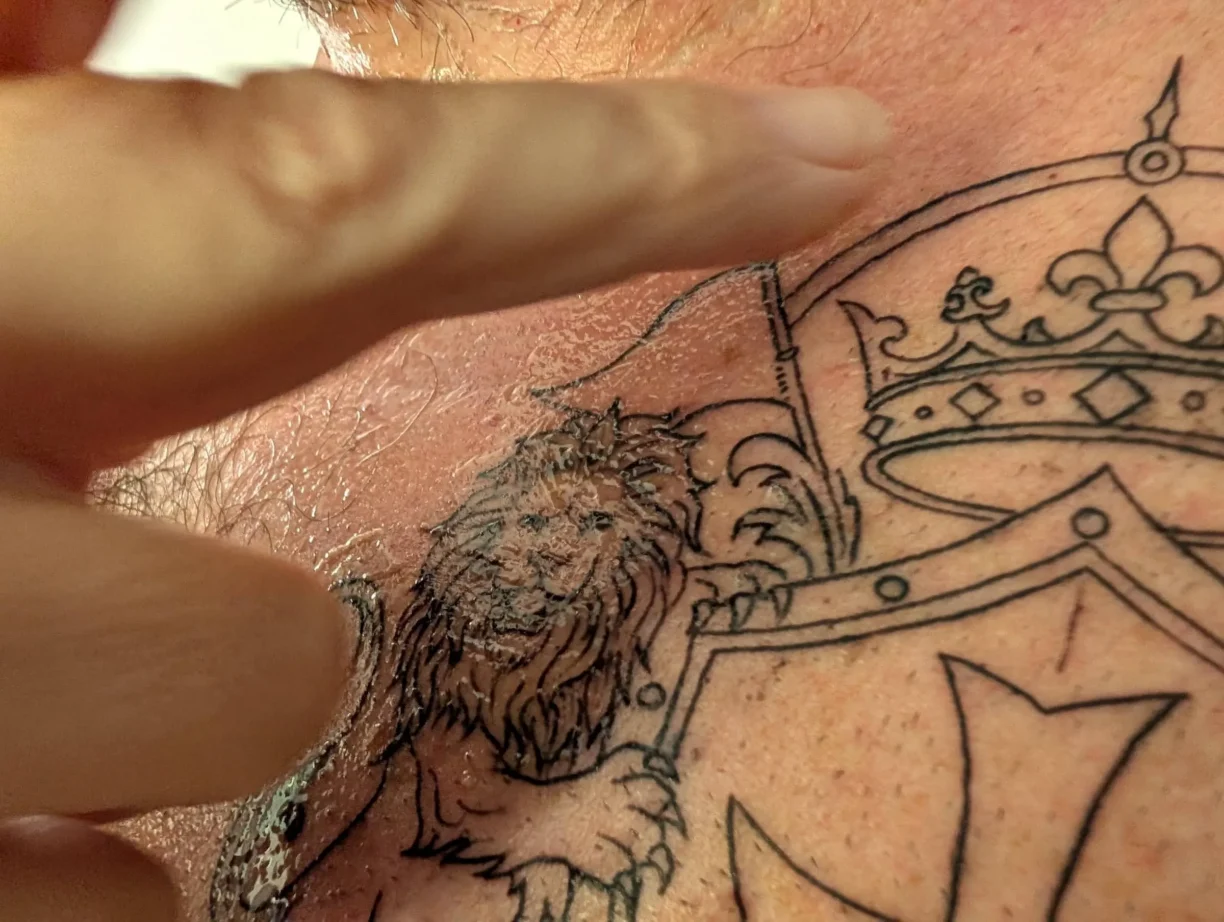
Nicholls advises staying out of direct sun while the area is fresh, then using sunscreen once the tattoo has fully healed. Shade, loose clothing and sensible timing are the least glamorous parts of tattoo ownership, which is probably why they work so well.
Her specific recommendation is to use no higher than SPF 30 on healed skin and to reapply after swimming. The supplied material does not substantiate the claim that higher-factor products may affect tattoo colour, so readers should check that point against current NHS or dermatological guidance, the sunscreen manufacturer’s instructions and their own tattooist’s advice.
The essential distinction is between a fresh tattoo and a healed one. Sunscreen is not a substitute for keeping newly treated skin covered and out of strong sunlight.
Put swimming on hold
Pools, sea water and hot tubs are seductive once the temperature rises. They are also difficult places in which to keep a healing tattoo clean, dry and unbothered. Nicholls singles out chlorinated pools as a particular concern and advises avoiding swimming during the early healing period.
The sensible rule is not to use the hotel pool as a laboratory. Follow the aftercare instructions given by the tattooist who did the work, and do not assume that a quick dip is harmless because the tattoo looks dry on the surface.
Once the area has healed and swimming is back on the agenda, rinse the skin, pat it dry rather than scrubbing it, and reapply suitable sun protection before returning outdoors.
Hydration helps, but moisturiser is not wizardry
Nicholls recommends drinking plenty of water and using an aftercare product to prevent the skin from becoming dry. That is reasonable in spirit, though no balm can compensate for sun exposure, picking, soaking or ignoring the artist’s instructions.
She is critical of some products routinely handed out after treatment: ‘The creams and ointments often provided by therapists and semi-permanent make-up artists contain chemical ‘nasties’ that can not only irritate and dry out the skin – they can also adversely affect the pigment, dulling your new colour.’
That is a commercial claim from a founder selling an alternative, not a universal verdict on every conventional ointment. Natural is not a medical qualification, and essential oils may not suit every skin type. Use a product recommended for the particular treatment and skin, apply only a thin layer, and stop using it if irritation develops.
Alcohol, caffeine and the first 48 hours
Nicholls also advises avoiding alcohol and caffeine before treatment and for 48 hours afterwards, arguing that both may affect bleeding and healing. The supplied material offers no clinical evidence for a blanket rule covering both substances, so this is best treated as practitioner advice rather than a medical absolute.
Alcohol is hardly renowned for improving judgement, hydration or aftercare discipline, so skipping the celebratory round immediately after a tattoo is unlikely to ruin anyone’s cultural life. For caffeine, follow the artist’s instructions and consult a healthcare professional where medication, bleeding risk or a medical condition complicates the picture.
Where Four Tattoo Care fits
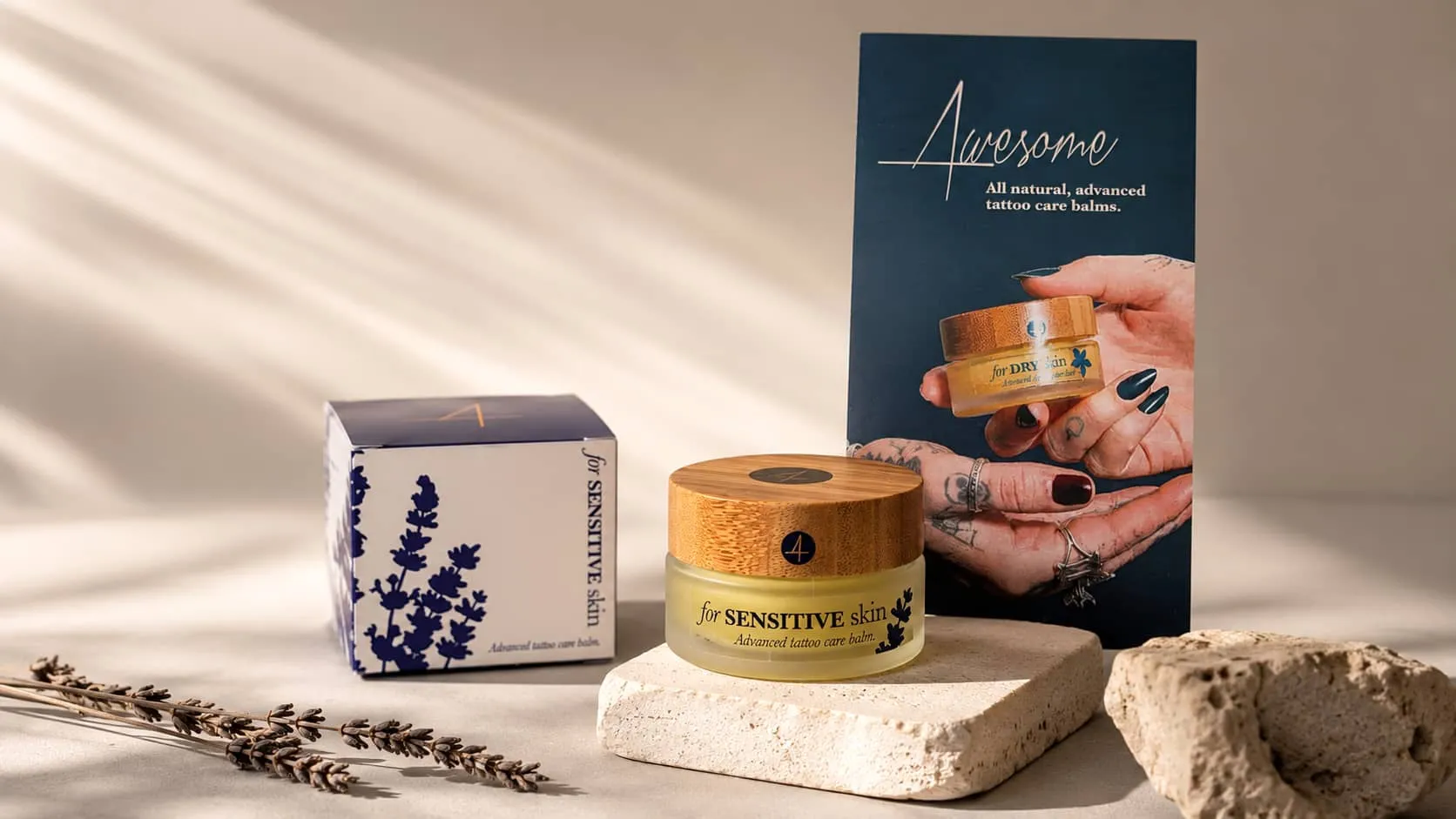
Four Tattoo Care sells four balms formulated for different skin types, including oily and dry skin. The brand says they use botanical ingredients and essential oils, are vegan, and are hand-poured into sustainable glass. Each balm costs £15 and is available through selected stockists and fourtattoocare.com.
Nicholls recommends applying a small amount once or twice daily. The modest quantity matters. A tattoo does not need to be marinated; it needs clean, calm, appropriately moisturised skin and the discipline to leave it alone.
The best summer aftercare is mostly unphotogenic: shade instead of sunbathing, patience instead of a pool, and clean hands instead of constant inspection.
Fresh ink may be permanent. Good results, rather inconveniently, still depend on temporary restraint.