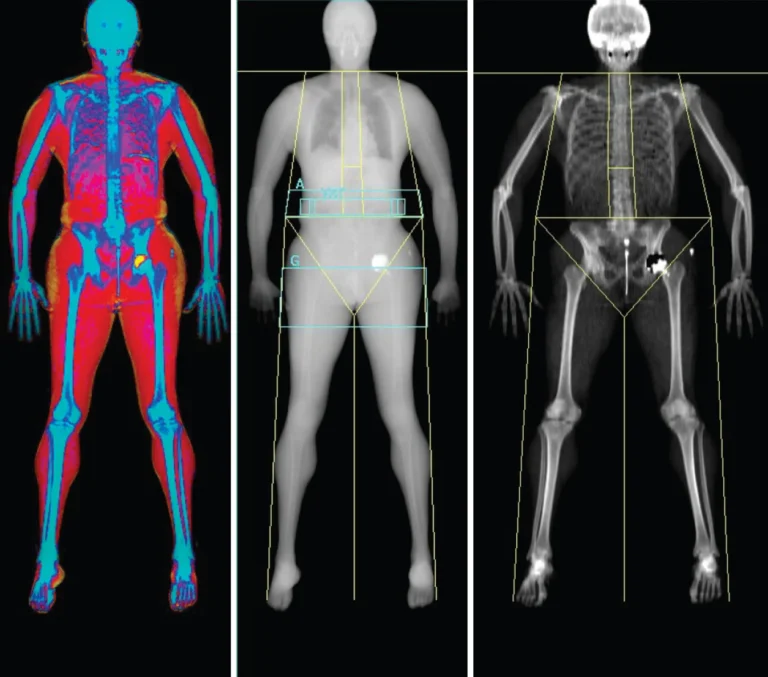
A body composition scan prompted a closer look at what I ate after exercise. In part two of my six-month experiment, I’m changing what goes into my breakfast smoothie and keeping track of how steadily I move.
My DEXA scan at Scanletics prompted me to reconsider something I had paid surprisingly little attention to over the years: whether I was eating enough protein to support the training I already do.
It was an uncomfortable oversight. I had spent years developing ways of challenging my body without unnecessarily punishing my joints, yet I had never applied the same scrutiny to the nutrition needed for recovery and adaptation.
I had questioned conventional training advice, experimented with different forms of resistance and paid close attention to how my body responded, but how much protein was I actually eating?
I didn’t know, which is rather extraordinary when I consider how much thought I’ve put into everything else.
The Protein Question
Protein is essential for maintaining and repairing muscle tissue, particularly as we get older. Many people assume that because they eat reasonably well, their intake must be adequate, but there is a difference between meeting basic nutritional requirements and providing enough protein to support an active older body.
The general adult reference intake is approximately 0.8 grams per kilogram of body weight daily. At my weight of 65 kilograms, that amounts to 52 grams. For active older adults, a higher intake of around 1.2–1.6 grams per kilogram may be appropriate, depending on health, activity and individual circumstances. For me, that translates into a daily target of 78–104 grams.
I have never kept an accurate record of what I eat, so I cannot give a precise figure for my previous intake. Looking more closely at my usual diet, however, I suspect I have been consuming considerably less than that target, which raises an intriguing possibility: I may have been training consistently for years without providing all the nutritional support my body needed to recover and adapt.
There is something faintly ridiculous about that. I’ve spent years thinking about how to make exercise more effective, yet I may have overlooked what was sitting on my plate.
Two Protein Shakes a Day
I am now introducing two protein shakes daily, each providing approximately 25 grams. Together, they will supply 50 grams before I count anything from my regular meals, leaving another 28–54 grams to obtain from food.
I usually train during a fourteen-hour overnight fast, so my first shake will form part of my breakfast smoothie when that fast ends. The second will help distribute my protein intake across the remainder of the day. There is nothing magical about protein powder, and I am not expecting miracles. It is simply a convenient way to meet a nutritional target that I may have been consistently missing.
Protein does not automatically turn into muscle, and consuming more than the body needs does not guarantee better results. Nevertheless, if my previous intake was insufficient, correcting that shortfall may help me recover more effectively and make better use of the exercise I am already doing.
I am not adding protein to become bigger. I am adding it to find out whether I can become more capable.
The Next Six Months
My first DEXA scan challenged the assumption that looking muscular necessarily means having above-average lean mass. It also raised an important question about what a subsequent scan might reveal.
DEXA measures lean tissue, but lean tissue is not identical to muscle. It includes water and other non-fat soft tissues, while muscles themselves store glycogen alongside water. Changes in hydration, diet and training can therefore influence a lean-mass reading without representing an equivalent change in actual muscle. That means I will need to be careful about how I interpret any improvement.
A higher number would be interesting, but it would not automatically demonstrate healthier ageing. The objective is not to manipulate a measurement but to improve the body being measured.
The six-month experiment I introduced in Part One now has an additional nutritional dimension. Alongside KunAqua and Jumpga, I intend to meet my protein target consistently, increase the demands of my training where appropriate and allow sufficient recovery. I want to discover whether that combination helps me become stronger, move more confidently and maintain my physical independence.
I won’t be able to isolate the contribution of protein from the effects of training and recovery. This is a personal experiment, not a controlled scientific study, but I can pay attention. I’ll track strength, balance and mobility, and repeat the DEXA under comparable conditions, keeping hydration, food and exercise as consistent as reasonably possible.
Ageing is associated with a gradual decline in muscle mass, strength and physical performance, but that doesn’t mean the body loses its ability to respond. The challenge is finding ways to keep that capacity alive, and perhaps the most useful thing this experiment has taught me so far is that experience doesn’t make us immune to overlooking the obvious.
I had been concentrating on what my body could do in the pool, on the rebounder and in everyday life, without paying nearly enough attention to what I was giving it afterwards.
Perhaps I didn’t need another exercise. Perhaps I simply needed to feed the ones I was already doing. Now I intend to find out.