Garrett Quigley explains how Celsius International is pursuing brand distinction, agile growth and market share rather than flags on a map.
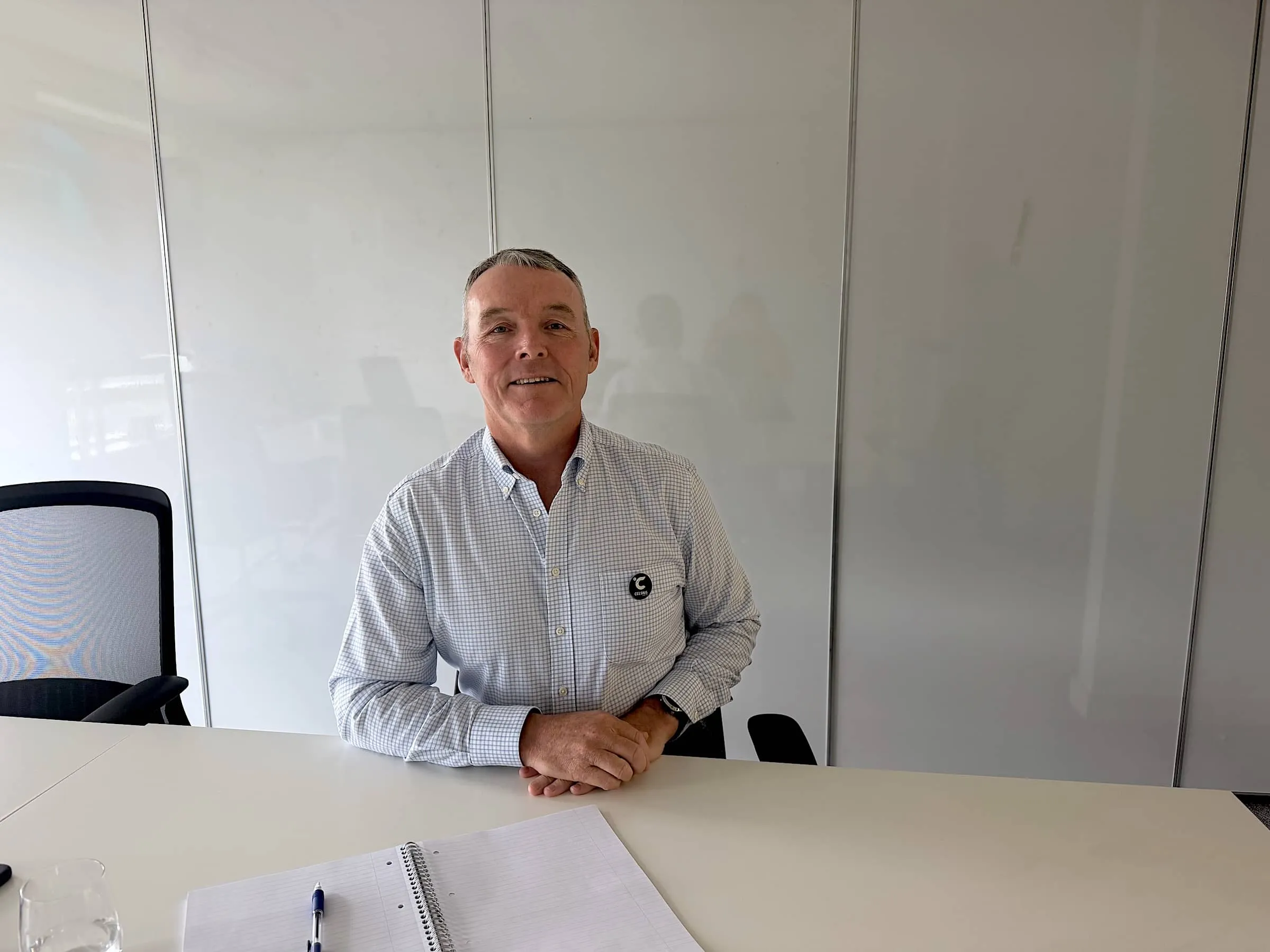
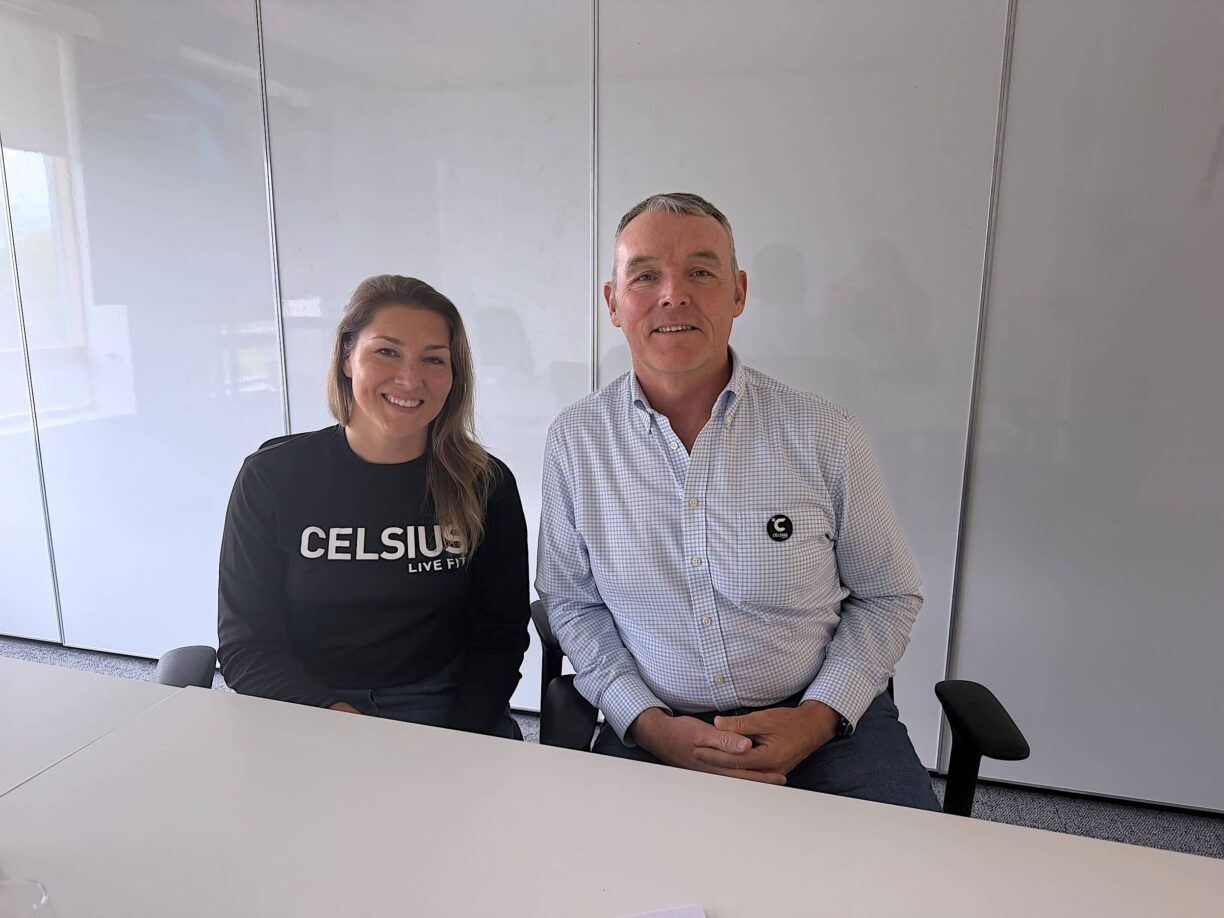
At Celsius International’s Dublin headquarters, President of Celsius International Garrett Quigley sat down with me to discuss the energy drink brand’s international expansion, why zero sugar is now simply “table stakes”, the thinking behind LIVE. FIT. GO.™, the value of staying agile and why entering more countries is not, by itself, a measure of success.
There is a rather important difference between expanding internationally and simply appearing in more countries. Quigley is acutely aware of it.
Garrett outlined a growth strategy that is less concerned with planting flags on maps than ensuring Celsius earns a distinctive and commercially valuable position once it gets there.
That distinction matters. The international energy drinks market is hardly short of brands promising stimulation, functionality and increasingly familiar combinations of zero sugar and fruit-forward flavours. For Celsius, the challenge is therefore not merely distribution. It is avoiding becoming another can on an already crowded shelf.
Quigley believes that requires discipline.
Having joined Celsius with a mandate to accelerate its international business, the former PepsiCo executive says one of his early observations was that the company needed greater consistency around precisely what had driven its success in the first place.
And there was one temptation in particular that he wanted to resist: copying the competition.
“We will not be successful if we don’t create brand distinction”
You joined Celsius with a brief to accelerate international growth. What did you discover during your first few months that caused you to rethink—or reinforce—the company’s original expansion strategy?
“The company was, based on the success in the U.S. and the performance in Sweden, saying, ‘All right, let’s launch,’ and went to a bunch of markets and employed a bunch of people and got going.
“For me, when I came in, I saw a lot of success, but also some inconsistencies around really understanding what the core bits were that made Celsius successful where it was, and making sure we stuck to that.
“What I saw was people trying to copy existing brands rather than carve out our unique space. And we will not be successful if we don’t create brand distinction.
“If Celsius is distinct and has a distinct proposition, then that’s great for retailers because it brings in new consumers who happily pay for this space in the energy drink category.
“If all we do is come in and copy our competitors, then all we do is cannibalise something that they already have. We bring no value.”
It is arguably the central theme running through Quigley’s international strategy. Celsius does not simply want shelf space; it wants to give retailers a reason to allocate that shelf space in the first place.
For an energy drinks market in which product attributes can be replicated remarkably quickly, that places considerably more importance on the brand surrounding the liquid.
Why you shouldn’t expect a giant Celsius TV campaign
That thinking extends into marketing.
Celsius has built much of its identity around LIVE. FIT. GO.™, but Quigley does not envisage international growth being powered by an enormous traditional television advertising campaign.
Instead, the strategy is weighted towards social media, community, ambassadors and carefully targeted out-of-home activity.
“LIVE. FIT. GO. is the overarching campaign and so we will continue to push that, but you’ll see much more of it through social media. We don’t plan to be on TV.
“A lot of it is around building a community that talks to each other and people hear about it through a peer group.
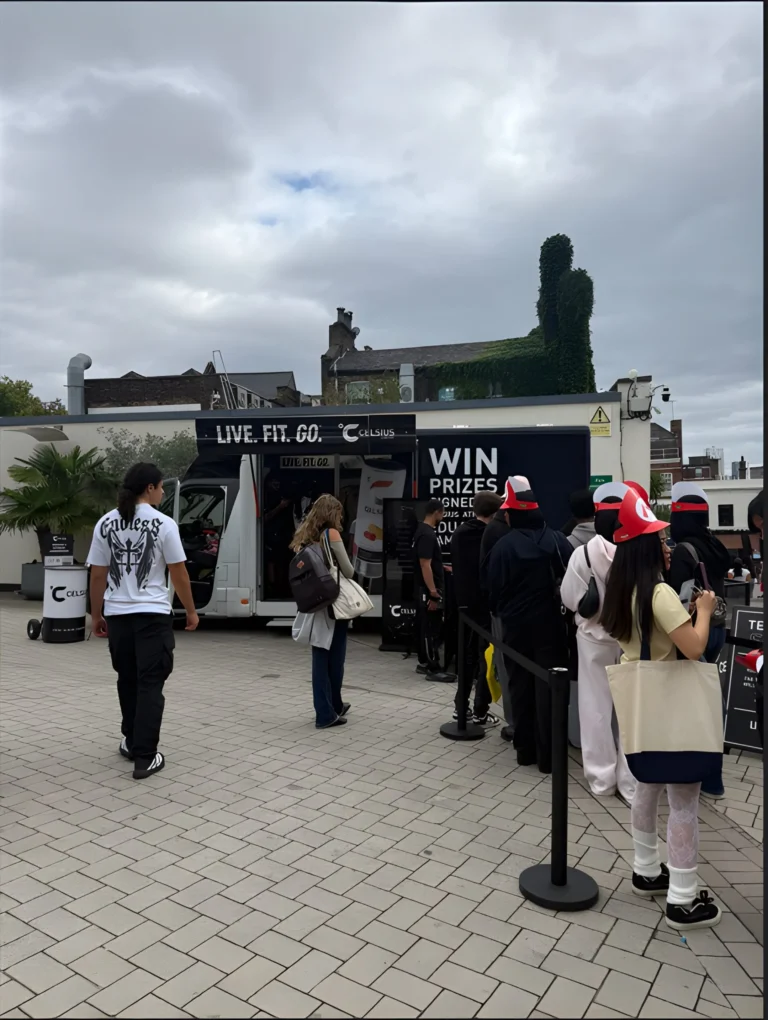
“Now, we do specific outdoor campaigns. We will do retailer-adjacent, proximity-type outdoor, which just supports specific campaigns, and you’ll see us continuing work with Declan Rice as an ambassador.
“But you won’t see us on an epic TV campaign anytime in the near future in these markets.”
It is an interesting approach for a company with considerable international ambitions. Rather than immediately reaching for the biggest megaphone available, Celsius wants consumers to encounter the brand through communities, social channels, ambassadors and environments where the product feels relevant.
LIVE FIT has to work outside the gym
That presents another challenge.
Fitness has been fundamental to Celsius, but most people — even irritatingly dedicated ones — do not spend their entire waking existence performing burpees.
For Celsius to become a regular rather than occasional purchase, LIVE. FIT. GO.™ has to make sense when the consumer is nowhere near a squat rack.
“LIVE FIT is rooted in fitness, but it’s much more than fitness. It’s an overall ethos of kind of how you live your life, and that applies to a lot of people.
“People like to keep fit, but you’re not in the gym all the time. You’ve got your rest days, but you’ve got your work days, your other things, and our vision is to be part of their life. It’s sort of an integral part of their life with regular consumption that fits what they’re doing.
“We talk about universities, for example, as a place to connect with our consumers. We know that the study moments when they’re cramming for an exam is a Celsius opportunity.
“The first responders, the healthcare workers — there are lots of opportunities beyond being at the gym where LIVE FIT GO is relevant and Celsius can play a part in their lives.”
The strategic ambition is therefore considerably wider than selling an energy drink to someone immediately before or after a workout. Celsius wants fitness to remain the cultural anchor without allowing the gym to become a commercial boundary.
“Zero sugar is table stakes”
That brings us to the drink itself.
Walk along an energy drinks fixture today and zero-sugar formulations are hardly exotic. Nor are colourful cans, fruit flavours or claims of functionality.
Quigley readily acknowledges the problem.
“This is something that’s very important to me because zero sugar is table stakes. It’s not a point of difference.
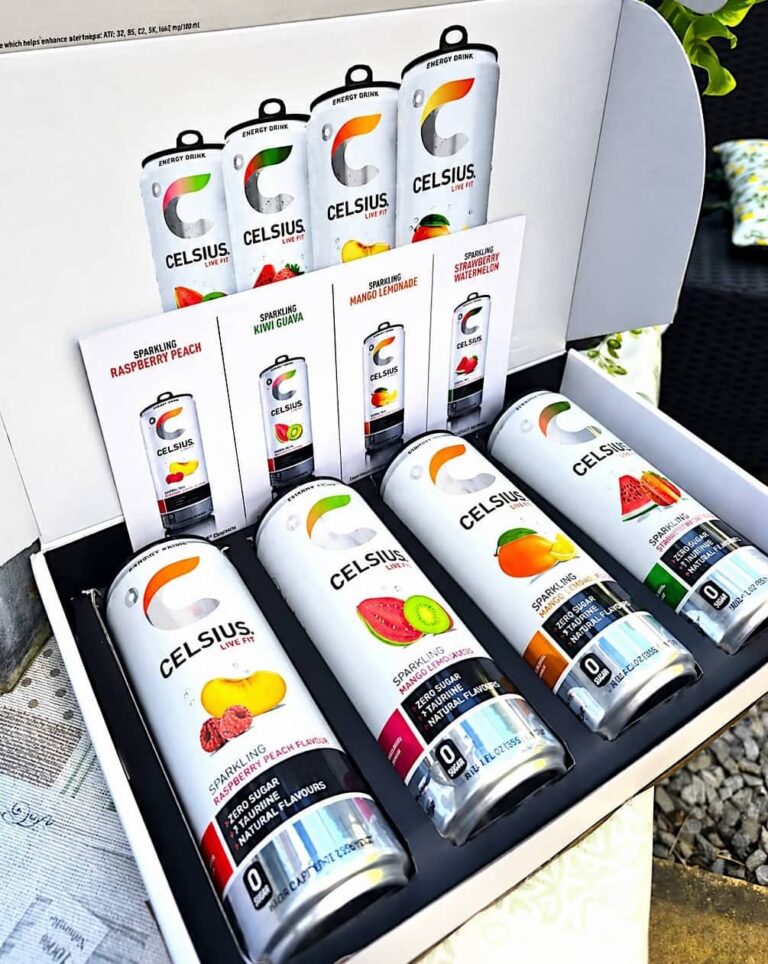
“Anybody can be zero sugar. Anybody can put fruit on the can.
“But it’s zero sugar, fruit-forward, with the combination of ingredients and the LIVE. FIT. GO.™. That together is what gives us the difference and creates that sense of badge value that the community talks about.
“Any one of those table stakes doesn’t differentiate you, it doesn’t give you brand distinction, but the LIVE FIT GO does.”
It is a notable admission because brands are often terribly fond of presenting features as unique long after the rest of the supermarket has acquired them.
Quigley is instead arguing for differentiation through the whole proposition: formulation, flavour, identity, community and the social currency attached to carrying the brand.
The PepsiCo lesson: your distributor has to believe you add value
Before joining Celsius, Quigley spent years within PepsiCo’s international system. That experience gives him an unusually useful perspective on one of the less glamorous but absolutely decisive parts of beverage expansion: getting the product into consumers’ hands.
The greatest marketing campaign on Earth becomes somewhat academic if nobody can find the can.
“It’s a great challenge. I spent my career in systems working with many franchise partners.
“The key to success for me is always making sure we add value to their portfolio, so that we are not cannibalising something they already have or we’re not something which doesn’t work for them.
“They’re all smart operators. They will look at something that we bring them and if they just don’t believe it, they won’t do it.
“So bringing something with a proven track record, something they’re already interested in because they’ve seen the success, but coming with very clear playbooks on how to do it, which is different and maybe different because of the agility of a younger brand.
“So helping them with: what’s our playbook? What’s our right to succeed? How should we show up? What’s the promotional support activity? Being clear around we won’t be on TV and that sort of thing — that’s how we work.”
There is a revealing commercial pragmatism in that answer. Celsius may regard itself as a challenger, but enthusiasm alone does not persuade major distributors. The proposition has to make financial sense for the people tasked with putting it on shelves.
Why Celsius won’t use the same operating model everywhere
The international business also won’t be built according to one universal template.
In Sweden and Finland, Quigley says Celsius operates the business itself. In other countries, partnering with an established operator can provide substantially faster access to scale.
“In Sweden and Finland, we do the business ourselves. We are an end-to-end business model. Full control, full speed.
“But there’s markets like the UK where we look at that and we just think, if we start on our own, it’s going to take us a very long time to get to the scale we would need to versus partnering with someone with the access and the scale.
“So we look on a market-by-market basis and look at the structure of the market.
“We look at it from a consumer opportunity first. Is it an attractive place? Would the consumer in this market buy our product? Then, how do we get there?
“We look at the scale, the structure of the trade, the evolution, and then: what’s the best way and who are the strong partners to go in?”
That consumer-first sequence is significant. The operating model follows the opportunity rather than dictating it.
In some countries, control is worth building an end-to-end operation. Elsewhere, the distribution muscle of an established partner can outweigh the attraction of doing everything internally.
Fitness partnerships remain firmly on the table
Celsius’ sporting associations also create obvious opportunities for partnerships beyond traditional advertising.
During our conversation, I asked Quigley whether emerging fitness brands and events could become part of the international strategy.
“Absolutely — there are a number of brands who are in the fitness space, not a beverage, apparel or so on, and partnerships with them can complement both brands.”
That potentially gives Celsius another route to consumers without requiring the brand to abandon its fitness heritage. Rather than diluting LIVE. FIT. GO.™ as it moves into more everyday consumption occasions, complementary partnerships can reinforce the original positioning while expanding the audience around it.
Celsius wants entrepreneurs, not passengers
International expansion also creates a less visible challenge: hiring people capable of operating without the infrastructure they might expect inside a mature multinational.
Despite the scale of the Celsius name, Quigley describes its international operation as retaining something much closer to a start-up mentality.
“It’s like a start-up here. It’s not a big company internationally.
“In terms of total number of employees, it’s still relatively small. So we need people who are entrepreneurial and who can multitask.
“We do not have large departments that cover everything. So we need people who can understand what needs to be done and then figure out how to get it done, bring in resources that we need.
“But we need entrepreneurial and agility and people who are ambitious too. I don’t want people who are just there for the ride.
“Ambition and agility are important.”
It is perhaps the clearest description of the culture Quigley is trying to create: people capable of operating with the expectations of a global company without assuming they will have the resources of one.
Success isn’t measured by flags on a map
Which brings us to the obvious question.
If Celsius International succeeds, what does that actually look like?
One possible answer would be an impressively long list of countries. Quigley isn’t particularly interested in that metric.
“It’s not number of countries. The target is going into the countries and achieving what we believe the right share is in that timeframe.
“Because that will differ by markets — the mix of zero sugar, the development of fitness.
“So we look at each market and we build a three-to-five-year business plan and then we target what we think the share should be.
“So success looks like getting to that share. And it varies.”
That may ultimately be the most consequential part of Celsius’ international strategy.
Global expansion has a seductive tendency to become a geography competition: another launch, another market, another coloured-in section of the corporate map.
Quigley is advocating something less theatrical and considerably harder — meaningful penetration.
Entering a market is an announcement. Winning share in it is a business.
The leaders who shaped Quigley’s approach
Before we finished, I asked Quigley who had inspired him during his career.
Two names came immediately to mind.
“People like Indra Nooyi at PepsiCo. She was just a very inspirational type of leader.
“I would say more recently, someone like John Fieldly. John is so passionate about the brand.
“Really people who inspire you to inspire people too. They give you the opportunity. They give you the platform; they believe in you. They tell you, ‘You can do this,’ and then they give you the tools and the freedom, but they set the vision.”
It is a useful final insight into Quigley’s own approach.
Celsius International is attempting to perform a delicate trick: become substantially bigger without behaving as though it already is.
That requires established distribution without becoming lumbering, broader consumption occasions without abandoning fitness, international scale without indiscriminate expansion and differentiation in a category where yesterday’s innovation can rather quickly become today’s table stakes.
For Quigley, the answer keeps returning to the same idea: distinction.
“If all we do is come in and copy our competitors, then all we do is cannibalise something that they already have. We bring no value.”
In an energy drinks category already bursting with noise, Celsius’ international challenge isn’t simply being louder.
It’s giving consumers — and retailers — a reason to hear something different.