Brits would ditch phones, sex and showers for fitness goals. Freeletics Mindset aims to fix the motivation gap properly.
In the curious national theatre of achieving our dream body, Britain appears willing to negotiate with almost anything except a regular workout. According to new research, one in five people would give up all electronic devices for a full month if it meant instantly reaching their health and fitness goals. Which is either impressive discipline or proof that the dumbbell still frightens us more than a dead phone battery.
The Strange Things Brits Would Sacrifice For Fitness
The survey of 1,000 Brits paints a wonderfully odd picture of modern wellness ambition. Almost 19% said they would shave their head in return for instantly achieving their dream body. Another 17% would give up sex for a year, while the same proportion would forgo showering or bathing for two weeks.
There is something magnificently British about this. We will consider baldness, celibacy and mild social exile, but ask us to plan three sensible workouts and a few better nights’ sleep and suddenly the whole thing has become rather a lot.
Still, underneath the comedy is a serious point. The chase for fitness is rarely about knowledge alone. Most people know movement is good for them. They know sleep matters. They know a body does not change because one has admired a pair of trainers online. The problem, as ever, is starting — and then doing it again when life turns up wearing muddy boots.
The Real Barrier Is Motivation, Not Just Time

The study found that almost one in three Brits exercise for less than one hour each week. A lack of motivation was cited as the main reason for leading an inactive lifestyle.
That detail matters because the usual excuse, “I don’t have time”, begins to wobble when placed beside another finding: Brits spend more than three times as long watching television each week as they do exercising.
Even so, 28% claimed they do not have time for exercise, while 30% said lack of motivation was the main reason they struggled to exercise or maintain healthy habits.
This is the modern fitness trap. We are busy, but not always in the way we think. We are tired, distracted, anxious, over-advised and under-supported. The gym can feel less like a place of self-improvement and more like an audition room for people who already know what they are doing.
Why Healthy Habits Feel So Intimidating
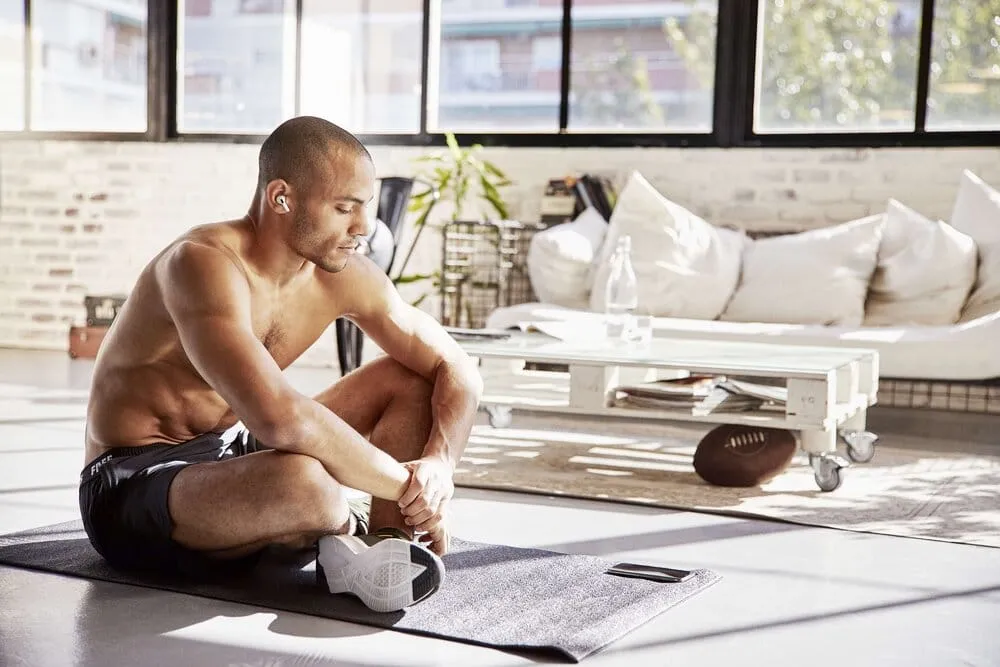
The research also found that 26% of respondents often face tiredness, while 36% do not know which healthy habits to build. More tellingly, 42% feel so overwhelmed and intimidated by maintaining a fitness routine that they would rather not start one at all.
That is the key line. Fitness failure is often framed as laziness, but intimidation is a far more useful word. A person who has not trained for years is not necessarily bone idle. They may simply be staring at a wall of conflicting advice, expensive kit, questionable influencers and workouts designed by people who appear to have been assembled in a laboratory.
For anyone pursuing better health, body confidence or achieving our dream body, the answer is unlikely to be one heroic January rampage. It is more likely to be smaller, repeatable habits: movement that fits real life, recovery that does not feel like a luxury, and guidance that does not bark at you like a sergeant major with a protein shaker.
Stress, Sleep And The Fitness Equation
The same study suggests the fitness conversation is no longer just about exercise. Some 43% of Brits said they want to build healthy habits but are too busy. Respondents reported feeling stressed on average almost three days each week, while 19% said they are stressed five to seven days a week.
More than half of Brits, 56%, also face issues with sleep.
This is where the old “eat less, move more” sermon starts to sound a little thin. If someone is exhausted, stressed and unsure where to begin, throwing a brutal training plan at them is about as useful as handing a violin to a Labrador and shouting “Vivaldi”.
Health routines need energy, clarity and some degree of mental bandwidth. Without those, even the best workout programme becomes another unopened tab in the brain.
Mindfulness Moves Into The Fitness Lane
There is, however, a shift taking place. One in three Brits now prioritise mindfulness, with 49% practising it to sleep better and combat the effects of a stressful lifestyle. Meanwhile, 55% said they feel more energetic and motivated by listening to mindful audio content, including podcasts, audiobooks and audio coaching.
That is where Freeletics is now placing its marker.
The fitness app has announced Freeletics Mindset, a new addition that combines its AI-powered, personalised exercise plans with mindset coaching. The update gives its 40 million users access to educational, motivational and mindful audio courses, bringing mental training into the same ecosystem as adaptive workout plans.
On paper, it is a sensible evolution. Fitness apps have become very good at counting reps, timing intervals and nudging people through burpees they did not request from the universe. The harder challenge is keeping people consistent when motivation drops, sleep suffers and the sofa begins whispering sweet nothings at 8pm.
Freeletics Mindset And The Body-Brain Link
Freeletics says the new product is designed to strengthen the body and sharpen the mind, combining mental training with workouts tailored to each user’s fitness level, preferences and goals.
The company has built its reputation over the last six years around personalised workout experiences, and this update moves the proposition beyond physical programming alone. Freeletics describes itself as the first fitness app to fully harness AI technology for hyper-personalised coaching while merging training for both body and mind.
That claim is certainly ambitious, but the direction of travel feels right. The future of fitness is not merely more exercises on a screen. It is better context, better adherence and a more realistic understanding of why people fall off track in the first place.
For many users, the most valuable coach may not be the one that tells them to go harder. It may be the one that helps them return tomorrow without feeling like a failure today.
The Smarter Route To A Better Body
The survey’s more eccentric findings will grab attention, naturally. Giving up devices, hair, sex or bathing for a better body makes for excellent pub conversation, provided everyone involved has maintained reasonable hygiene.
But the more useful message is quieter. Achieving our dream body is not usually a single act of sacrifice. It is a long negotiation with stress, sleep, confidence, routine and patience.
Freeletics Mindset enters that conversation at the right moment. Not because an app can magically remove the hard work, but because the fitness industry is finally admitting that the mind is not a side issue. It is the steering wheel.
And if Britain can spend a little less time bargaining with the absurd and a little more time building habits that last, we may yet discover that the dream body was never waiting at the end of a grand sacrifice. It was hiding in the dull, dependable brilliance of doing the basics well — repeatedly, quietly, and preferably after a shower.
For more information on Freeletics, visit www.freeletics.com.
The Freeletics app is available to download for free from the App Store or Google Play Store.