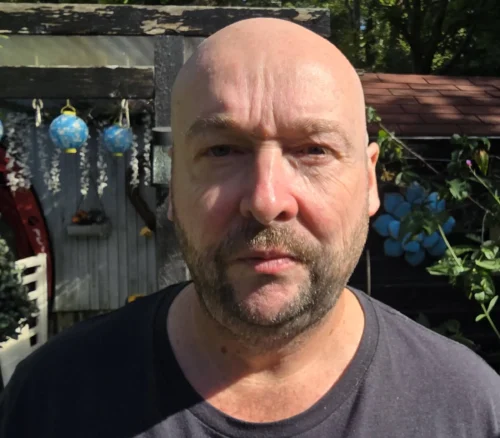
The Washington Commanders player returned to the community where he grew up to join 150 young people for a Crystal Palace camp built around sport, confidence and opportunity.
For Efe Obada, a day of NFL Flag football at Crystal Palace carried rather more meaning than the average summer sports session.
The Washington Commanders player grew up in South London and did not begin playing American football until he was 21. On Thursday 13 July, he returned as an established NFL player to work with 150 children at a youth camp designed to show what the sport can offer beyond touchdowns and scoreboards.
The event, delivered with the NFL Foundation UK, the Greater London Authority and BIGKID Foundation, combined mindfulness and team-building workshops with NFL Flag training drills and games.
Obada, an ambassador for both the NFL Foundation UK and BIGKID Foundation, spent the day working with young people from local schools, BIGKID programmes and other community organisations supported by the NFL Foundation UK.
A homecoming with a purpose


A homecoming with a purpose
Obada’s route into professional American football was hardly conventional, which gives his involvement with younger players a certain relevance. He discovered the sport relatively late and is now Britain’s longest-serving current NFL player.
For children being introduced to flag football much earlier, his career offers a fairly tangible example of where an unexpected opportunity can lead.
“I grew up in South London, so this is a homecoming for me and I’m able to give something back to my community.
“I only began playing American football at the age of 21, so working with the NFL Foundation UK and the BIGKID Foundation to help provide more opportunities, in a sport that I love, and especially with flag football, brings me a lot of joy.
“The future looks bright and I love seeing the positive impact it can make on kids’ lives. I can’t wait to see more South Londoners in the NFL in the future.”
That last ambition may be some distance from the immediate purpose of a community camp, but the route begins with something much simpler: making a sport accessible enough for young people to try it in the first place.
Why flag football fits the community model

NFL Flag removes the tackling associated with the full-contact version of American football. The resulting game is fast, relatively simple to introduce and designed to be accessible across ages and genders.
More than 20 million people in over 100 countries play flag football, with women and girls among the groups driving its growth.
For organisations working with young people, however, the attraction is not solely sporting.
The NFL Foundation UK programme uses flag football alongside broader work intended to develop confidence, self-belief and skills that can support young people in education, employment and their communities.
Its London work currently involves 15 community groups across 18 boroughs and has engaged more than 4,000 young people. Half are female, while 78 per cent come from diverse ethnic backgrounds.
That emphasis on access is central to the partnership with the Mayor of London’s Sport Unites fund, through which a combined £1 million was committed to the NFL Foundation UK’s work in the capital.
BIGKID takes the sport into schools
BIGKID Foundation has been running flag football initiatives since 2018 and now delivers the sport across 24 schools.
The charity’s wider purpose is to address social exclusion and youth violence through sport, mentoring and leadership programmes. During 2022, it worked with more than 2,500 young people, with 79 per cent reporting improved wellbeing in its annual survey.
Chief executive Shaninga Marasha said the value of the partnership could be seen in the confidence developing among participants.
“Working with NFL UK over the past few years, it has been wonderful observing how these young people are growing in confidence and the community they are forming through flag football.
“Efe has been a great ambassador for us and seeing how he has flourished in the NFL will only inspire more children to follow their dreams.”
Familiar faces, unfamiliar positions
The camp also attracted a few participants whose sporting credentials were already established elsewhere.
Former Watford striker Troy Deeney and actor Nicholas Pinnock joined the activities, with Deeney taking a turn at quarterback. Apparently, years spent trying to find space in a penalty area leave a man reasonably well prepared for locating an open receiver.
Phoebe Schecter, a Team GB NFL Flag player and global flag football ambassador, also attended alongside Deputy Mayor of London Debbie Weekes-Bernard, NFL UK general manager Henry Hodgson and NFL international flag football development and youth marketing manager Afia Law.
The celebrity involvement provided colour. The more significant measure, though, was the sight of 150 young people being given another route into organised sport.
Hodgson said: “Sport has the potential to have a powerful influence on young people’s lives, and as part of the NFL Foundation UK program we are seeing first-hand how NFL Flag is impacting young people on and off the field.”
For Obada, that influence has come full circle. He left South London on a route that eventually carried him into the NFL. At Crystal Palace, the more important job was making sure the next group had somewhere to start.