Darren Barker turned an aborted Channel swim into a 21-mile detour as The Longest Round carried Ricky Hatton’s memory towards Gibraltar.
Darren Barker set himself an extraordinary endurance challenge in memory of Ricky Hatton. When the English Channel refused to cooperate, he changed the plan and kept moving.
There is something reassuringly simple about most endurance challenges. Run the distance. Climb the mountain. Cross the finishing line.
Darren Barker’s The Longest Round was never going to be quite so simple.
The former IBF world middleweight champion set out on an extraordinary journey involving almost 2,000 miles of cycling and swimming, raising money and awareness for the mental-health charity CALM in memory of his friend Ricky Hatton. The intended route would take him from Edinburgh to Dover, across the English Channel, through France and Spain to Gibraltar and eventually across the Strait towards Morocco.
For somebody accustomed to preparing for formidable opponents, the physical demands were enormous but understandable. Bodies can be trained. Distances can be calculated. Nutrition can be planned.
But one element of the challenge was never going to follow the plan. The sea.
The opponent you cannot train for
The English Channel occupies a peculiar place in endurance sport. Stand on the Kent coast on a clear day and France can appear almost within reach. Enter the water and that apparently modest strip of sea becomes something else entirely.
A swimmer can prepare for months. Yet eventually preparation meets something outside human control: the conditions.
That is what happened to Darren. The planned Channel crossing could not go ahead because conditions made the swim unsafe. Rather than abandon the distance, he completed the equivalent 21 miles in other open water, crossed to France and continued by bicycle.
I have known Darren for years, as a friend and as a client. I saw him prepare for world-title fights and know how dogged he can be. Disappointment doesn’t disappear simply because you are mentally tough, but if anyone can absorb it, adapt and find a way forward, Darren is right up there.
Not even the English Channel was going to stop his desire to continue. What changed was the route. Not the purpose.
The challenge behind the challenge
Inside a boxing ring, the opponent may be dangerous, unpredictable and highly skilled, but they are still an opponent you can study. Trainers analyse footage. Strategies are developed. Months of preparation are built around what is likely to happen.
The sea offers no such agreement. It doesn’t care about reputation, preparation or motivation. When conditions become unsafe, sheer willpower cannot make them safe. Sometimes determination means accepting what you cannot change and finding another way to continue.
That is precisely what Darren did.
We have become accustomed to judging endurance challenges by completion. Did they reach the summit? Did they cross the ocean? Did they finish the race?
But The Longest Round asks a more interesting question. What if completing every element exactly as planned was never the ultimate measure of success?
Darren wasn’t attempting to establish a sporting record. The journey was created following the death of Ricky Hatton, and the physical ordeal was intended to draw attention towards something much larger: mental health, grief and the difficulty many men still experience when trying to talk about vulnerability.
During an interview from the road in France, Darren described the challenge as a “microphone” for getting the message out.
It is difficult to think of a better description. The bicycle, the swimming and the sheer scale of the undertaking give people a reason to look. Once they are looking, another conversation can begin.
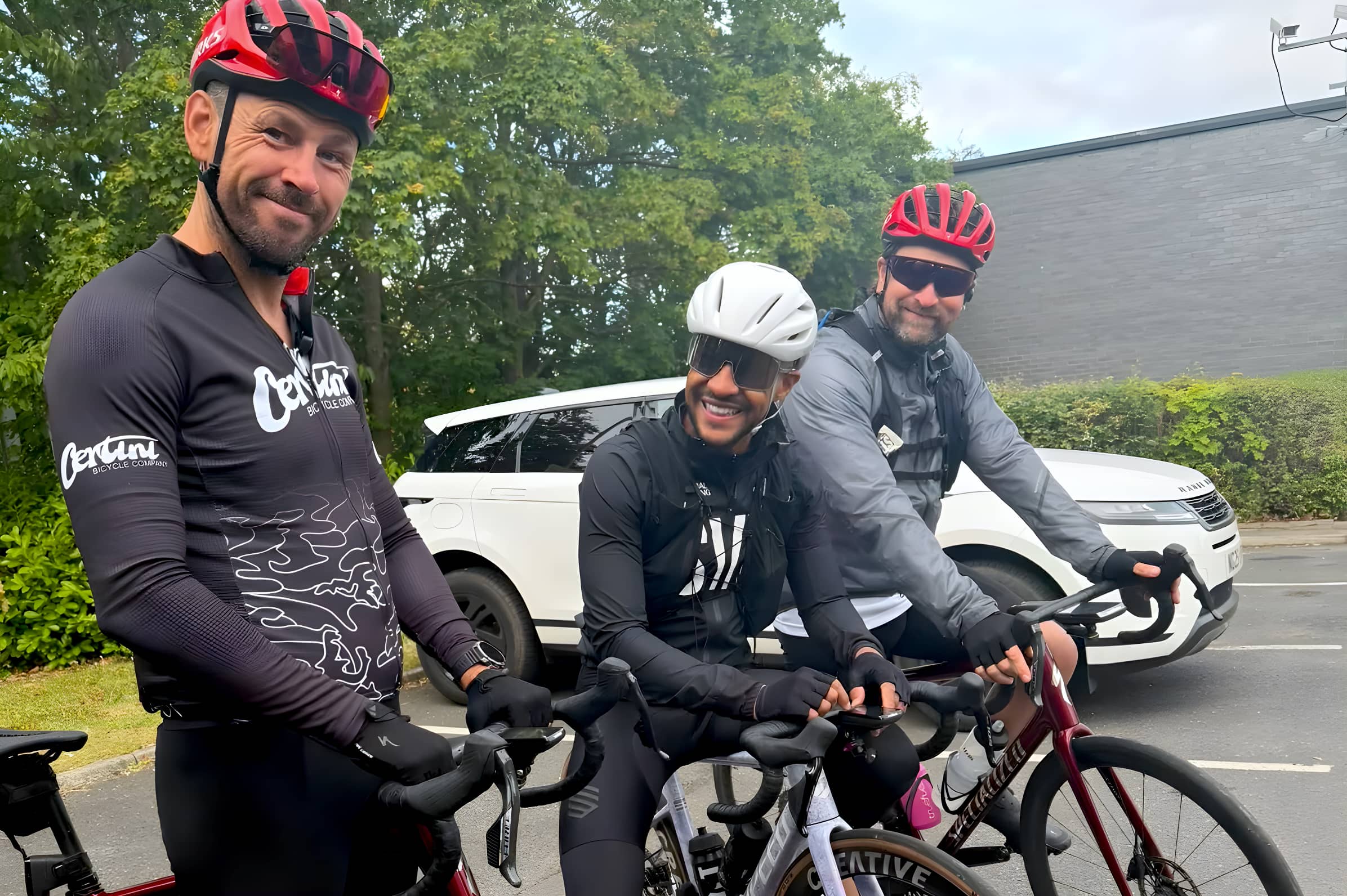
And people have been looking. Other former world champions, including Tony Bellew and Barry Jones, have joined Darren for sections of the journey. People have stopped and spoken to him. Stories have been exchanged. At the time of his Independent interview, the challenge had already raised more than £33,000 for CALM.
The microphone is working.
When toughness becomes something else
Boxing is a sport built around an unusual relationship with vulnerability. A fighter learns to conceal weakness. Darren has spoken openly about how that mentality can follow fighters outside the ring, where maintaining the appearance of toughness becomes considerably less useful.
During The Longest Round, he has talked about grief, loneliness and the people he has lost. On one long stretch of road, cycling alone, memories of those people came flooding back. Some made him smile. Others brought tears. Ricky Hatton was among them.
Darren believes that if people see men such as himself having these conversations, somebody watching might think: if they can talk, perhaps I can too. That is an achievement no stopwatch can measure.
Respecting the water
We have a habit of describing endurance sport through the language of conquest. Mountains are conquered. Oceans are conquered. Athletes defeat environments as though nature has agreed to participate.
The sea isn’t an opponent. It doesn’t win because somebody cannot cross it. Sometimes nature simply sets the terms.
Human determination can be extraordinary, and I have seen enough of Darren Barker to know that his reserves of willpower run unusually deep. But perhaps determination is not always demonstrated by forcing your way through whatever stands in front of you. Sometimes it is demonstrated by what happens when the plan falls apart.
The English Channel said no. Darren accepted the decision, completed the distance elsewhere and got back on the bike. The Longest Round continued.
The Channel changed the route, but it couldn’t change the conversations already taking place, the money already raised or the people who may hear a former world champion talking about grief and decide to talk about their own.
Perhaps that is the more interesting measure of this challenge. Darren set out to cover an extraordinary physical distance. But he also set out to make a message travel.
Not even the English Channel could stop that.