Three trophies, a managerial change and a difficult start to the Premier League season. Crystal Palace's recent success has raised expectations, but the challenge of building on it may be proving harder than anyone anticipated.
Crystal Palace find themselves at a crossroads. A difficult start to the Premier League season has left the South London club in the relegation zone, with a new manager, several new signings and a team still searching for consistency.
Maybe the bigger question is whether Palace are simply experiencing the challenges that come with entering a completely new era as a football club.
Following three major honours in two seasons, including the FA Cup, Community Shield and UEFA Conference League, replacing Oliver Glasner was never going to be straightforward. His departure marked the end of one of the most successful periods in the club’s history.
For Palace, European football and competing across multiple competitions are new territories. Clubs that are accustomed to playing in Europe year after year understand the demands, squad rotation and importance of depth. Palace are still learning and adapting.
There were already questions surrounding recruitment and squad depth last season, despite the incredible success.
The departure of sporting director Dougie Freedman was another significant blow. His recruitment record speaks for itself, bringing in players such as Michael Olise, Eberechi Eze, Marc Guéhi and Adam Wharton to Selhurst Park. Replacing that experience and eye for talent was never going to be easy.
Matt Hobbs arrived from Wolves with an enormous responsibility. His first major challenge was strengthening a squad that had previously struggled for depth. Several new players arrived with the intention of helping Palace compete across domestic competitions and in Europe. However, recruitment is not simply about numbers. It is about finding the right players, building a balanced squad and identifying individuals who fit the manager’s philosophy.
Have Palace recruited the players Pierre Sage needs to make his system work?
On paper, Sage looked an exciting appointment. Having led Lens to second place in Ligue 1, Champions League qualification and the French Cup, alongside previous experience at Lyon, his credentials were impressive. His preferred 3-4-2-1 formation also offered continuity after Glasner.
There have been encouraging signs going forward, with a more aggressive press and greater attacking intent. However, the biggest concern has been at the other end of the pitch. Palace have looked vulnerable defensively, particularly defending from wide areas. They have been conceding goals that could arguably have been prevented through better organisation, positioning and basic defensive structure.
These are fundamentals that need addressing and should be on the training ground.
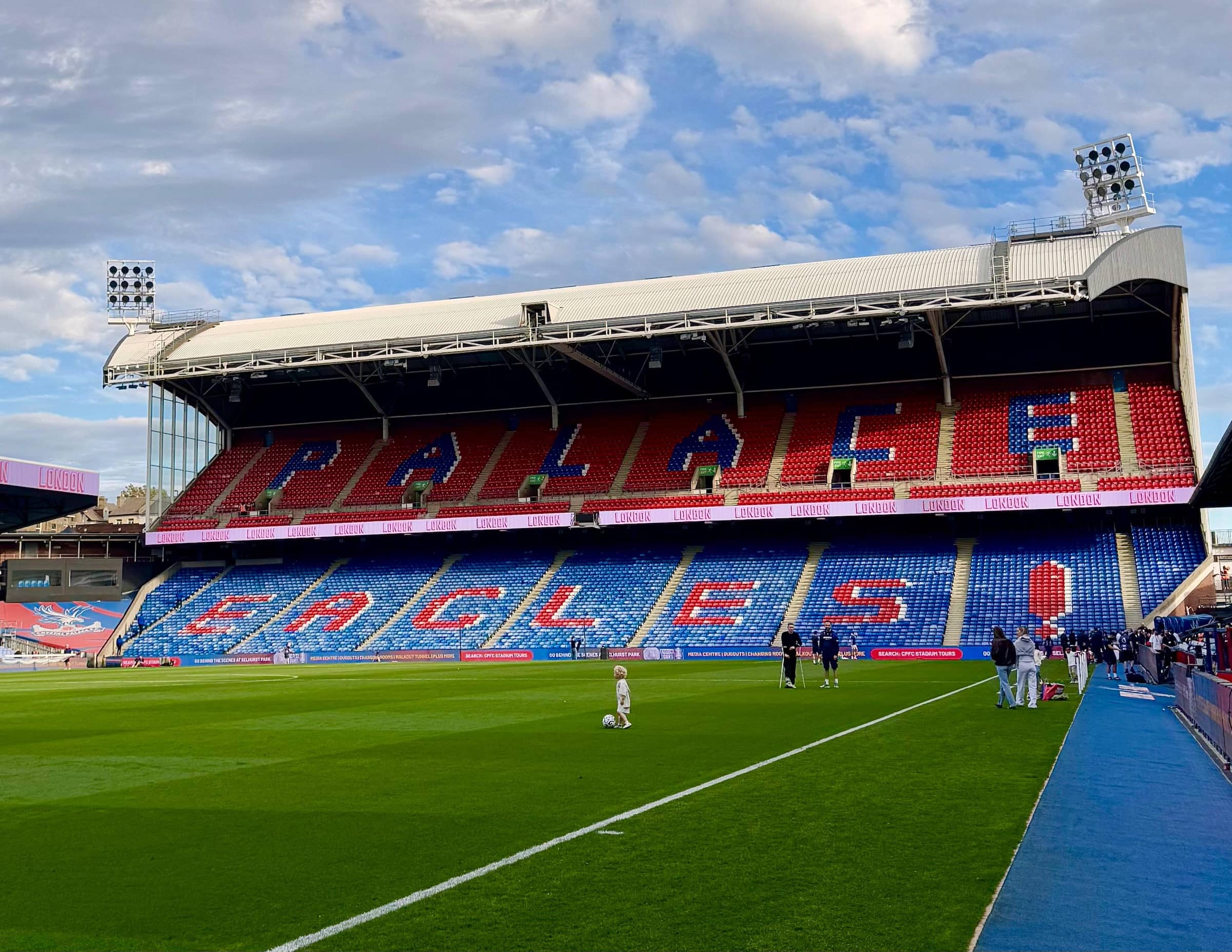
The atmosphere at Selhurst Park has also changed. The Holmesdale Fanatics, known as the HF, announced in August that they would stop all organised activity inside the stadium, citing growing restrictions, ticket prices and concerns about the future of supporter culture. Their absence has been noticeable.
For years, the group helped create one of the most recognisable atmospheres in English football. Losing that connection is another significant change for the club.
Now, with pressure mounting on Sage, attention turns to the Liverpool fixture and what happens next. Anthony Barry, Thomas Frank and Sean Dyche are among the names being linked with the position should a managerial change happen.
There are legitimate questions surrounding Sage, but also around the recruitment, squad balance and the overall direction of the club. Has he been given the right resources? Has Hobbs delivered the players required? What is the identity Palace want to build moving forward?
There are lessons to be learned from the last two seasons. Success cannot be taken for granted and competing in Europe requires planning, stability and investment in the right areas.
Losing both Glasner and Freedman in a short space of time has left enormous shoes to fill.
Palace need to become harder to beat, find consistency and demonstrate a clearer tactical direction. If something isn’t working, something has to change. By changing nothing, nothing changes.
However, perspective is important. This is a club that has lifted three major trophies, experienced unforgettable European nights and built a squad with genuine quality. The foundations are there, even if the performances have not yet reflected that.
The coming weeks could prove pivotal, but this should be viewed as a difficult chapter rather than the end of the story. Palace have earned the right to be ambitious.
Now comes the challenge of turning recent success into something sustainable.