An ice bath is cheap, simple and perfectly adequate for occasional use. Once cold plunging becomes part of the weekly routine, however, the preparation can become harder to tolerate than the cold.
Cold plunging can begin with remarkably little ceremony. A tub, cold tap water and enough ice to make getting in seem briefly like a poor life choice will do the job.
For occasional use, that simplicity is difficult to argue with. But anyone considering a cold plunge with chiller has probably reached a different stage. The question is no longer whether cold water is worth trying. It is whether buying ice, waiting for water to cool and rebuilding the setup several times a week is still worth the trouble.
That distinction matters, because a more elaborate system does not necessarily make a plunge more effective. What it can make it is considerably easier to repeat.
Ice works — until the routine around it stops working
The humble ice bath has several things going for it.
There is little commitment. You can experiment with cold plunging without sacrificing half the garage to another piece of fitness equipment or spending heavily on a habit that may disappear before the enthusiasm for it does.
For somebody who plunges after the occasional long run or demanding training session, that may remain the sensible arrangement indefinitely.
The inconvenience creeps in when frequency increases.
Buying a bag or two of ice now and again barely registers. Buying enough for several plunges every week is another matter. There is the cost, certainly, but also the less glamorous business of remembering to buy it, finding room for it and waiting while it does what frozen water does.
None of this is disastrous. It is simply friction.
And habits tend to notice friction long before spreadsheets do.
Consistency may matter more than colder water
The obvious assumption is that people upgrade because they want colder plunges. Often, the more useful difference is control.
An ice bath changes according to the starting temperature of the water, the weather, the amount of ice available and how long you are prepared to wait. A summer setup can behave very differently from the same tub in winter.
A controlled system removes much of that variability.
That does not mean the objective should be to drive the temperature as low as possible. Cold tolerance varies considerably, and there is little practical value in treating the thermometer like a leaderboard.
For somebody using cold water regularly, returning to a familiar temperature without recreating the conditions from scratch may be far more valuable than shaving another degree from the display.
Predictability is not terribly glamorous. It is, however, quite useful.
The point at which a chiller starts making sense
There is no particular number of weekly sessions at which everybody should suddenly buy a chiller.
A more revealing test is whether preparation has begun affecting use.
If buying ice has become a regular errand, sessions are being delayed while the water cools or plunges are being skipped because setting everything up feels like an unnecessary production, the equipment may no longer suit the habit.
That is the problem a cold plunge with chiller is designed to solve.
Instead of cooling a fresh tub with bags of ice before every session, a more permanent system can leave chilled water available for repeated use. For someone plunging once every few weeks, the extra equipment may be difficult to justify. For somebody using it several times a week, convenience carries rather more weight.
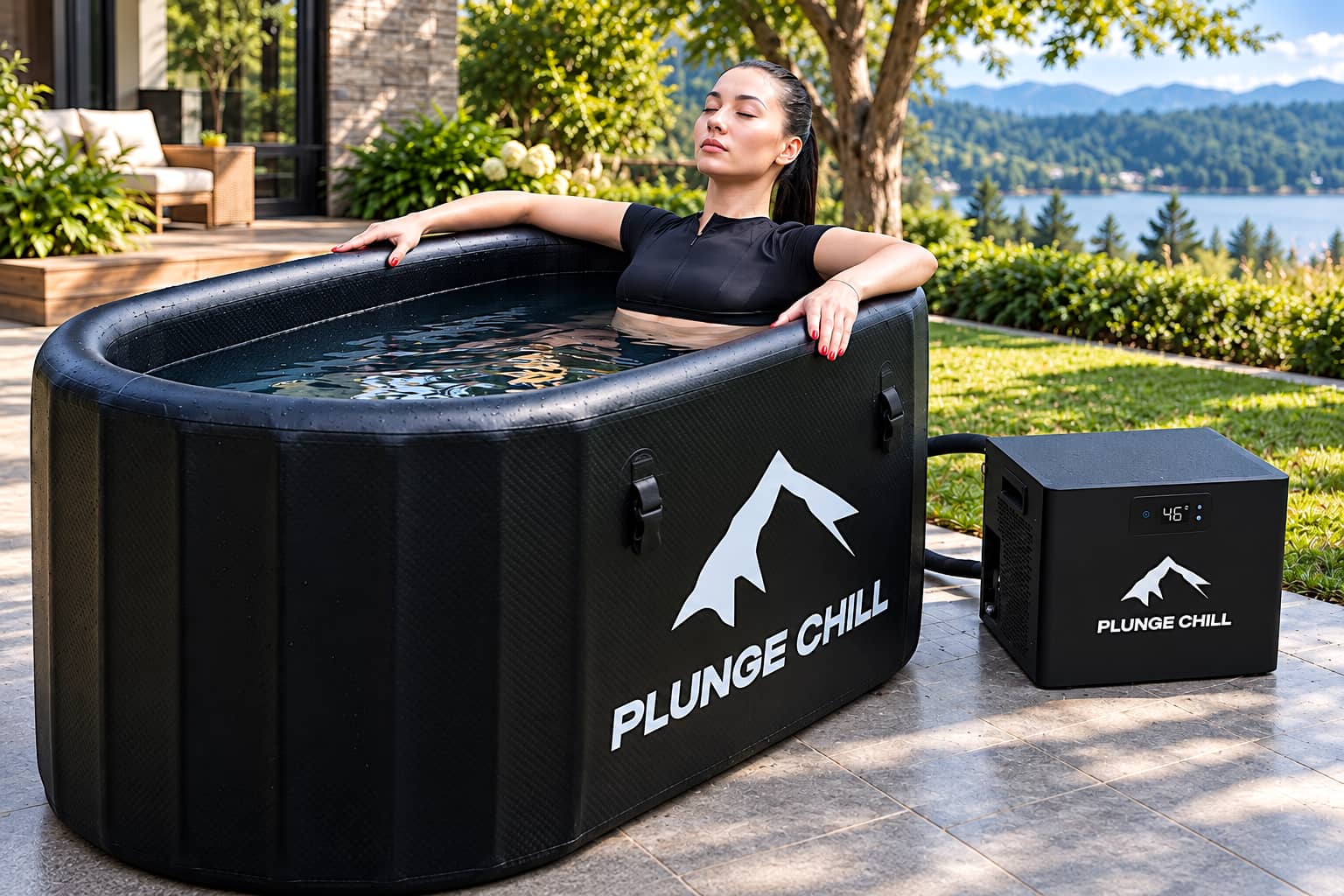
Plunge Chill is one example of this more permanent approach, offering tub-and-chiller combinations intended for regular home use.
The important point is not that a chiller is automatically the superior choice. It removes a particular inconvenience. If that inconvenience barely exists in your routine, there is very little to solve.
Permanent cold water creates permanent chores
Getting rid of the ice run does not make the whole business maintenance-free.
Quite the opposite, in one respect.
A tub that is filled, used and emptied occasionally is relatively straightforward. A system that keeps the same water in circulation requires more attention to cleanliness, filtration and general water quality.
The surroundings matter as well.
A permanent system needs a sensible drainage plan and access to power. Hoses and cooling equipment need space. A chiller also requires adequate airflow, while operating noise may matter far more indoors than it appeared to on a product page.
Outdoor installations bring their own considerations, including where the equipment will sit and how it will be protected from the weather.
These are decidedly less exciting subjects than water temperature. They are also the details most likely to become irritating once the novelty has worn off.
A useful upgrade should remove inconvenience rather than merely relocate it.
Buy for the habit you have
Fitness equipment has a remarkable ability to be purchased on behalf of a future version of ourselves.
Cold-plunge equipment is no exception.
A runner using cold water after occasional long sessions may have no reason to progress beyond a tub and ice. Somebody training frequently, with a dedicated recovery space and an established plunging routine, may place considerable value on walking over to a tub that is already prepared.
The equipment should follow that behaviour, not attempt to create it.
For readers who have already decided that a permanent Plunge Chill setup suits their routine, the checkout code Plunge10 offers 10% off.
That saving does not alter the more important calculation. A chiller still needs to solve a problem you actually have.
The tub is only one part of recovery
Convenience can make cold plunging easier to repeat. It does not elevate it above the rest of recovery.
Sleep, adequate food, hydration and sensible management of training remain part of the same picture. Nor does cold water have to follow every workout simply because a tub happens to be ready.
Different training days create different priorities. What fits after a demanding endurance session may not be the automatic choice after every strength workout, easy day or shorter technical session.
That is another reason not to judge a cold-plunge setup purely by how cold it gets or how elaborate it looks.
The useful question is considerably less dramatic: does it make an established routine easier?
If the ice bags, waiting and repeated setup have become the most exhausting part of getting into cold water, a chiller may have solved its first problem before anyone even steps into the tub.