Slow cranking, dim lights and electrical glitches can signal a weakening battery. Learn when testing or replacement may make sense.
There aren’t many automotive issues that cause as much specific stress as a failing battery. It usually shows up at the worst times: a chilly morning when everything else is already against you, a parking lot where assistance is not readily available, or the beginning of a journey that cannot be postponed. Until they get severe, the symptoms are rarely noticeable. In retrospect, the warning indications that preceded the battery’s ultimate failure appear much more apparent.
One of the more doable things a motorist can do to eliminate a category of unpredictable disturbance from daily life is to understand how car batteries decay and what early symptoms of that deterioration look like. Repeated starting problems can be an early sign that a battery replacement is needed, and Magowan Tyres offers a reliable local option.
How a Car Battery Deteriorates Over Time
A car battery is not a component that wears visibly. Unlike brake pads or tyres, there is no tread depth to measure and no audible warning that something is nearing its limit. The deterioration is chemical and gradual; the battery’s capacity to hold and deliver charge reduces over charge cycles, exposure to temperature extremes, and the simple passage of time.
Under typical conditions, most automobile batteries last three to five years, though this depends on driving habits, the environment, and the amount of strain that contemporary automotive electronics exert on the system. A car used primarily for short urban journeys tends to wear its battery faster than one covering regular longer runs.
The issue is exacerbated by cold temperatures. Batteries that have been surviving the warmer months frequently show their true condition during the first cold snap of fall or winter because a battery operating at lower capacity performs demonstrably poorer in low temperatures.
Identifying the Early Warning Indications
The transition from a battery that is ageing to one that is failing tends to produce a consistent set of signals, most of which are easy to dismiss individually but worth taking seriously when they appear together or repeatedly.
One of the most obvious signs is a sluggish or laborious engine crank upon beginning. It is audible that the battery is providing less current than the starter motor needs. A single occurrence might be attributed to cold weather or a car that has been sitting unused. Repeated occurrences suggest the battery is no longer performing as it should.
Early knowledge can also be obtained from electrical behaviour. A battery that is having trouble maintaining sufficient voltage may be the cause of dimming headlights during idle, sluggish power windows, or dashboard displays that flicker or behave strangely while the engine is under load. A battery that is operating below capacity makes it more difficult to handle the considerable continuous demand that modern automobiles exert on the electrical system.
The most obvious signal is a battery warning light on the dashboard, but it might also point to a problem with the alternator or charging system rather than the battery itself. It’s important to confirm this with a diagnostic check rather than presuming.
Why Earlier Replacement Tends to Be the Better Decision
The practical case for replacing a battery before it fails completely rather than after is straightforward. A battery that fails unexpectedly creates disruption at a time of the driver’s choosing, that is not at their choosing at all. A replacement carried out at a convenient moment, based on evidence that the battery is approaching the end of its useful life, takes place on predictable terms.
Secondary effects should also be taken into consideration. A battery that is no longer holding charge adequately places additional strain on the alternator, which must work harder to compensate. In certain situations, leaving a failing battery in use for a long time might hasten the wear on related parts in a way that could have been prevented by replacing the battery on time.
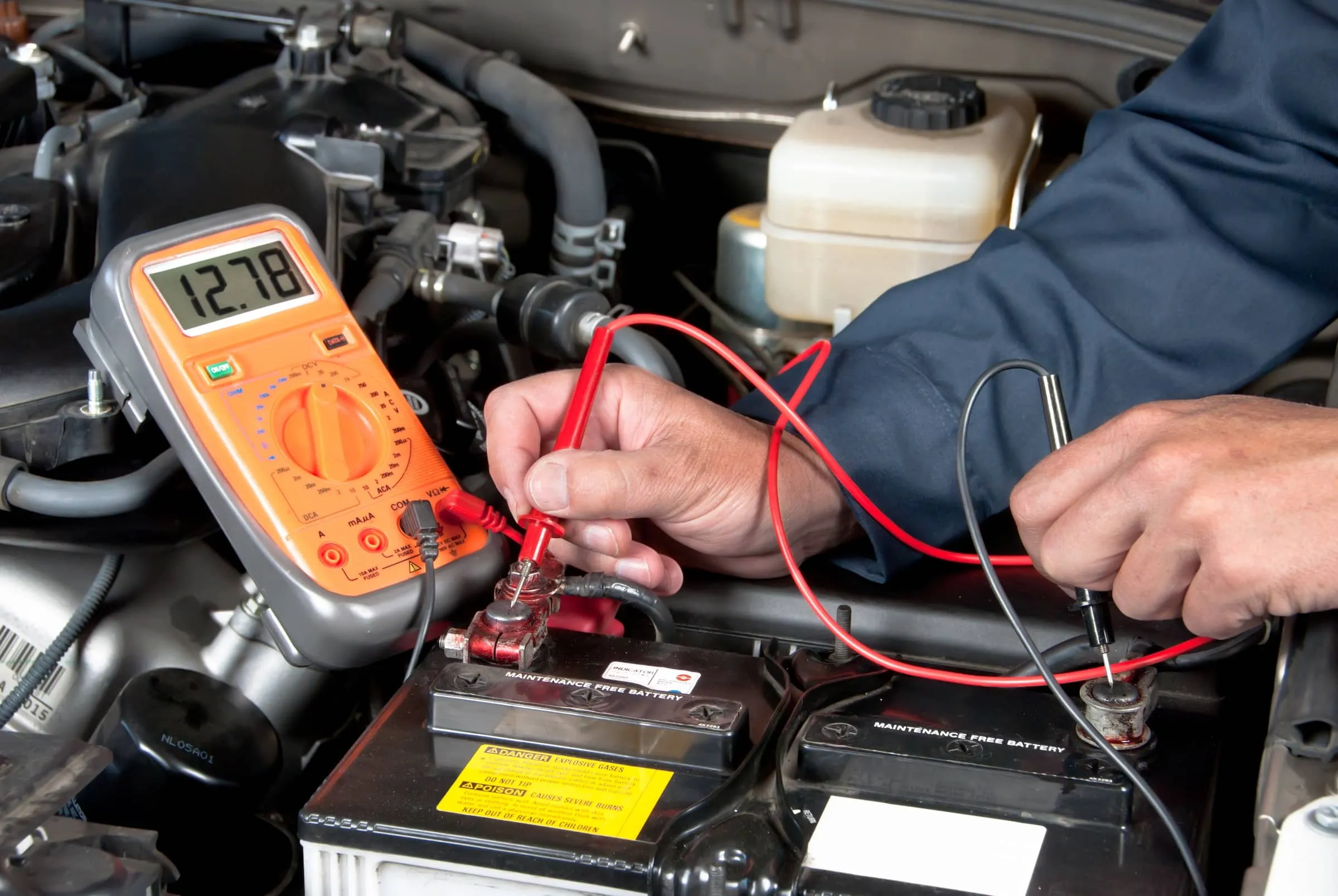
Many garages and tyre centres offer battery testing as a quick, straightforward service; a load test or conductance test can give a clear indication of the battery’s current state of health and its remaining capacity. This information transforms what could otherwise be a guesswork exercise into a precise, fact-based choice.
Matching the Replacement to the Vehicle
Car batteries are not always interchangeable. In terms of reserve capacity, physical dimensions, and cold cranking amps, the new battery must be identical to the original specification. Instead of using normal lead-acid batteries, vehicles with start-stop systems, regenerative braking, or high electrical demand from modern driver aid equipment may need to use improved flooded or AGM batteries.
Fitting a battery that does not meet the vehicle’s specification can affect charging behaviour, electrical system performance, and in some cases trigger warning lights or fault codes in vehicles with battery management systems. Before making a purchase, make sure the specifications are exact to avoid completely avoidable problems.
The Broader Relationship Between Battery Health and Driving Comfort
A healthy battery adds to the kind of low-level dependability that is often overlooked since nothing goes wrong. The car starts, the electrics work as expected, and the journey begins without incident. When battery health is deteriorating, background reliability gradually deteriorates until a failure occurs that necessitates prompt treatment.
One of the easier ways to lessen the unpredictability that makes automobile ownership unpleasant is to address battery status proactively, as part of a thoughtful approach to vehicle maintenance rather than merely in response to difficulties.
Regardless of whether the replacement is urgent or planned, the cost is the same. The difference lies entirely in the circumstances under which it happens.