Poor sleep, disrupted meals and abandoned exercise routines are becoming familiar complaints among British business travellers. New research suggests that giving employees more control over their accommodation could be an important part of the wellbeing conversation.
Business travel wellbeing is becoming a rather awkward subject for employers. The flights are arranged, the hotel is booked and the meeting schedule is ready. The person making the journey, however, may have had remarkably little say in where they will spend the night.
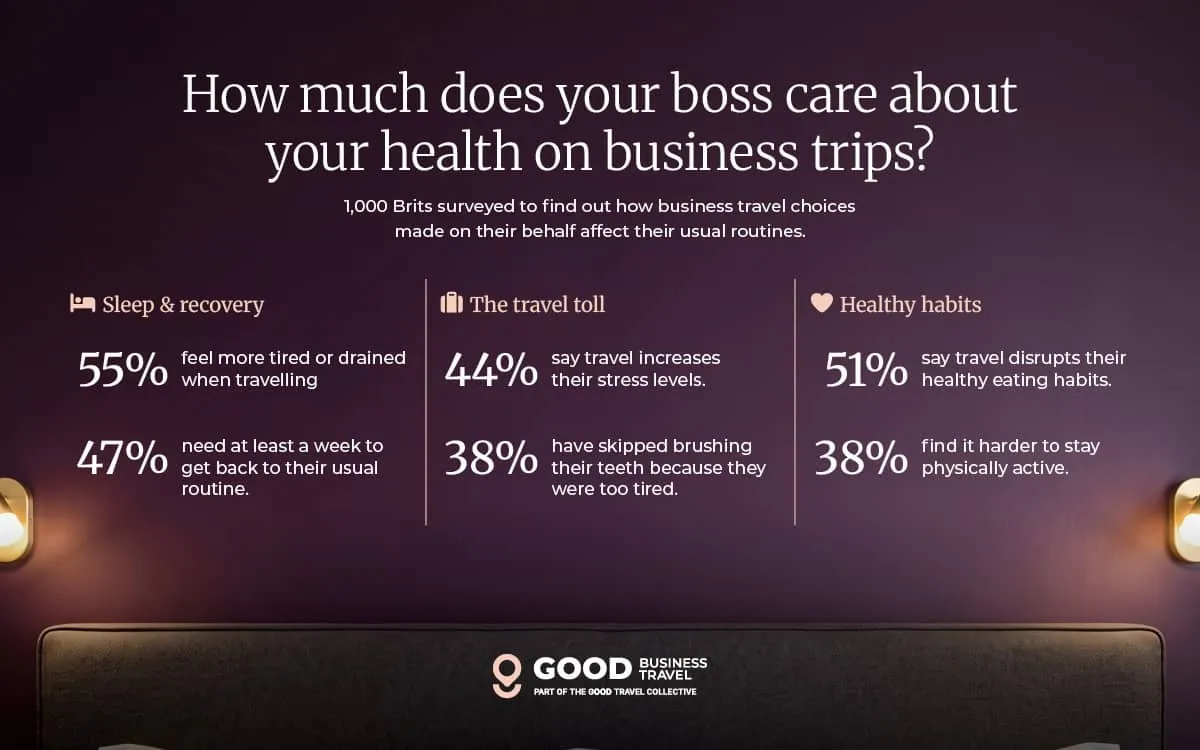
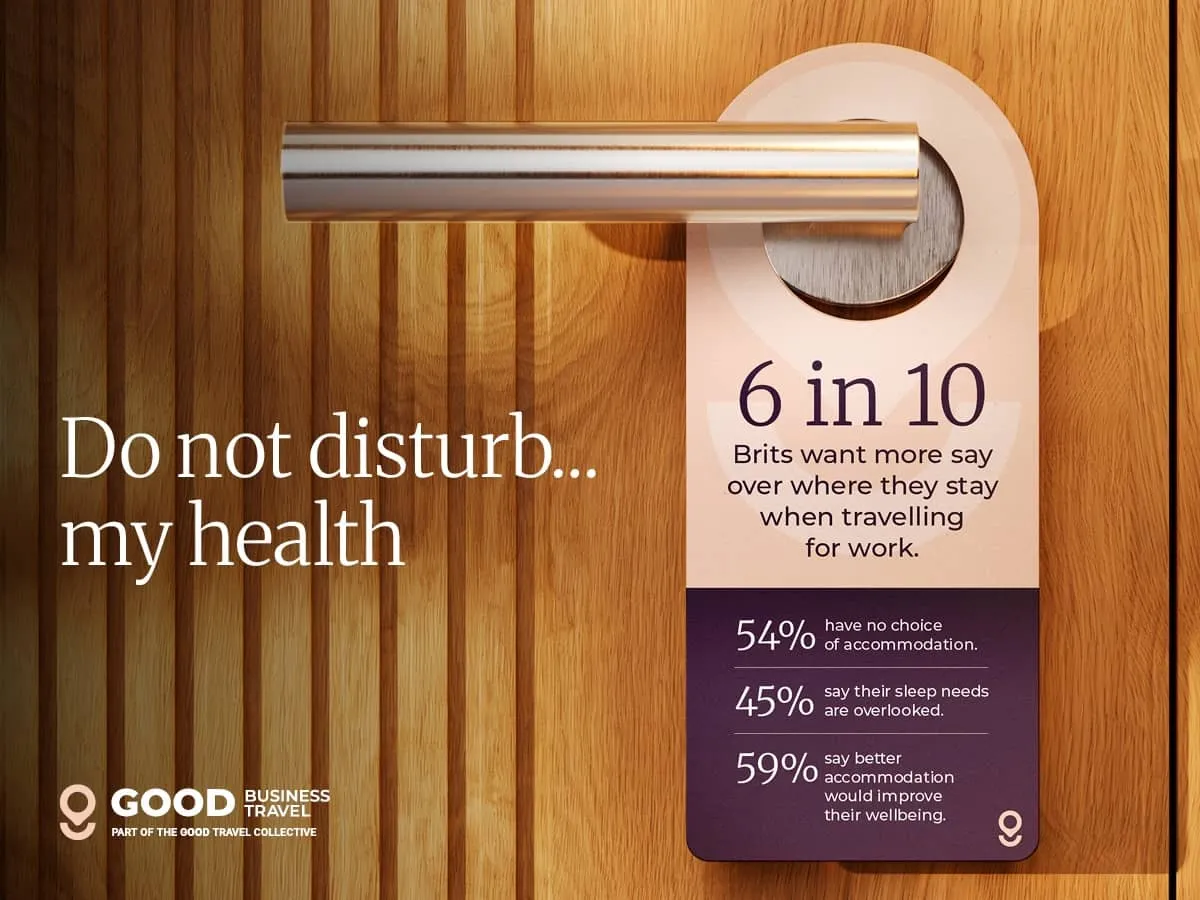
New consumer research from corporate travel management company Good Business Travel found that 54% of British business travellers have no choice over their accommodation, despite 60% saying they would like more control.
That lack of choice sits alongside some uncomfortable findings about life away from home.
More than half of respondents (54%) say poor sleep during business trips affects their ability to perform at their best. Meanwhile, 51% report that travelling disrupts their usual healthy eating habits, 38% find it harder to stay physically active and 51% experience anxiety or stress while working away.
Of course, a hotel booking cannot be blamed for every restless night or missed workout. Business travel brings its own demands, and the survey does not establish that accommodation choice directly causes these problems.
It does, however, raise a reasonable question: if employers expect people to perform well away from home, shouldn’t the conditions surrounding that work receive a little more attention?
The disruption doesn’t always end when the trip does
Coming home isn’t necessarily the end of the story.
Among business travellers aged 25–34, 53% say they need at least a week to recover and return to their normal routines after travelling for work. That is the highest proportion of any age group surveyed.
It is a striking finding, particularly because recovering from a business trip rarely features in the official itinerary.
The figures are self-reported, so they cannot establish precisely what is driving that recovery period. Nevertheless, they suggest that the effects of travelling for work can extend beyond the journey itself.
Age also appears to influence how strongly employees feel about accommodation choice.
Travellers aged 45–54 are the most likely to want greater control over where they stay, followed by those aged 35–44.
There is no indication that everyone wants the same facilities or type of hotel. Quite the opposite may be true. Someone prioritising a quiet night’s sleep could have different requirements from a colleague who wants convenient opportunities to exercise.
A standardised booking policy may be administratively convenient, but convenience for the organisation does not necessarily translate into comfort for the traveller.
Should hotel choice be part of workplace wellbeing?
Corporate accommodation decisions inevitably involve budgets, availability and practical considerations. Those constraints are real, and giving employees more choice needn’t mean abandoning them.
What the findings challenge is the assumption that accommodation is simply somewhere to leave a suitcase between meetings.
Natasha Inglis, Client Experience Director at Good Business Travel, argues that employers should consider individual requirements and wellbeing alongside cost and convenience.
It is a distinction worth examining.
A hotel close to the office may save travelling time, while another property might make it easier for an employee to follow familiar eating, exercise or sleeping routines. The best option will depend on the individual and the demands of the trip.
Crucially, the research does not demonstrate that greater hotel choice would automatically improve sleep or reduce stress. That would require further investigation.
But asking employees what helps them maintain their routine seems a reasonable place to begin.
Which destinations and hotels offer the best conditions?
Good Business Travel also examined its 20 most-booked business destinations, assessing how well they support healthy routines using a scoring system with a maximum of 60 points.
Munich emerged as the highest-scoring destination, ahead of Berlin and Istanbul.
| Destination | Score out of 60 |
|---|---|
| Munich | 47.8 |
| Berlin | 45.8 |
| Istanbul | 45.1 |
Germany had another representative in the top 10, with Hamburg joining Munich and Berlin. Paris, Brussels, Madrid, Prague, Dublin and Manchester also featured among the leading destinations.
The company conducted a separate assessment of hotel chains operating across Europe, considering factors including comfort, facilities and cleanliness.
| Hotel chain | Score out of 60 |
|---|---|
| Sofitel | 45.2 |
| NH Hotels | 44.0 |
| Holiday Inn Hotels | 43.8 |
Hampton by Hilton, Mercure, Hilton Hotels, Crowne Plaza and Marriott were also among the top-performing hotel groups.
These rankings provide one perspective on the practical conditions surrounding business travel. They should not, however, be mistaken for independent clinical assessments or guarantees of better sleep.
The scores reflect the company’s evaluation criteria, and individual experiences will inevitably vary between properties.
Still, their inclusion highlights a useful consideration for travel planning: the quality of a business trip involves more than getting an employee to the right city at the right time.
How to protect your routine when the hotel isn’t your choice
For employees who cannot influence their accommodation, health expert Thorrun Govind recommends concentrating on practical adjustments that remain within their control.
Make the bedroom easier to sleep in.
An unfamiliar room can make a familiar bedtime routine more difficult. Govind recommends creating conditions that encourage rest rather than allowing the hotel environment to dictate the evening.
“You might not be able to choose the hotel, but you can control your environment. An eye mask and earplugs can help. Keep the room cool and as dark as possible. Try to stick to your normal bedtime routine.”
Pay attention to caffeine, alcohol and regular meals.
The temptation to use another coffee to compensate for a tiring journey is understandable.
Govind advises avoiding caffeine too close to bedtime and remembering that alcohol can disrupt sleep, even if it initially makes someone feel drowsy.
Staying hydrated and eating regular meals are also useful ways to maintain some familiarity when the working day has taken an unfamiliar turn.
Find opportunities to move and get outside.
Maintaining physical activity doesn’t require recreating an entire home exercise schedule.
A walk between meetings can provide movement and fresh air. Govind also points to the potential benefits of natural daylight for the body clock, particularly when travelling across time zones.
These are manageable habits rather than an elaborate programme of self-improvement. They may help protect familiar routines, even when the accommodation itself is beyond an employee’s control.
There is, however, a limit to what personal adjustments can achieve.
Employees can pack earplugs, make time for a walk and try to maintain regular meals. Employers still control many of the decisions that shape the trip.
The emerging challenge for corporate travel is finding a more sensible balance between those responsibilities. After all, the journey may be for work, but the person trying to get a decent night’s sleep is still a human being.