New analysis reveals the staggering cost for two fans to follow their nation to the 2026 World Cup Final.
The World Cup has always belonged, spiritually at least, to the supporter with a flag round the shoulders, a hoarse voice, questionable face paint and a bank balance already looking nervous. But new analysis suggests the 2026 tournament may be drifting further from the working-class football fan and closer to the corporate hospitality crowd, where the prawn sandwiches are chilled, the lanyards are laminated, and the emotional damage comes with table service.
According to analysis by AceOdds.com, following your nation from the group stage all the way to the Final could cost an estimated €54,000 for two people on average.
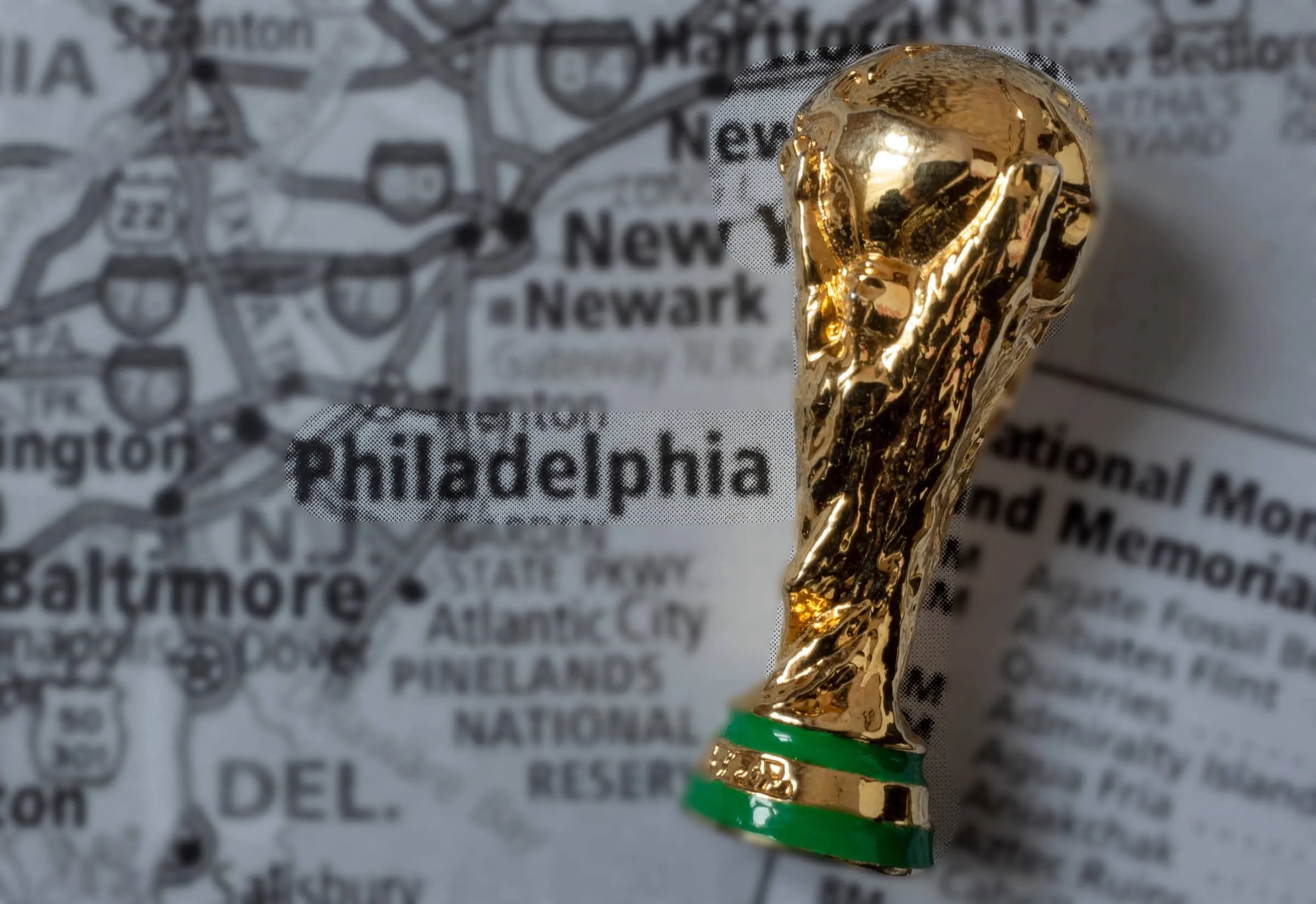
That includes flights, accommodation, match tickets, food and drinks. It also assumes the dream run: your team keeps winning, your passport gets more exercise than your midfield, and the journey ends at the Final in East Rutherford, New Jersey.
Romantic? Yes.
Affordable? Not unless your savings account has Champions League revenue.
Football’s Biggest Party Now Has A Luxury Price Tag
AceOdds.com analysed more than 120,000 accommodation listings and 50,000+ flights to estimate what it would cost fans from all 48 competing nations to follow their team through every match of the 2026 World Cup.
The average projected cost for two supporters is brutal enough to make even the most loyal fan briefly consider watching from the sofa with a multipack and emotional support crisps.
The great irony is that food and drink make up the smallest part of the bill. The pint is not the villain here. Nor is the hot dog that looks as though it has lived through several qualifying campaigns.
The real damage comes from tickets, flights and accommodation.
Tickets alone account for nearly half of the average total cost, at around €26,500 for two people. The analysis states that ticket prices were sourced from a secondary marketplace and reflect the lowest prices available per match at the time of research.
That distinction matters. These are not necessarily official face-value prices. They are the sort of real-world figures fans may encounter when demand has gone feral and availability starts behaving like a rumour.
The Final Alone Could Cost €13,500 For Two Tickets
The World Cup Final ticket is estimated at around €13,500 for two people.
That is more than all three group-stage matches combined for the majority of nations in the analysis. There, in one figure, is the modern football economy: the closer you get to history, the further it moves from the people who made the sport matter in the first place.
For decades, football has sold itself as the people’s game. Terraces, pubs, buses, trains, dads, daughters, factory workers, nurses, posties, students, and the bloke who insists every manager since 1998 has got the formation wrong.
But at these prices, the travelling World Cup fan starts to look less like the heartbeat of the sport and more like a guest at an executive networking event that happens to have corners and VAR.
Has The Working-Class Fan Been Priced Out?
The uncomfortable question is no longer whether football is expensive. Everyone knows that. The sharper question is whether elite football has crossed a line where ordinary fans are no longer the intended audience.
A two-person World Cup trip costing €54,000 on average is not a holiday. It is a financial life event.
For many supporters, that number is wildly out of reach. For others, it would mean credit cards, savings, loans, favours, sacrifices and a level of domestic diplomacy normally reserved for buying a second-hand sports car.
And that is before factoring in the obvious truth: most fans do not travel as a tidy two-person financial unit. They travel as mates, families, parents and children. They travel with hope, superstition and too many chargers. They also travel with limits.
The danger for football is that its showpiece events begin to feel less like mass gatherings and more like velvet-rope experiences. Less street carnival, more branded lounge. Less “we were there”, more “your access package includes complimentary grazing”.
Iraq Fans Face The Heaviest Bill
Of all 48 nations analysed, Iraq fans face the most expensive route.
Two supporters travelling from Baghdad and following Iraq all the way to the Final would need an estimated €64,500, approximately IQD 100 million. The biggest driver is flights, with Iraq fans expected to spend around €21,000 on air travel alone.
Jordan and Argentina complete the top three most expensive nations to follow.
Panama fans face the lowest estimated cost at around €48,500 for two people, helped by shorter flights to host cities and lower accommodation costs along their route.
The difference between Iraq and Panama is around €16,000, a gap driven largely by flight costs. Same tournament, same dream, very different bill.
England Fans Would Need Around £44,700
For England supporters, the projected cost is around £44,700 for two people, assuming England win their group and reach the Final in East Rutherford.
That includes approximately £24,200 on tickets, £9,300 on accommodation, £7,500 on flights, and £3,600 on food and drinks.
The route referenced in the analysis includes cities such as Atlanta, Mexico City and Miami. Lovely places, all of them. Less lovely when your bank app starts sending push notifications that sound like a cry for help.
For England fans, this is where romance collides with reality. Supporting your country abroad has never been cheap, but this is not a few quid over budget. This is the sort of figure that turns a football trip into a household summit.
The Prawn Sandwich Problem
Football has always had money in it. That is not new. The difference now is the growing sense that the best seats, biggest matches and most meaningful live experiences are moving steadily away from traditional supporters.
The working-class fan did not merely watch football become popular. They made it popular. They filled the terraces, carried the songs, built the tribal rituals, passed the obsession down generations and turned clubs and countries into living things rather than balance-sheet assets.
Now, at the very top end of the sport, those same fans can find themselves priced into the margins.
The World Cup should be a global gathering, not an affordability test. It should feel noisy, chaotic, democratic and gloriously human. If it becomes too polished, too packaged and too expensive, it risks losing the very thing that gives it power.
A stadium full of corporate clients can produce revenue. It cannot produce soul.
France, Germany, Spain, Portugal, Brazil And USA Costs
The wider examples reinforce the same point.
France fans would spend around €53,000 for two people. Germany fans would spend about €54,000. Spain fans would face a similar figure at around €53,000, while Portugal supporters would need approximately €56,000.
Brazil fans would spend around R$331,500, with R$175,000 going on tickets alone.
American fans, despite following a host nation, would still need around $63,000 for two people, including $34,000 on tickets and $16,100 on accommodation.
Home advantage, it turns out, does not come with a discount code.
Football’s Greatest Show Still Needs Real Fans
None of this takes away from the scale of the 2026 World Cup. A tournament across the United States, Canada and Mexico will be enormous, colourful, noisy and, in places, spectacular.
But the numbers raise a question the sport cannot keep dodging.
If the people who built football culture cannot afford to attend football’s biggest moments, then the game has a problem bigger than ticketing. It has a belonging problem.
There will always be hospitality suites. There will always be sponsors, premium lounges, VIP entrances and people eating delicate seafood while pretending to understand the offside law.
Fine. Let them have their padded seats.
But the World Cup still needs the fan who saves for years, sings until their throat gives out, cries at full-time and remembers the trip not because the canapé selection was strong, but because they were part of something.
Football can survive high prices. It cannot survive forgetting who gave it a heartbeat.