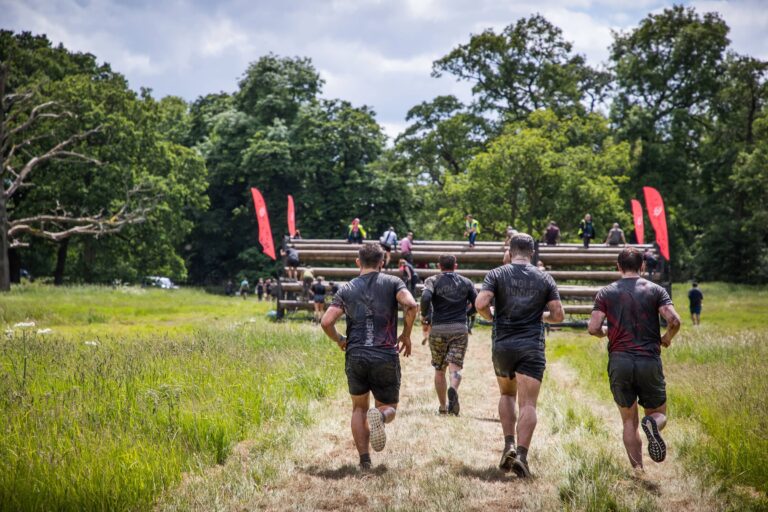
Warwickshire’s Wolf Run marks 15 years at Offchurch Bury this September, with mud, obstacles, Junior Wolf waves and no winners.
Warwickshire’s Wolf Run will celebrate its 15th anniversary at Offchurch Bury in Leamington Spa on 12–13 September, returning to the West Midlands countryside with obstacles, water, mud and the useful understanding that immaculate trainers are a fundamentally temporary condition.
This year’s Autumn Wolf marks 15 years since the first event in 2011. Founded by local brothers Will and Charlie Moreton, whose farming family created and continues to organise the event, Wolf Run has grown into three fixtures each year while keeping its headquarters firmly in the countryside that inspired it.
Its most revealing feature, though, may be the thing Wolf Run deliberately leaves out: winners.
Wolf Run’s 15th anniversary is not really about racing
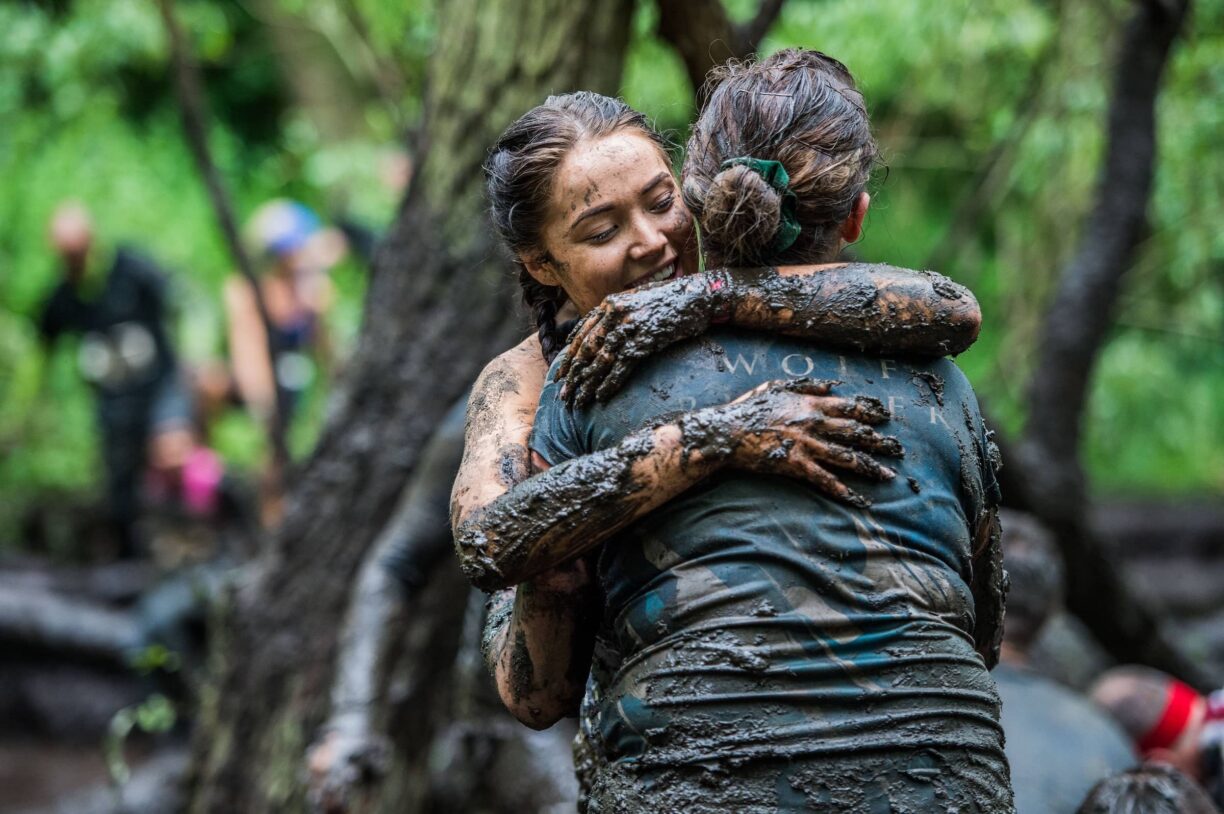
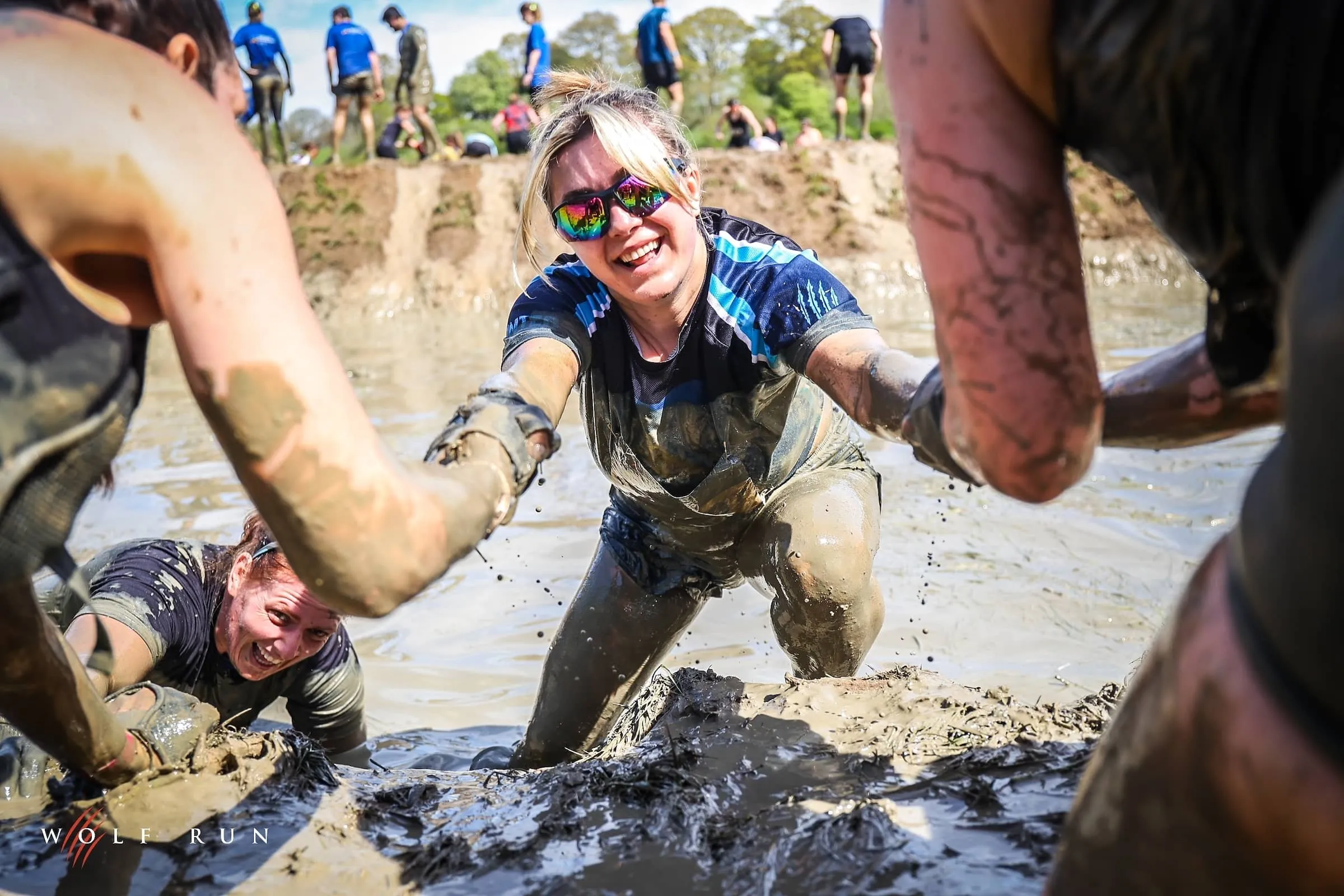
There is no timing system and no competitive hierarchy. Participants are encouraged to help their own group and anybody else who happens to be negotiating the same patch of mud.
That changes the character of the day.
Most endurance events eventually become exercises in numbers: finish times, positions, splits, personal bests and watches that appear capable of running small governments. Wolf Run has taken another route. The emphasis is on completing the experience rather than defeating the person beside you.
For groups of friends, colleagues, families and charity fundraisers, that makes considerably more sense. Getting over something awkward together tends to produce a better story than finishing 47 seconds ahead of Dave from accounts.
The Landslide remains Wolf Run’s calling card
Every established event needs one image capable of explaining itself without a paragraph of supporting evidence. Wolf Run has the Landslide.
The enormous red slide stretches for more than 100ft, with six lanes allowing participants to descend alongside one another before arriving in the pool at the bottom.
It has become one of the event’s most recognisable obstacles, partly because it looks spectacular and partly because gravity requires very little briefing.
The course also includes obstacles such as the Acrophobia nets. Marshals are present to provide support and every obstacle can be skipped, an important distinction for an event that wants challenge without turning the afternoon into an audition for the special forces.
From England internationals to muddy families
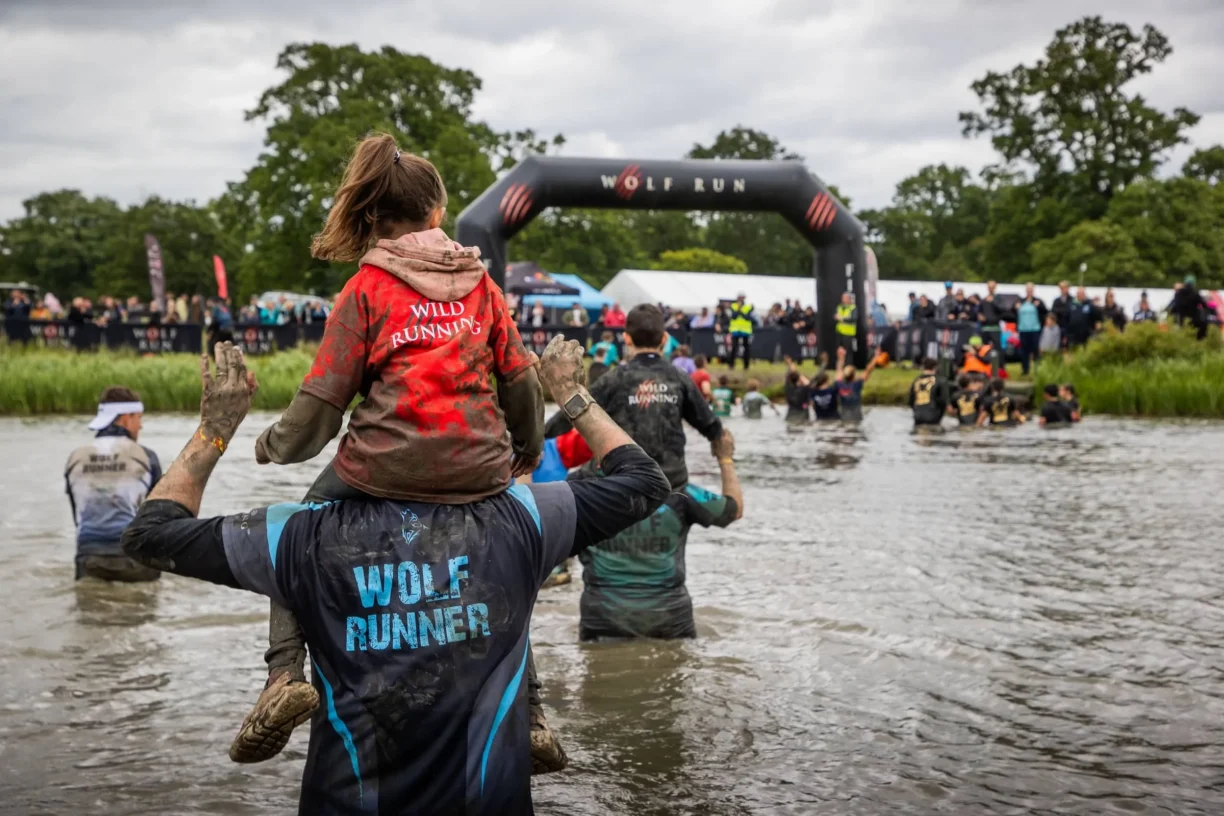
The appeal has reached beyond the usual obstacle-running crowd.
Former England internationals Mike Tindall, Neil Back and Will Greenwood took part in Spring Wolf in 2018, providing a particularly sturdy demonstration that distinguished sporting careers offer no permanent immunity from getting covered in Warwickshire mud.
The event has also built a route for younger participants. Junior Wolf waves run at every event for seven to 17-year-olds, with 3k and 6k options.
That family element extends beyond the course. Wolf Run’s event village brings together food, drink, music and local partners, giving supporters somewhere to gather while runners return looking as though they have recently lost an argument with a field.
The Moreton brothers remain behind the event
Fifteen years can turn a homespun sporting idea into something unrecognisable. Wolf Run appears to have resisted that particular temptation.
Will and Charlie Moreton remain at the centre of the operation, having created the event from their own affection for the West Midlands countryside.
That local connection matters. Plenty of obstacle events can supply cargo nets and cold water. Fewer have a genuine relationship with the landscape underneath them.
A photograph from the inaugural 2011 Wolf Run provides the neatest reminder of how far the idea has travelled. The machinery may have become more familiar and the Landslide more famous, but the proposition remains pleasingly uncomplicated: get outside, tackle something ridiculous and lend a hand when somebody else needs one.
Autumn Wolf returns to Offchurch Bury
The anniversary edition takes place at Offchurch Bury, Leamington Spa, on 12–13 September, with entries still open.
There will be mud. There will be water. There will be marshals, hugs, questionable laundry prospects and people voluntarily throwing themselves down a six-lane slide.
Fifteen years after the first Wolf Run, perhaps that is the clever bit. It never needed to discover who was fastest.
It merely had to find out how many people were prepared to get filthy together.