

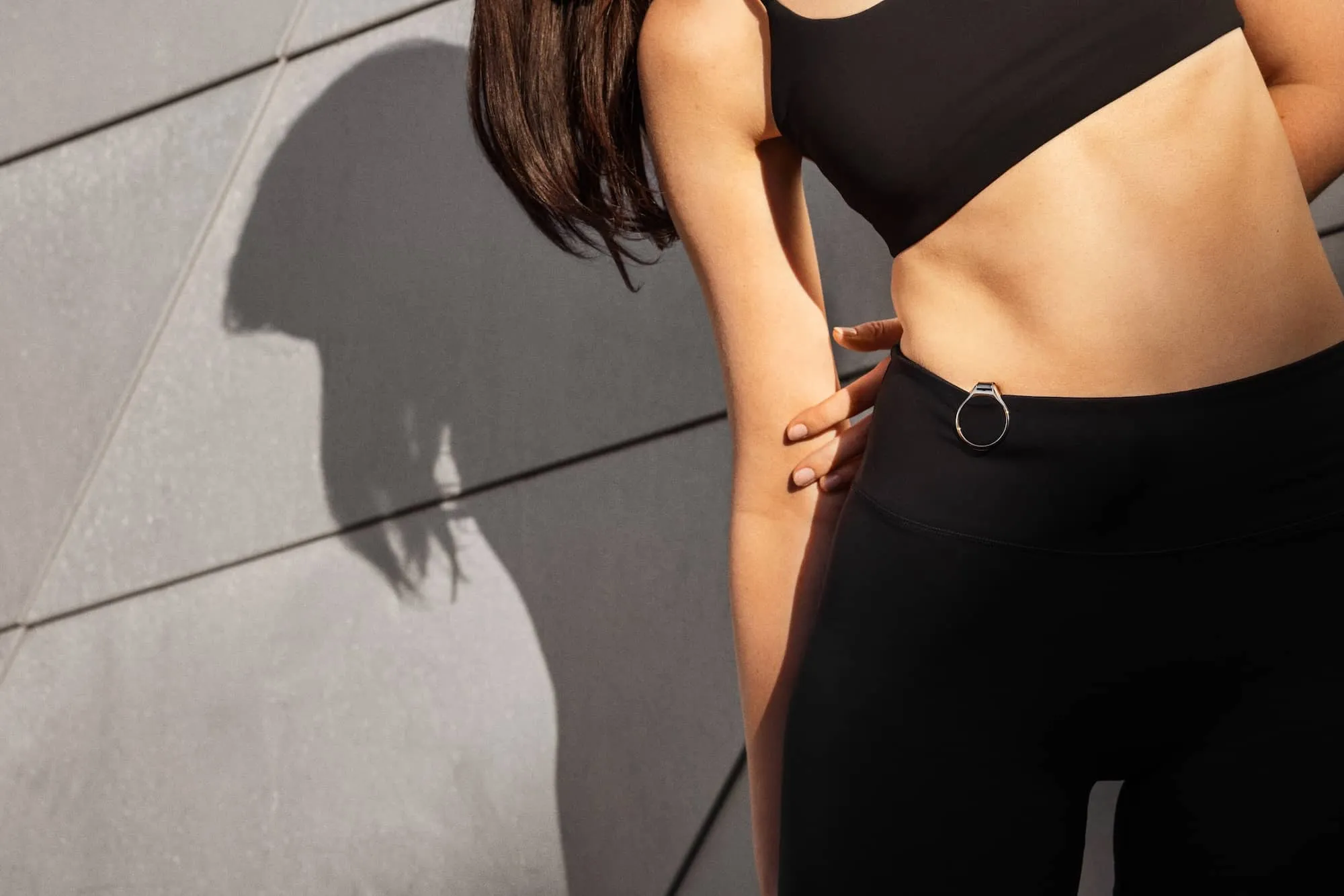
Finnish startup Vire Health is taking temperature tracking away from the wrist and onto the waist. Its first 100 customers will help develop the technology, with menstrual health, sleep and menopause among the areas being explored.
Most health wearables arrive with their features settled, their promises polished and a price attached. Finnish startup Vire Health is trying something different. It wants 100 women to help decide what its first consumer device should become.
There is a catch, although not necessarily an unreasonable one: participants will be paying for the privilege.
Unveiled at the Slush technology event in Helsinki on 18 November 2026, the Vire 100 programme invites women to purchase the company’s first-generation Vire Clip for £449 and contribute directly to its development.
In return, they receive early access to a waist-worn temperature tracker, lifetime access to the Vire app, weekly discussions with women’s health experts and an opportunity to influence how the technology translates physiological measurements into useful information.
The programme is open initially to customers in the UK, EU, Switzerland and Norway, with deliveries scheduled to begin in December 2026.
The proposition is unusual enough to deserve attention. Rather than asking women to adapt to another finished health tracker, Vire is asking them to help determine what the information should actually tell them.
Why Vire is moving health tracking to the waist
The Vire Clip takes a different approach to wearable technology. Instead of sitting on the wrist or finger, it attaches at the waist, where the company says its patented sensing technology can continuously monitor changes in body temperature.
Temperature is influenced by several physiological processes, including hormonal fluctuations, metabolism, the body’s internal clock and nervous system activity.
Vire believes following these changes over time could help women recognise patterns associated with their menstrual cycles, sleep and recovery, as well as changes experienced during perimenopause and menopause.
The distinction is between an isolated reading and a developing pattern. A thermometer provides a temperature at a particular moment. Vire wants to show how that temperature varies across hours, days and longer periods.
Antti Immonen, Vire Health’s CEO and co-founder, says the device’s position also allows it to capture other physiological signals.
“The Vire Clip is worn at the waist, close to the core. It picks up signals you’d recognize from other wearables, like sleep, movement and heart rate, and others the core placement makes possible: breathing, sleep position, perspiration and, above all, continuous body temperature.”
That approach adds another dimension to an area already attracting interest from wearable manufacturers, as explored in Sustain Health’s earlier coverage of technology designed around women’s physiology.
For Vire, the question is whether a different measurement location and continuous temperature data can produce information women find genuinely useful.
From a child’s sleep monitor to women’s health research
The technology has a more personal history than the average fitness gadget.
Immonen had been researching heat-sensing technology for years when, in 2021, his newborn daughter was diagnosed with congenital central hypoventilation syndrome, a rare condition that affects breathing during sleep.
Frustrated by wired monitoring equipment and false alarms, he adapted his sensor into a wearable clip.
That early prototype became the Vire Clip, which is now being used as part of a sleep study protocol at Helsinki’s New Children’s Hospital.
The company’s research interests have since expanded into women’s health.
Vire is involved in Our Transitions, a participant-led menopause study organised by nonprofit 4YouandMe with Women Living Better. An optional participant group is exploring whether the device can detect hot flushes.
The company is also undertaking early-stage work examining sleep disturbances during perimenopause.
These are relevant questions, particularly given the relationship between hormonal changes, temperature regulation and disrupted sleep during different stages of women’s lives.
But the distinction between measuring a temperature change and explaining its cause remains important. Vire’s research activity does not yet establish that the Clip can reliably identify menopause symptoms, diagnose a health condition or determine why someone’s sleep has been disturbed.
Turning measurements into something meaningful
This is where the Vire 100 programme becomes more interesting than a conventional product launch.
The participating women will be able to explore their own temperature data while working alongside the company’s team and women’s health experts to identify which patterns deserve closer attention.
Lisa Falco, a women’s health and technology adviser, sees that involvement as central to the project’s potential.
“But collecting more data isn’t the same as creating meaningful health insights. What’s exciting about this approach is that women themselves will help determine which patterns matter, what questions need answering, and how that information can be useful in their everyday lives.”
It is a sensible distinction.
A graph showing nightly temperature changes might be interesting. Understanding whether those changes have a useful relationship with disrupted sleep, menstrual patterns or menopausal symptoms is a considerably bigger undertaking.
Vire hopes its initial customers can help establish which questions its technology should prioritise and how the resulting information should be presented.
The company also has experienced wearable developers behind it. Vire says it is backed by members of the founding team behind Oura, the Finnish business responsible for the Oura Ring, including Petteri Lahtela.
Former Oura chief science officer Hannu Kinnunen is also involved, bringing expertise in wearable technology and physiological measurement.
Their experience gives Vire a relevant technical background, although the success of the device will ultimately depend on what its measurements can demonstrate and how effectively those measurements are translated into everyday use.
Vire Clip price, availability and what happens next
The first-generation Vire Clip is available through the Vire 100 programme, with the announced regional pricing as follows:
- UK: £449
- European Union: €449
- Switzerland: CHF 449
- Norway: NOK 5,490
The price includes lifetime free access to the Vire app. Deliveries are scheduled to start in December 2026, while a wider commercial rollout is planned during 2027.
People interested in future availability can also join the company’s customer waitlist.
For the first 100 women, though, this is a chance to influence a product that is still taking shape, rather than simply buy a finished set of health features.
And that may be the most useful thing about Vire’s approach. The technology can collect the measurements. Its first customers will help the company establish which of them are actually worth paying attention to.