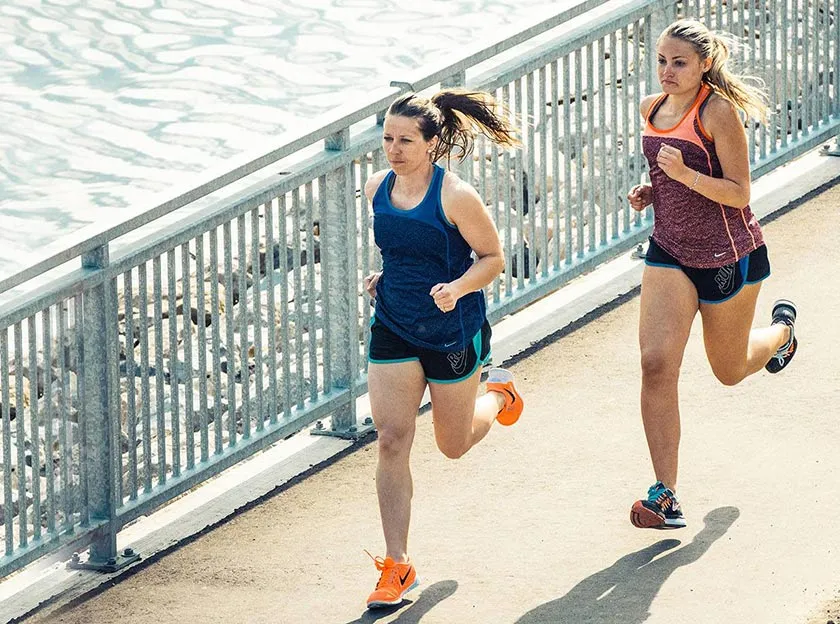
Training in high temperatures? Five practical ways to stay safer, avoid heat exhaustion and adapt your workout during a heatwave.
Training in high temperatures requires rather more thought than simply arriving with a larger water bottle and a heroic expression.
As the mercury climbs, the same boxing session, run or cardio workout can place considerably greater strain on the body. The sensible response is not necessarily to abandon exercise, but to stop pretending the weather has failed to turn up.
That distinction matters during a heatwave. Exercise already produces heat; hot conditions make getting rid of it harder. Add a demanding session, inadequate hydration and the understandable temptation to maintain your usual pace, and a perfectly ordinary workout can become far less ordinary.
Leon Bolmeer, personal trainer and fitness expert at Geezers Boxing, says one of the recurring problems is athletes and recreational exercisers refusing to adjust.
“We are seeing a lot of people still trying to train the same way they normally would, even when it is really hot,” says Bolmeer. “The problem is your body is already under more stress in that kind of heat, so you need to be a bit smarter about how you approach it.”
The thermometer, regrettably, has never been especially impressed by anybody’s training plan.
High temperatures change the demands of your workout

A session that feels manageable in mild conditions can become considerably tougher as temperatures rise. That is particularly relevant to high-intensity work such as boxing rounds, circuits and cardiovascular training, where effort levels can climb quickly.
The mistake is assuming consistency means reproducing the same workout regardless of conditions. Good training is built around managing stress. If the environment has already turned up one dial, there is little glory in enthusiastically turning up all the others.
Bolmeer argues that relatively modest adjustments are often enough.
“A lot of people think they need to completely stop training in a heatwave, but that is not the case,” says Bolmeer. “It is more about adapting what you are doing so your body is not under unnecessary pressure.”
Choose cooler hours rather than fighting the afternoon heat
Timing may be the simplest adjustment available.
Early mornings and later evenings are generally preferable to the hottest part of the day. Cooler conditions reduce the amount of work the body must do simply to regulate temperature, leaving rather more capacity for the exercise you actually came to perform.
That can be particularly useful for outdoor running, conditioning work or boxing sessions in facilities that become markedly hotter as the day progresses.
Where timing cannot be changed, location can. Moving indoors, choosing shade or shortening an outdoor session can all reduce unnecessary heat exposure.
There is no training benefit attached to selecting the most punishing hour simply because it was already written in the diary.
Lower the intensity before the heat lowers it for you
A heatwave is not an especially persuasive setting for chasing personal bests, maximum-effort intervals or one heroic final round performed principally because pride has taken control of programming.
Technique work, controlled movement and shorter training blocks offer a more measured alternative.
That does not automatically make a session easy. A technically focused boxing workout, for example, can still be productive without every round being conducted at full throttle. Quality is not measured exclusively in puddles of sweat.
Bolmeer puts the adjustment rather simply:
“Things like training earlier, reducing intensity or just taking more breaks can make a massive difference. You can still get a good session in, it just needs to be a bit more sensible in extreme heat.”
Hydration starts before the workout
Turning up thirsty and attempting to repair the situation between rounds is a poor strategy.
Bolmeer advises drinking water consistently through the day rather than relying solely on what is consumed during exercise. Thirst can arrive after dehydration has already started to affect how a session feels and performs.
The practical point is straightforward: hydration should be part of preparation rather than an emergency procedure conducted beside the gym bag.
That becomes particularly relevant during longer sessions and workouts involving sustained cardiovascular effort, where fluid loss through sweating can become increasingly significant.
Know the warning signs of heat stress
The ability to push through discomfort is celebrated enthusiastically in fitness culture. Unfortunately, the body occasionally sends messages that deserve something more sophisticated than motivational shouting.
Dizziness, light-headedness, unusual tiredness, headache and nausea are all reasons to reduce the effort or stop. Changes in normal sweating patterns should also be taken seriously.
These are not moments for bargaining over the remaining sets.
Heat exhaustion can develop when the body is struggling to cope with the thermal strain being placed upon it. Continuing to increase the workload once warning signs appear is not toughness; it is poor decision-making wearing gym kit.
Keep the session flexible
Perhaps the most useful heatwave training rule is also the least complicated: give yourself permission to change the plan.
Rounds can be shortened. Rest periods can be extended. An outdoor workout can move into the shade or indoors. A demanding conditioning session can become a technique day.
None of those adjustments erases the training effect.
The more experienced approach is to judge the session against the conditions actually in front of you rather than the workout that looked splendid on paper several days earlier.
Training intelligently through hot weather is therefore less about finding some secret method of beating the heat than recognising that there is no particular reason to fight it.
A good workout should leave you fitter, not merely victorious in an argument with the weather.