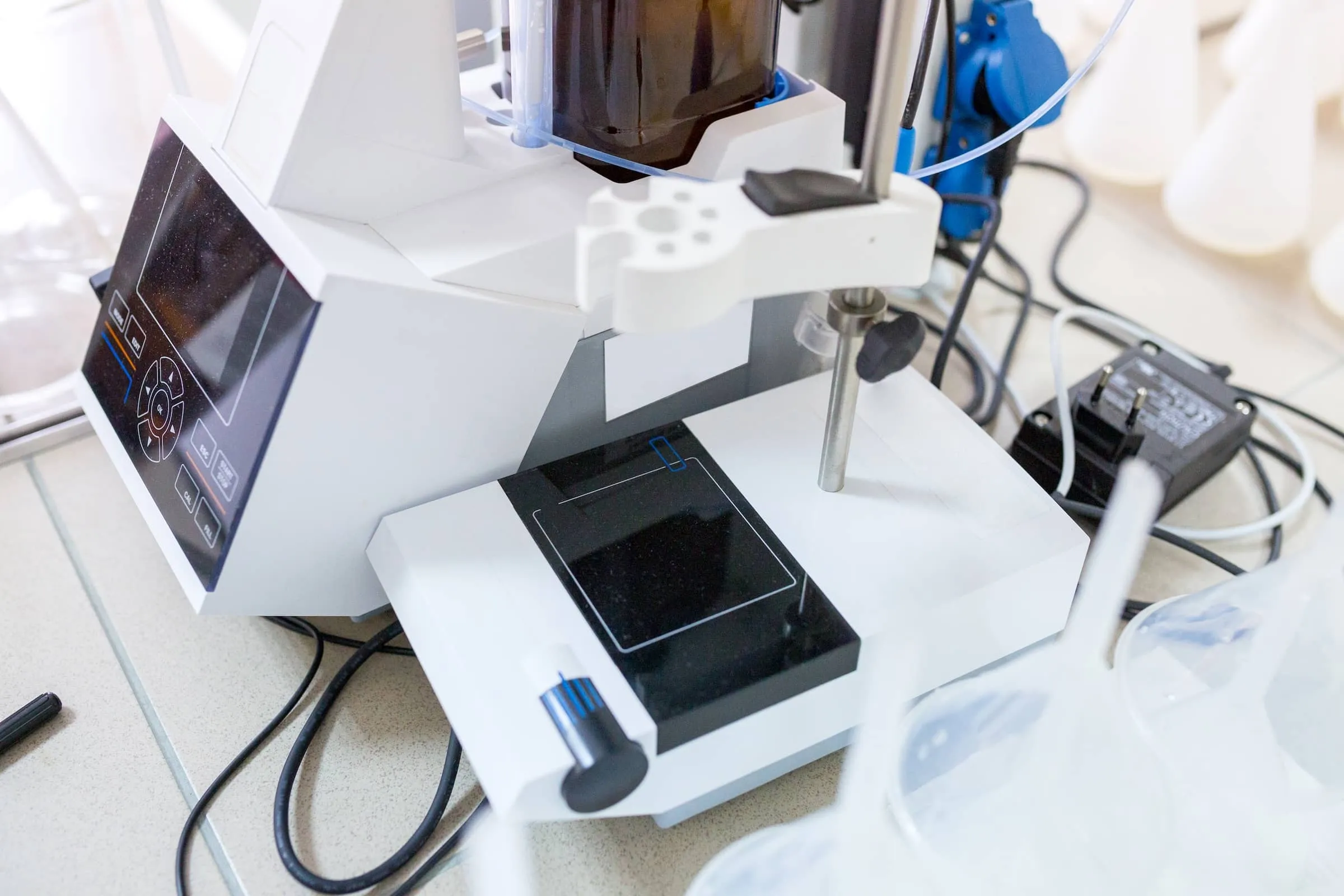
How automated titration helps health and performance labs cut reagent waste, improve traceability and protect analytical accuracy.
Laboratories testing nutrition products, hydration formulas, sports supplements, and wellness ingredients generate substantial chemical waste through routine analytical testing. Karl Fischer moisture analysis, acid-base endpoint determinations, and chloride testing each consume solvent and reagent volumes that accumulate fast across a full day of samples. Automated titrators reduce that consumption without touching the analytical accuracy accreditation requires.
Health and performance labs face pressure to demonstrate sustainable practices alongside quality assurance. Automated titration addresses both at once.
What Makes Chemical Waste Such a Persistent Problem in Health and Performance Labs?
Manual titration has one structural weakness built into the method. A scientist watches for a colour change and calls the endpoint. Judgment varies between operators. It shifts across shifts. Overshoot happens. The test repeats. Reagent gets used twice for a result that should have taken one run.
Disposal costs for hazardous solvents and acids can rise quickly when sample volumes increase. UK laboratories working under environmental regulations need documented evidence of waste reduction, not just safe disposal. A downward trend in chemical consumption is easier to defend when labs can show the data behind it. For sustainable laboratories, that data needs to exist before anyone asks for it.
How Do Automated Titrators Reduce Reagent Consumption?
Reagent delivery in micro-increments is what changes the equation. Not continuous flow. Controlled steps. Potentiometric and photometric sensors catch the endpoint at the exact moment the chemistry says the reaction is complete. The analysis stops. No overshoot. No repeat run because a colour change was misjudged at the end of a long shift.
Pre-programmed methods with fixed parameters remove operator-dependent variation from the workflow. Endpoint threshold, reagent volume and timing stay constant, regardless of who runs the analysis. Every technician applies the same criteria on a Monday morning and a Friday afternoon.
For health and performance labs upgrading sustainable testing workflows, Metrohm supports titration systems built around precision reagent delivery, sealed vessel design, and integrated data tracking.
Sealed reagent vessels prevent solvent evaporation between runs. In moisture testing for powders and supplement formulations, evaporation loss from open vessels accumulates across a full working day. Seal the vessel and that loss stops. The saving is measurable and consistent.
Where Do Health and Performance Labs See the Most Measurable Waste Reduction?
High-throughput applications show the clearest gains. Moisture content testing in nutrition powders and supplement formulations reduces methanol solvent waste through tighter endpoint control and sealed vessel containment. Acid-base titrations for quality control in hydration products cut standardised reagent solution waste. Chloride testing in sweat research and sports hydration analysis reduces sodium nitrate consumption compared to manual burette methods.
Real-world lab audits confirm that moving from manual to automated titration produces measurable efficiency gains. The reduction in chemical spend compounds quickly in facilities processing high sample volumes daily.
What Data Integrity Benefits Come with Automation?
Every measurement gets timestamped. Assigned to the operator. Linked to the relevant reagent batch. Stored digitally without manual transcription. When paired with a laboratory information management system, those records are ready during quality audits without anyone scrambling to compile them.
Traceability reaches calibration certificates. Each result connects directly to the calibration event that preceded it. Electronic signatures replace handwritten sign-offs in quality control logs. Under ISO/IEC 17025, that level of documentation accuracy is mandatory. Automated systems produce it natively. Manual workflows cannot reliably replicate it.
How Do Health Labs Start the Transition to Automated Titration?
Three months of data collection come first. Current reagent use, disposal volumes and associated costs all get recorded before anything changes. Without that baseline, demonstrating progress to regulators or funding stakeholders has no foundation. The baseline is what makes the trend visible later.
Moisture, acid-base, and chloride determinations generate the highest waste volumes in most health and performance testing environments. Start there. Those workflows deliver the fastest returns through solvent and reagent savings and generate the data needed to justify broader implementation.
Selecting the right titrator involves checking laboratory information management system compatibility, confirming throughput capacity, and asking suppliers for method validation data. The instrument needs to match or surpass manual procedure precision under ISO 17025 before replacing those methods in regulated workflows.
Staff training needs a structure. Method transfer, calibration procedures and basic troubleshooting usually need several days of dedicated sessions rather than informal handover. After rollout, tracking reagent savings, test turnaround times, and disposal costs each quarter gives lab managers the evidence base needed for sustainability reporting.
Maintenance schedules protect the gains. Scheduled servicing, software updates, and regular review of consumption data and instrument logs keep the titrator running at validated parameters through heavy use periods.
Health and performance labs do not reduce waste by lowering testing standards. They reduce it by choosing methods that use less reagent, repeat results more consistently, and keep consumption visible over time. A titrator gives lab teams a practical way to protect accuracy while making everyday testing less wasteful.