G2 and Red Bull launch a research-driven lab to improve esports performance, player development and competitive wellbeing.
G2’s new esports performance lab, launched with the support of Red Bull, is an attempt to answer one of competitive gaming’s most awkward questions: how do you turn extraordinary young talent into sustained elite performers without treating them like rechargeable peripherals?
The G2 Performance Lab is being positioned as an applied research and innovation platform built to support the competitive success and long-term development of G2’s elite rosters. In plain English, it is where science, coaching, player welfare and hard-nosed competitive ambition are being asked to sit around the same table and behave themselves.
This is not simply a room full of monitors, beanbags and energy drinks pretending to be a think tank. The project aims to combine scientific research with practical performance work, exploring how elite esports players train, recover, lead, learn and cope under pressure.
A More Grown-Up Approach To Elite Gaming
Esports has spent years borrowing the language of traditional sport. Teams talk about performance, resilience, preparation, leadership and culture. The difficulty, as ever, is doing the unglamorous work behind those words.
G2 appears to be taking a more serious swing at it.
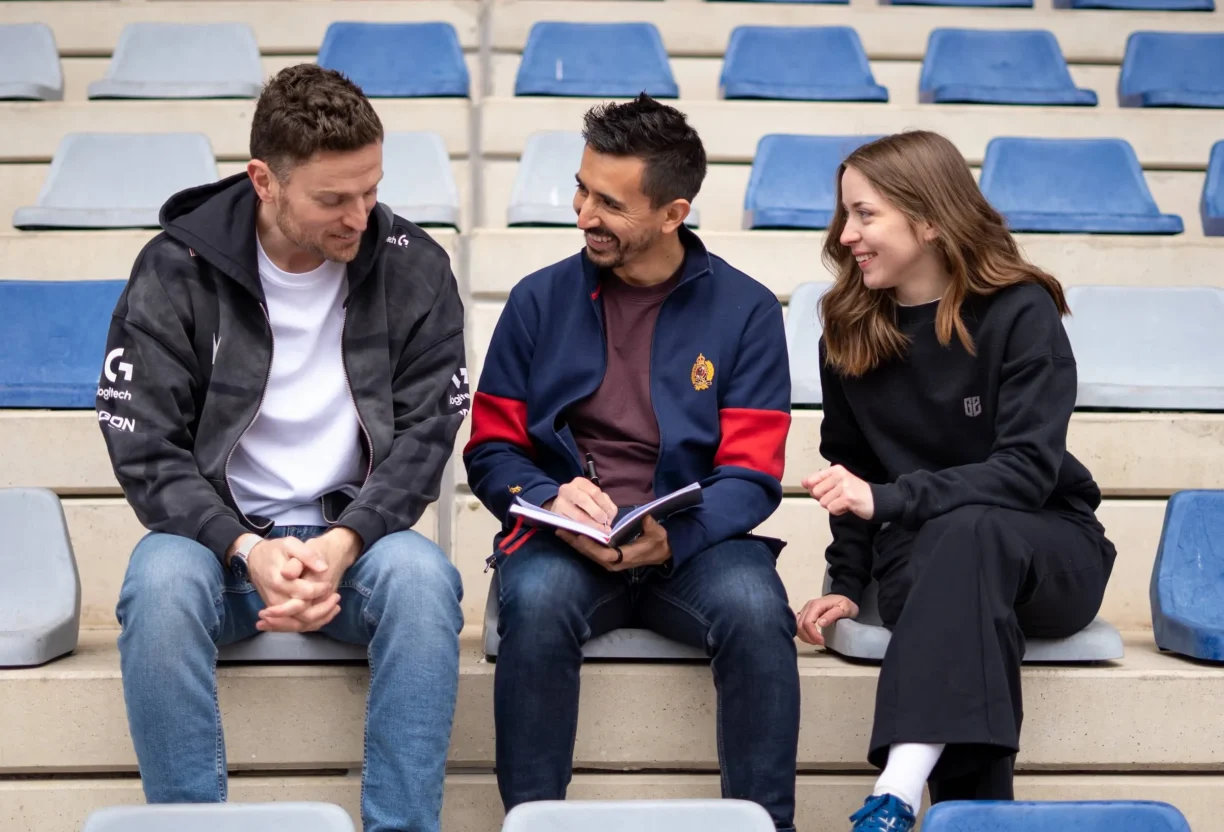
The lab is led by Ismael Pedraza-Ramirez, a PhD candidate and Performance Coach for G2, and its work is already under way. Its first project, “A Space for Leaders”, focuses on leadership development across G2’s staff through research and collaborative learning.
That matters because esports teams are no longer loose collections of prodigies with mechanical gifts and terrifying reaction times. At the top level, they are small, volatile ecosystems: players, coaches, analysts, performance staff, management and partners all tugging at the same competitive rope, usually while the internet shouts helpful things from the cheap seats.
Red Bull’s Role In The G2 Performance Lab
Red Bull’s involvement gives the project extra weight. The brand has long been embedded in high-performance sport, and G2 is clearly hoping some of that institutional understanding can help shape how esports approaches athlete development.
“As a long-standing partner of G2, Red Bull has played a central role in supporting the vision behind the G2 Performance Lab,” said Alban Dechelotte, G2 CEO. “Red Bull’s track record of investing in athlete performance and high-performance environments speaks for itself. Across traditional sports and esports alike, they share our ambition to build something truly impactful.
When you have partners around the table who have that same mindset, it pushes ideas further, raises the standard, and helps challenge what’s possible.”
It is the sort of line that could easily float away into corporate mist, except the substance beneath it is genuinely interesting. The lab is not only intended to help G2 win more often, useful though that tends to be in professional sport. Its findings are also expected to be shared with the wider industry through scientific publications and academic work.
That includes collaboration with institutions such as the German Sport University Cologne, with projects for 2026 involving academic contributors from German Sport University Cologne and Vrije Universiteit Brussel.
The Four Pillars Behind The Project
The G2 Performance Lab is built around four core pillars: coaching and coach development, training design and delivery, player development, and performance health and support systems.
None of those are especially flashy on their own. Then again, neither is stretching properly, eating breakfast, or learning how not to detonate a team meeting with the emotional range of a dropped toaster. Elite performance is often decided by the dull things done well, repeatedly, by people who understand why they are doing them.
The lab’s model uses what G2 describes as a holistic ecological approach. That means examining the athlete’s wider environment rather than obsessing over isolated metrics. Psychological, motor and physiological dimensions are all part of the picture.
The idea is to embed scientist-practitioners and researchers directly inside G2’s teams, allowing performance work to move beyond abstract theory and into the daily reality of competition, preparation and support.
Why Esports Performance Science Is Still Catching Up
Traditional sport has spent decades refining performance environments. Football, cycling, athletics, golf, tennis and Formula One all have their own elaborate machinery of marginal gains, some useful, some expensive theatre with lanyards.
Esports is younger. Its competitive demands are different, but no less serious at the sharp end. Players must process huge amounts of information, execute under pressure, communicate clearly, manage fatigue, adapt tactically and survive the mental clutter of online fame.
The challenge is that the science of developing world-class esports competitors is still relatively immature. That is precisely the gap the G2 Performance Lab is aiming to address.
”The work we’re doing at the G2 Performance Lab is truly innovative for esports and sports, and is going to revolutionise how we approach performance improvement at G2 and beyond,” said Ismael Pedraza, Performance Lab Director and Performance Coach at G2. ”Elite esports competitors are incredible at what they do, yet they have the potential to go even further.
Little is still known about how to properly develop them into world-class competitors, and we’re taking steps to change that with Red Bull’s support. Through robust scientific research and practical work, we’re designing the tools and building the infrastructure to bring out the best in our competitors, while also sharing our findings with the world to support the entire esports scene.”
G2’s Wider Push Beyond The Server
The move fits neatly into G2’s broader evolution as an esports and entertainment brand. Over more than a decade, it has built a reputation beyond match results, with streetwear collections, brand partnerships and an expansion into traditional sports through Gerard Piqué’s Kings League.
Its commercial orbit has also included partnerships with names such as Ralph Lauren and Solo Leveling, while its competitive rosters have continued to pursue championship success at the highest level.
That wider context is important. The esports performance lab is not a bolt-on wellness initiative or a shiny plaque for a meeting room wall. It is part of a larger question facing the industry: how do elite esports organisations mature without losing the speed, personality and chaos that made them compelling in the first place?
A Performance Lab With Wider Ambitions
The most intriguing part of the G2 Performance Lab may be its outward-facing ambition. By sharing knowledge through academic work and scientific publication, G2 is signalling that the project is not designed solely as a private competitive advantage.
That is a fine balance to strike. In elite sport, nobody wants to give away the family silver, especially if the family silver improves reaction time and stops your star player from flaming out before a semi-final. But esports has plenty to gain from stronger shared standards around training design, coaching development, recovery and support systems.
A more sustainable performance culture would benefit players, coaches, teams and the industry that depends on them.
For G2 and Red Bull, this is a bet on the next phase of esports: less guesswork, more evidence; less grind worship, more intelligent development. The lab coat has entered the arena. Mercifully, it appears to have brought a clipboard rather than a fog machine.