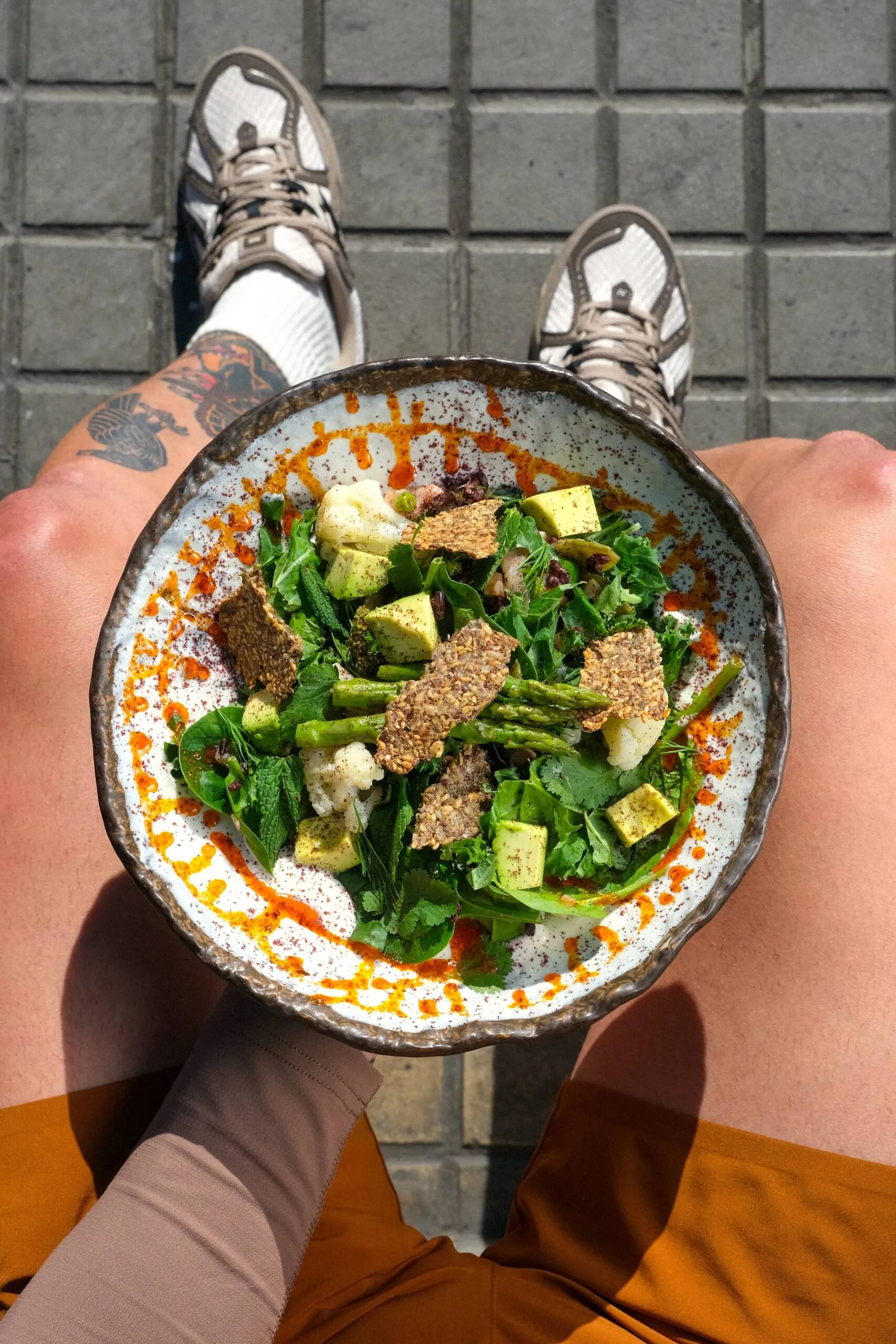
London’s lunch tables are shifting with spring greens, lighter plates and Mediterranean-style sharing menus.
Seasonal eating has a way of sneaking into London before anyone officially announces it. One mild afternoon, the city’s lunch tables begin behaving differently. Coats come off. Conversations stretch. A side dish becomes a shared dish. Then another plate arrives, because apparently one bowl of greens is never enough once spring has put its elbows on the table.
This is not the grand theatre of a menu relaunch. It is subtler than that. Across London, and particularly in Soho, the change happens ingredient by ingredient. The plates get brighter. The food gets lighter. The pace of the meal loosens. Winter’s sturdy, sit-down-and-behave cooking starts making room for dishes that feel more mobile, more sociable and, frankly, less likely to leave you needing a small nap under your desk.
Spring Arrives In The Vegetables First
The first clue is usually green.
Asparagus begins appearing in careful quantities, like a celebrity entering a room and pretending not to notice the attention. Peas follow. Spinach softens the edges of a plate. Herbs creep into sauces, grains and dressings with the sort of quiet confidence usually reserved for Londoners who know exactly which side of the escalator to stand on.
These ingredients do more than decorate the dish. They change the way lunch feels. Heavy winter sides move from the edge of the plate towards the centre. Vegetables become less of an apology and more of a plan. For diners looking for Healthy food that supports energy, movement and concentration, this seasonal shift makes sense.
A lighter lunch is not about eating less. It is about eating better for the rhythm of the day.
London Menus Are Becoming Less Fixed
At this point in the year, the best menus stop behaving like laminated commandments.
Instead, they flex around what is arriving from growers and suppliers in real time. A grain bowl may keep its basic shape, but the character changes. Herbs become sharper. Dressings lift rather than smother. Vegetables take up more room, not because someone in a marketing meeting said “wellness”, but because spring produce has a habit of being rather persuasive.
That is the real charm of seasonal cooking. It does not need to shout. It simply turns up looking fresher than everyone else.
In London, where lunch often has to do the impossible job of being quick, satisfying, healthy and vaguely enjoyable between emails, this approach feels particularly useful. A well-built plate can give you flavour without heaviness, texture without clutter and enough substance to prevent the 4pm biscuit raid becoming a full-scale hostage situation.
The Rise Of The Shared Lunch Table
Spring also changes the social mechanics of lunch.
Individual plates rarely remain individual for long. Someone orders a bowl. Someone else adds a side. A dish arrives “just for the table”, which is usually code for “I wanted it but needed moral support.” Then another plate lands, and suddenly lunch has become a small, democratic buffet with better lighting.
This is where seasonal food works beautifully. Greens, grains, herbs, roasted vegetables, sauces and Mediterranean food influences are built for passing, tasting and rearranging. Nothing feels too formal. Nothing requires a ceremony. The table builds itself as people keep talking.
It is relaxed, practical and very London: casual on the surface, highly strategic underneath.
Soho Shows The Shift Clearly
In Soho, the seasonal movement is particularly easy to spot because the area has always treated lunchtime as a competitive sport.
Here, menus have to satisfy office workers, shoppers, creatives, tourists, regulars and people who claim they are “just grabbing something light” before ordering three plates and a side. At places like Hg Soho, also known as Honest Greens, the emphasis leans towards Mediterranean food, with vegetables often given a central role rather than being left to loiter beside the main event.
That balance is important. The menu sits somewhere between a vegetarian restaurant and a broader healthy dining option, which gives it a useful flexibility. You can eat plant-forward without feeling boxed in. You can build a meal around grains, greens, proteins, herbs and sauces without needing to consult a nutritionist or a flow chart.
The result is a lunch that feels current without being faddish.
Breakfast, Brunch And The All-Day Soho Appetite
Of course, spring eating in London is not confined to lunch. Breakfast and Brunch have become part of the same seasonal conversation, particularly in Soho, where the day rarely moves in straight lines.
One person may be starting slowly over a speciality coffee, another may be building a late-morning plate around eggs, greens, grains or something warm from the kitchen. By midday, the same table can shift naturally from coffee and breakfast-style dishes into shared plates, salads and Mediterranean-inspired bowls.
That flexibility is part of the appeal. Modern London dining no longer fits neatly into old categories. Breakfast can drift into brunch. Brunch can become lunch. Lunch can become an excuse to order one more dish for the table, purely in the interests of research.
Why Seasonal Eating Fits Modern London Life
The appeal of seasonal dining is not just flavour, though flavour certainly helps. It is also about how people now want lunch to function.
A midday meal has to carry more responsibility than it used to. It needs to be quick but not joyless. Healthy but not punishing. Filling but not flattening. Social but not drawn out to the point where someone from accounts starts checking their watch.
Seasonal menus solve much of that by working with ingredients that naturally suit the moment. Spring vegetables bring freshness. Herbs bring lift. Mediterranean-style combinations bring colour, texture and balance. Shared plates bring a sense of ease.
It is food that supports the rest of the day rather than sitting on it like a grand piano.
The Quiet Beauty Of Eating With The Season
There is something reassuring about seeing a city change through its plates.
London does not always do gentle transitions. It tends to leap from drizzle to heatwave, from scarf to sunglasses, from “absolutely not” to “pub garden?” in the space of a lunch break. But the seasonal shift in food is more measured. It arrives through asparagus, peas, spinach, herbs and the sudden urge to order something for the middle of the table.
That is what makes this moment worth noticing.
Seasonal eating in London is not a trend dressed up in expensive trainers. It is a return to common sense: cook what is good now, serve it simply, let people share it, and make lunch feel like part of the day rather than an interruption.
And when the plates gather at the centre of the table, full of greens, grains and spring brightness, London feels a little lighter on its feet.