10 benefits of the practice that you might not know about, to help you decide if yoga is the one for you..
Among the many reasons to take up yoga, the most persuasive may be the least mystical: your back, shoulders, breathing, stress levels and general tolerance for modern life could probably all use a hand. Or, more accurately, a mat.
Yoga has been practised for thousands of years, and today it is estimated that around 300 million people worldwide are doing some form of it. That is a fairly convincing participation figure, even allowing for the fact that half of them may simply be trying to stand up after a long day hunched over a laptop.
Stephen Virtue, Fitness Experience Manager at Total Fitness, the North’s leading mid-market health club, has outlined ten benefits of yoga that make a strong case for beginners, desk workers, gym-goers, sceptics and anyone whose spine currently has the posture of a question mark.
Yoga Can Help Release Desk-Bound Tension

The modern office body is a peculiar contraption. The shoulders creep upwards, the spine rounds forward, the neck stiffens, and by mid-afternoon, you resemble someone trying to apologise to their own keyboard.
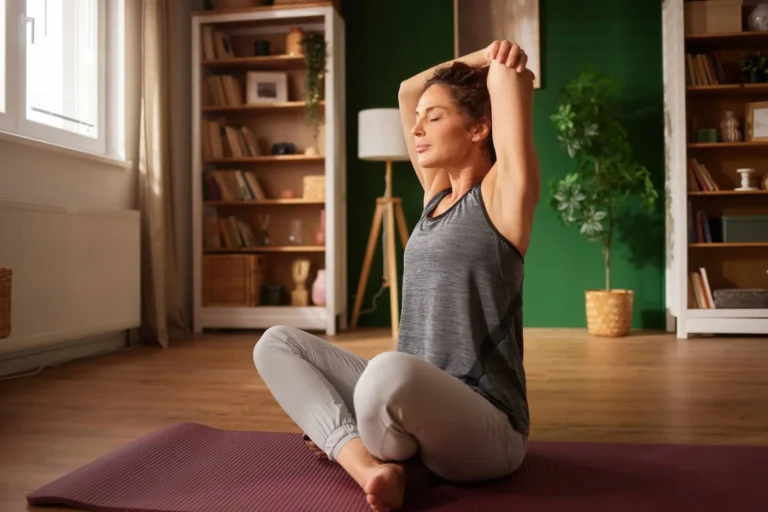
Yoga offers a practical way to unwind that tension through controlled stretching, mobility work and posture-focused movement. For those with aching shoulders or a sore back after a long day at a desk, regular yoga can help the body move through ranges it has quietly stopped visiting.
One technique highlighted by Virtue is shoulder flossing, a simple mobility drill designed to move the shoulder joint through its full range. It can help open space around the joint and ease stiffness linked with the neck and thoracic spine.
The broader point is simple: flexibility is not a party trick. It supports movement quality, reduces the likelihood of muscular strain and may help people stay active and independent later in life.
It May Help Your Body Recover From Stress
If you are constantly dealing with colds, headaches, sore throats or that suspicious feeling that your immune system has resigned by email, lifestyle may be part of the picture. Long hours, poor sleep and general overdoing it tend to leave the body with very little room to recover.
Gentle yoga can help lower stress levels, giving the body a chance to shift away from constant strain. Deep breathing, controlled movement and slower pacing all encourage the sort of nervous-system downshift that many people do not get between inboxes, commutes and doom-scrolling.
Several yoga poses also encourage blood flow around the body, while breathing work can help oxygen reach the areas that need it. It is not magic. It is just your body being allowed to function without someone poking it with a stick every five minutes.
Yoga Can Sharpen Focus And Brain Function
One of the more interesting reasons to take up yoga is that the benefits are not confined to hamstrings and hips. The meditative element may also support brain function.
Studies have linked long-term meditative practice with changes in the cerebral cortex, the part of the brain associated with awareness, attention, memory, thought and language. In plain English, yoga may help train the brain as well as the body.
That does not mean one class of downward dog will turn anyone into a chess grandmaster. But regular practice may support concentration, learning and mental clarity. Which is useful, particularly when half the working day now involves remembering why you walked into a room.
It Can Help With Bloating

Bloating is not glamorous, but neither is pretending it does not happen. Yoga can be a simple, low-drama way to ease discomfort by encouraging circulation, stretching the body and helping release trapped gas and fluid build-up.
A basic pose such as lying on your back and hugging your knees into your chest can create a useful stretch and get things moving. It is not a dinner-party subject, admittedly, but it is practical. And practicality deserves a little applause.
Better Breathing Starts With Better Posture
Desk work does not just tighten the shoulders. It can also affect how we breathe. Sitting for long periods often encourages a collapsed posture, making full, deep breathing more difficult.
Yoga helps open the chest, lengthen the spine and encourage proper diaphragmatic breathing. With regular practice, that can support lung strength, posture and respiration away from the mat.
Breathing from the diaphragm is also used within yoga practice and has been associated with easing localised spinal stiffness. It is a reminder that breathing properly is not simply something we do when annoyed in a supermarket queue. It is a skill worth training.
Hot Yoga Can Turn Up The Sweat
For those who like their exercise served warm enough to question their life choices, hot yoga styles such as Bikram or Vinyasa offer a more intense route in.
Training at a higher temperature demands more energy and encourages sweating. Sweating through exercise can help clear grime and bacteria from the skin’s surface, while increased circulation may support a healthier-looking glow.
Still, this is not an excuse to treat hot yoga as a miracle cleanse. Hydration matters, common sense matters, and leaving the room before becoming a puddle with opinions also matters.
There Is A Yoga Style For Almost Everyone
One of the great myths about yoga is that there is only one version of it: silent, bendy, intimidating and faintly scented with moral superiority. In reality, the range is broad.
Hatha yoga is often a good starting point for beginners, with breathing and simple poses that support relaxation and body awareness. Vinyasa tends to be more flowing. Bikram brings the heat. Ashtanga and Power yoga offer more energetic practice, with a greater challenge for the abs, core and general willpower.
That variety is important. The best yoga style is not necessarily the hardest one. It is the one you are prepared to keep doing.
Yoga Builds Mindfulness Without Making A Fuss About It
Modern life is fast, loud and oddly determined to make everyone feel behind. Yoga offers a counterweight: half an hour to an hour of deliberate breathing, movement and attention.
By encouraging people to elongate the spine, open the chest and breathe slowly, yoga can support a more mindful state. That can improve attentiveness and help reduce stress.
You do not need to levitate. You do not need to own hemp trousers. You simply need to stop rushing long enough to notice you have a body attached to your head.
Classes Can Make Fitness More Social
Another underrated reason to take up yoga is accountability. A class gives structure to the week, and doing it with a friend gives you one less excuse to disappear under a duvet when motivation goes missing.
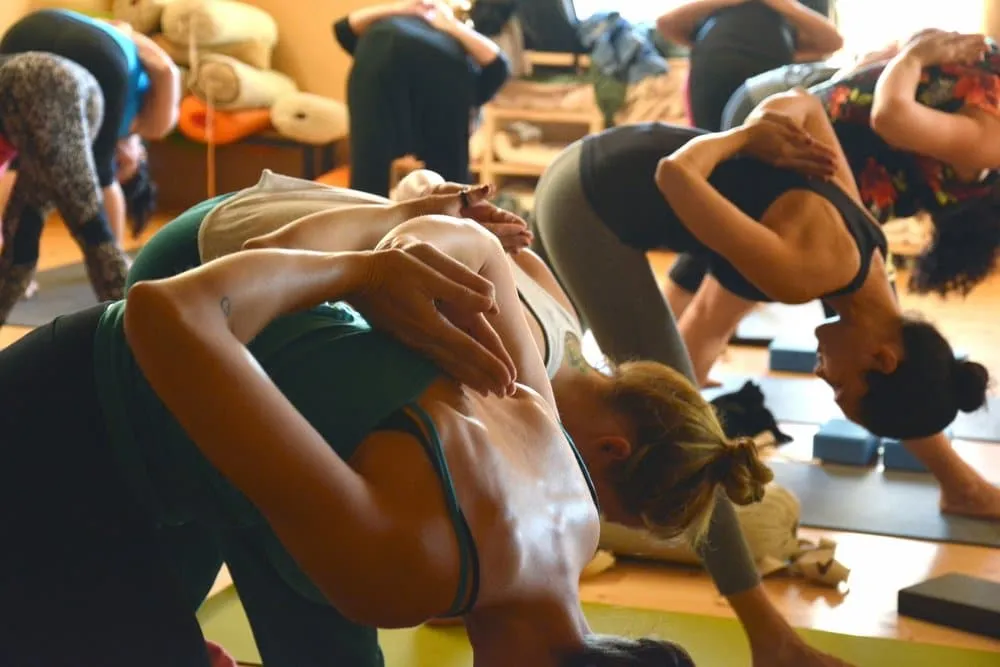
Yoga classes, including those offered at Total Fitness, can be a useful way to meet people or create regular face-to-face time with friends. That social element matters, especially for beginners who might otherwise find starting a new routine a little daunting.
Fitness is often easier to maintain when someone else knows you are supposed to turn up.
Yoga Is Not Just For Women
Yoga has long had to deal with the lazy assumption that it is mainly a woman’s activity. That view is looking increasingly tired.
According to a recent study by Total Fitness, 34% of men have either practised yoga or would like to. That is a significant figure, and one that suggests the old stereotype is quietly being escorted from the building.
For men who lift weights, run, cycle, play sport or spend too long sitting down, yoga can support mobility, breathing, flexibility and recovery. In other words, it is not a soft option. Done properly, it can be humbling enough to make a grown man negotiate with his hamstrings.
The Final Stretch
The best reasons to take up yoga are not abstract. They are felt in the shoulders after a day at the desk, in the breath after a stressful week, in the hips after years of pretending mobility is optional, and in the mind when everything finally slows down for a moment.
Yoga is accessible, adaptable and far more practical than many beginners expect. Whether the goal is flexibility, stress relief, better breathing, improved posture or simply finding a form of exercise that does not feel like punishment, it deserves a proper place in the conversation.
Roll out a mat, start where you are, and try not to make eye contact with your hamstrings during the first session. They may have a few things to say.