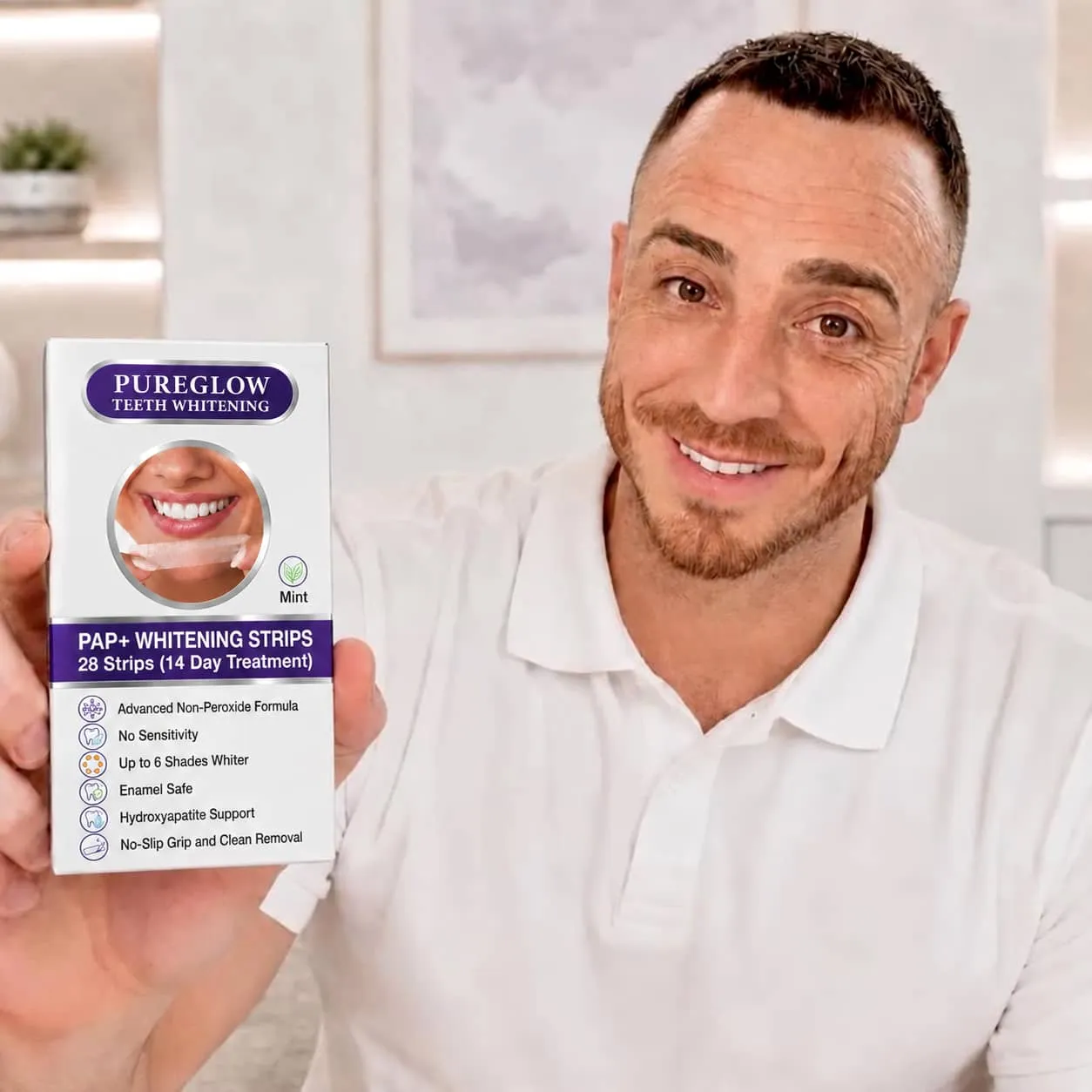
After years of coffee, fizzy drinks and a former smoking habit, I finally decided to tackle the stains on my teeth. Fourteen days into using peroxide-free whitening strips, the results have been surprisingly encouraging, even if I'm still some distance from a dazzling Hollywood smile.
My teeth have had a fairly eventful life. Years of coffee, fizzy drinks and, once upon a time, cigarettes have hardly helped matters. I gave up smoking 20 years ago, thankfully, but the evidence of those less-than-tooth-friendly habits has proved rather more difficult to shake off.
Like others, I’ve considered teeth whitening plenty of times. I’ve looked at the various treatments, wondered whether they actually work and usually found a reason to leave well alone.
Part of that hesitation has always been the concern about sensitivity. The other is rather more cosmetic. I don’t particularly want to emerge from a whitening treatment looking as though I’ve just returned from Turkey with an entirely new set of teeth.
No disrespect to anyone who enjoys a brilliantly white smile, but that unmistakable “Turkey teeth” look isn’t really what I’m after.
I just want my own teeth to look a little cleaner, a little brighter and considerably less affected by years of enthusiastic coffee drinking.
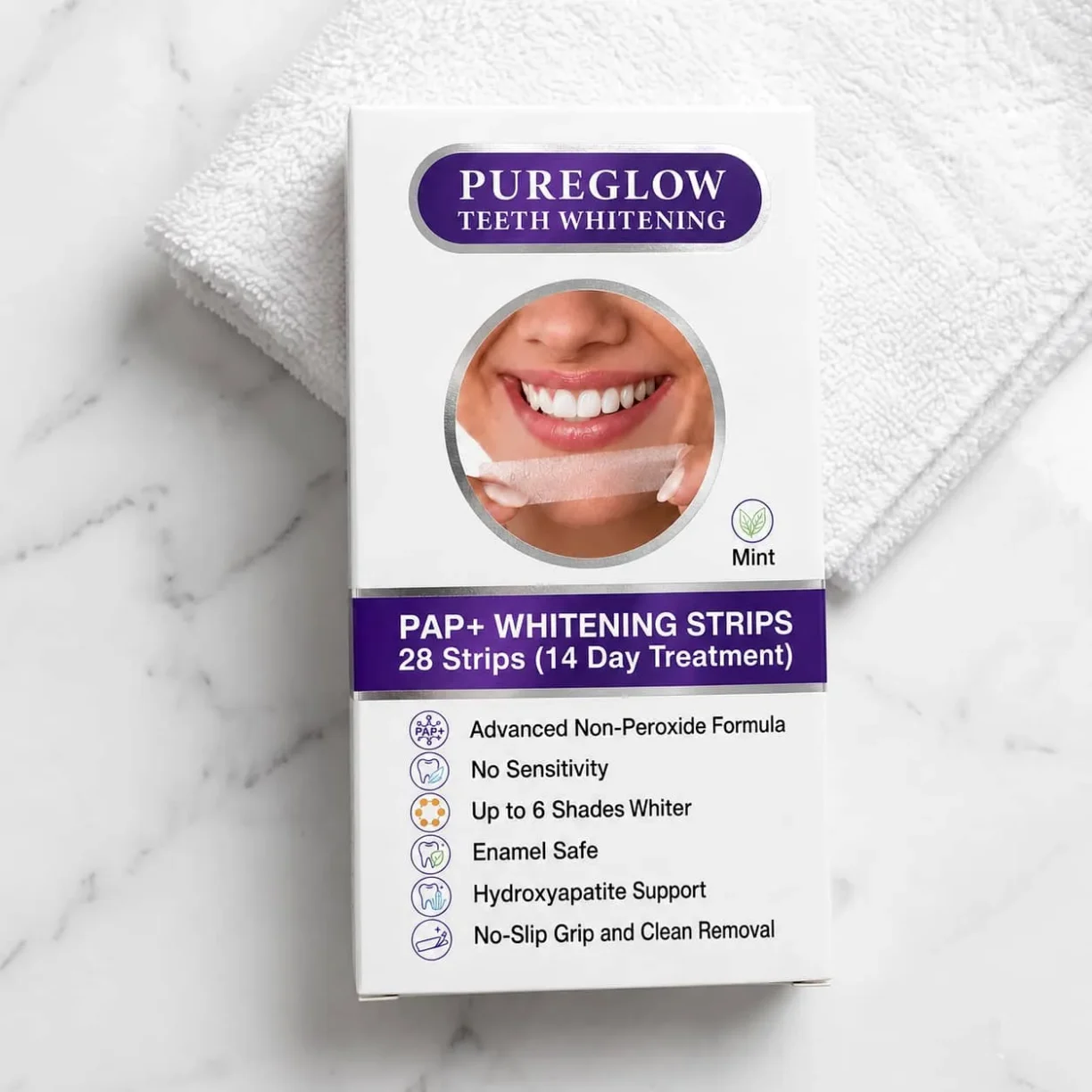
So, when the opportunity came to try Pure Glow Teeth Whitening peroxide-free whitening strips, I decided to give them a go.
I’m now 14 days into the treatment and, while my teeth are certainly not diamond white, I’m quietly impressed by what’s happening.
Why I decided to try peroxide-free whitening strips
The appeal was straightforward enough.
Conventional whitening strips often use hydrogen peroxide, an effective whitening agent that can also cause sensitivity. Having already spent years being less than kind to my teeth, I wasn’t particularly keen on exchanging a few stains for a mouthful of discomfort.
Peroxide-free whitening strips sounded like an interesting alternative.
Of course, the absence of hydrogen peroxide on its own doesn’t guarantee a comfortable experience. Different formulations use different whitening ingredients, and everyone’s teeth respond differently.
But the possibility of improving the appearance of my teeth without chasing an unnaturally brilliant white finish was enough to persuade me to try them.
I wasn’t expecting an overnight transformation. In fact, I would have been slightly suspicious if I’d got one.
What are the whitening strips actually like to wear?
This has been one of the more pleasant surprises.
The strips themselves are thin, sticky sheets that attach directly to the teeth. Once positioned, they stick firmly, which is reassuring when you’re supposed to leave something sitting across your teeth for half an hour.
Each application lasts 30 minutes.
That might sound inconvenient, particularly if you’re imagining having to sit perfectly still and avoid doing anything useful, but I’ve found they have very little impact on my usual routine.
They’re discreet enough that wearing them doesn’t feel like a major production. There is, however, one slightly amusing side effect.
You may find yourself talking a little strangely.
It’s nothing dramatic, but having strips attached to your teeth can make ordinary conversation sound just different enough to be noticeable.
For that reason, I’ve settled into applying mine before bedtime.
It’s a convenient half-hour when I’m generally winding down anyway, and there’s less chance of attempting a perfectly normal conversation while sounding as though my mouth hasn’t quite received the instructions.
Importantly, wearing them hasn’t become a chore. That’s a bigger consideration than it might sound, because even the most promising product isn’t much use if the application process is irritating enough to put you off continuing.
My results after 14 days: gradual, but encouraging
This is where the review becomes interesting.
Fourteen days into treatment, I cannot claim to have suddenly acquired a dazzling Hollywood smile. Nor have years of staining disappeared as though somebody has waved a particularly enthusiastic magic wand.
What I have noticed is a gradual reduction in the staining on my teeth.
It’s subtle. Very subtle, in fact.
But the change is noticeable enough to leave me feeling encouraged, particularly given how long some of those stains have been there.
Rather than producing an obvious, startling change in tooth colour, the strips appear to be making steady progress.
And, personally, that’s much closer to what I wanted in the first place.
I’ve never been particularly interested in teeth so white they become the first thing somebody notices when I walk into a room. I’d much rather have a natural-looking smile that has simply lost some of the discolouration accumulated over the years.
At this stage, that’s the direction things seem to be heading.
There is an important qualification, though. These are my observations after 14 days, not the results of a controlled test. I haven’t measured the change in tooth shade, and I can’t yet say how much further the whitening might progress or how long any improvement will last.
Still, the early signs are positive.
Does peroxide-free whitening actually work?
My experience suggests these strips are making a visible difference to my own staining, but there’s a distinction between a personal result and evidence that a particular ingredient works for everybody.
Many peroxide-free whitening formulations use PAP, or phthalimidoperoxycaproic acid. Unlike carbamide peroxide, which releases hydrogen peroxide in the mouth, PAP works without relying on that release.
A 2026 laboratory study published in the Journal of Functional Biomaterials compared PAP with hydrogen peroxide and carbamide peroxide using 57 extracted teeth.
PAP produced promising whitening results, including a change in tooth lightness comparable to hydrogen peroxide.
However, all three treatments reduced enamel microhardness, and the experiment could not establish whether PAP causes less sensitivity in everyday use.
Those findings are interesting, although they shouldn’t be treated as clinical proof of how any particular packet of whitening strips will perform.
The precise active ingredients in the product I’m using also need to be confirmed before drawing a direct connection with PAP research.
For anybody considering whitening products, it’s sensible to check the ingredients, follow the recommended treatment time and speak to a dentist if they already experience tooth sensitivity or have concerns about their enamel.
Whitening also has its limitations. Crowns, veneers and fillings won’t change their underlying shade in the same way as natural teeth.
The verdict: would I recommend these whitening strips?
After 14 days, my first impressions are encouraging.
The strips are straightforward to use; they stay firmly in place during the 30-minute application and they fit comfortably enough into my evening routine without demanding much attention.
The slight effect on speech is probably their most noticeable practical inconvenience, although applying them before bedtime makes that fairly irrelevant.
As for the whitening itself, the improvement has been gradual rather than dramatic.
But that’s not necessarily a criticism.
For somebody like me, whose teeth have endured years of coffee, fizzy drinks and a long-abandoned smoking habit, seeing some of that staining slowly diminish is a welcome development.
Would I recommend them to somebody expecting brilliant white teeth overnight? Probably not on the evidence of my first fortnight.
Would I suggest they’re worth considering if you’re after a more subtle improvement and don’t mind allowing the results to develop gradually? Based on what I’ve experienced so far, yes, with the usual precautions and the understanding that individual results will vary.
It’s still early days, and my opinion may change as the treatment continues.
For now, though, I’m pleasantly surprised.
Twenty years after giving up cigarettes, it seems I’m finally getting around to tackling some of the evidence they left behind. Better late than never.
Prices start from £17.97 for a 14-day treatment but head over to the Pure Glow website to find out further information.