A frank look at why men’s performance, vitality and ageing are shaped more by daily behaviour than biceps.
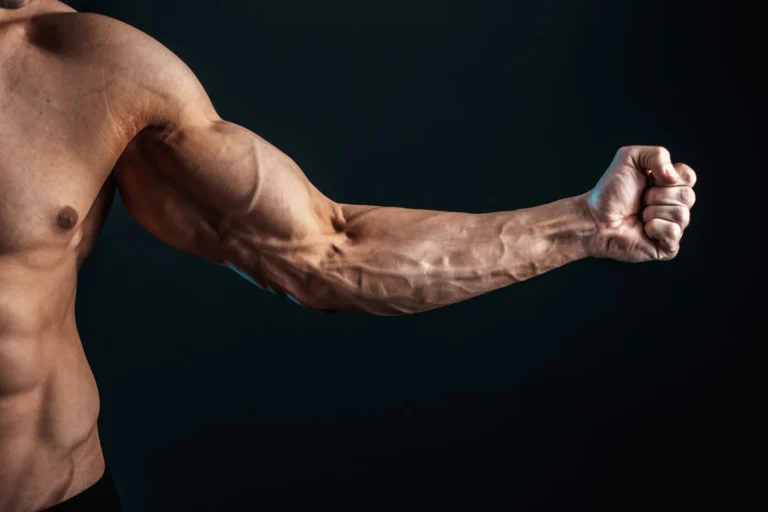
Ask most fitness articles and the answer is obvious: gym performance. Big biceps. Squat PRs. Visible abs. That’s what sells magazines and fills Instagram feeds.
Ask most men privately and you get a very different answer.
The quiet truth is that most men want to maintain their sexual performance more than they want big biceps. They just won’t say it out loud because admitting that means admitting what they are actually afraid of losing.
This is not a typical fitness article.
The mirror tells you some things, but the scales tell you what the mirror hides: visceral fat, muscle quality, metabolic health, body age. My latest reading suggested my body is functioning closer to someone half my age than someone approaching seventy. I still fit the same size jeans I wore thirty years ago. But I don’t check my stats out of vanity. It’s just part of the process.
And before anyone gets carried away, let me say this clearly: this is not about having the perfect body.
My scans don’t show that I need a knee replacement. They don’t show the degeneration in other joints either. They don’t show the surgeries. They don’t show the wear accumulated through decades of training, movement, injury, work, rebuilding, and life.
They don’t show the swelling in my left knee after a twenty-minute walk, or the occasional stabbing pain that can keep me awake at night. It won’t get better, and the scans call it “unremarkable”.
I call it the cost of still moving.
What they do show is capability.
The assumption people make is obvious: “He must train all the time.”
Yes, I train regularly.
But here is the truth most people don’t want to hear: you cannot out-train a poor lifestyle. You cannot repeatedly flood the body with poor fuel, poor sleep, stress, inactivity, alcohol, ultra-processed food, and years of neglect — then expect a few gym sessions to magically reverse the damage.
That is not how systems work.
Your lifestyle behaviour shapes the way you age. And the way you age shapes far more than how you look in a T-shirt.
Last night after a football match, I came home cold, wet, and starving. The truth? I wanted to join the queue at the local kebab shop. That voice in my head — the one built from decades of choosing — said: you know the consequences.
So instead, I walked to the supermarket, picked up a small bottle of kefir milk on special offer, and blended it with a banana and a handful of nuts.
The kebab would have left me sated but breathing greasy air. The smoothie left me full. And alive.
Not because I’m obsessive. Not because I never enjoy myself. Not because I’m trying to become immortal. Because behaviour compounds.
The same way I choose to train when it’s cold and raining is the same way I choose what I put into my body afterwards. The two are connected.
I look at the body the same way I look at a performance car. Treat it properly and it will continue to perform. Fill it with cheap fuel, neglect it, leave it parked up for months, and eventually it spends more time in the mechanic’s workshop than on the road.
The body is no different.
Most people think ageing arrives suddenly. I don’t believe that. I think much of what people later call “old age” is accumulated behavioural consequence: years of sitting, years of convenience, years of stress, years of compensation, years of not moving, years of disengaging from your own physical capability.
And here is what the big-bicep articles rarely tell you: disengagement often shows up long before your arms stop filling out a T-shirt.
Without sounding like a medical journal, the bottom line is this: most men want to maintain their sexual performance more than they want big biceps.
That’s what training for poise and mobility does. It gives you greater control. And control is what men lose first — and lie about most.
I can still run for a bus, touch my toes, pull up my own bodyweight, drop and give you fifty squats and push-ups, and recover sexually in under thirty minutes.
That last point may make some people uncomfortable. But it matters. Because for many men, one of the quietest signs of ageing isn’t appearance — it’s diminished vitality, diminished confidence, diminished responsiveness, diminished recovery.
Men rarely speak openly about it. Yet privately, many understand exactly what I mean.
The quiet truth is knowing that I can still perform and look good at the same time. That’s not vanity. That’s capability.
So which fades first?
Gym performance, if you’re lucky. Something far more personal, if you’re not paying attention.
Most fitness articles are written for the man who wants to look good in a locker room. This one is written for the man who wants to show up fully in every room.
Meta-Age is not about pretending you’re younger than you are. It’s about refusing to hand your body over to unnecessary decline through neglect.
Not through magic. Not through fantasy. Not through denial.
Through behaviour.
Because for decades, my behaviour has been shaping the way I age.
And it still is.