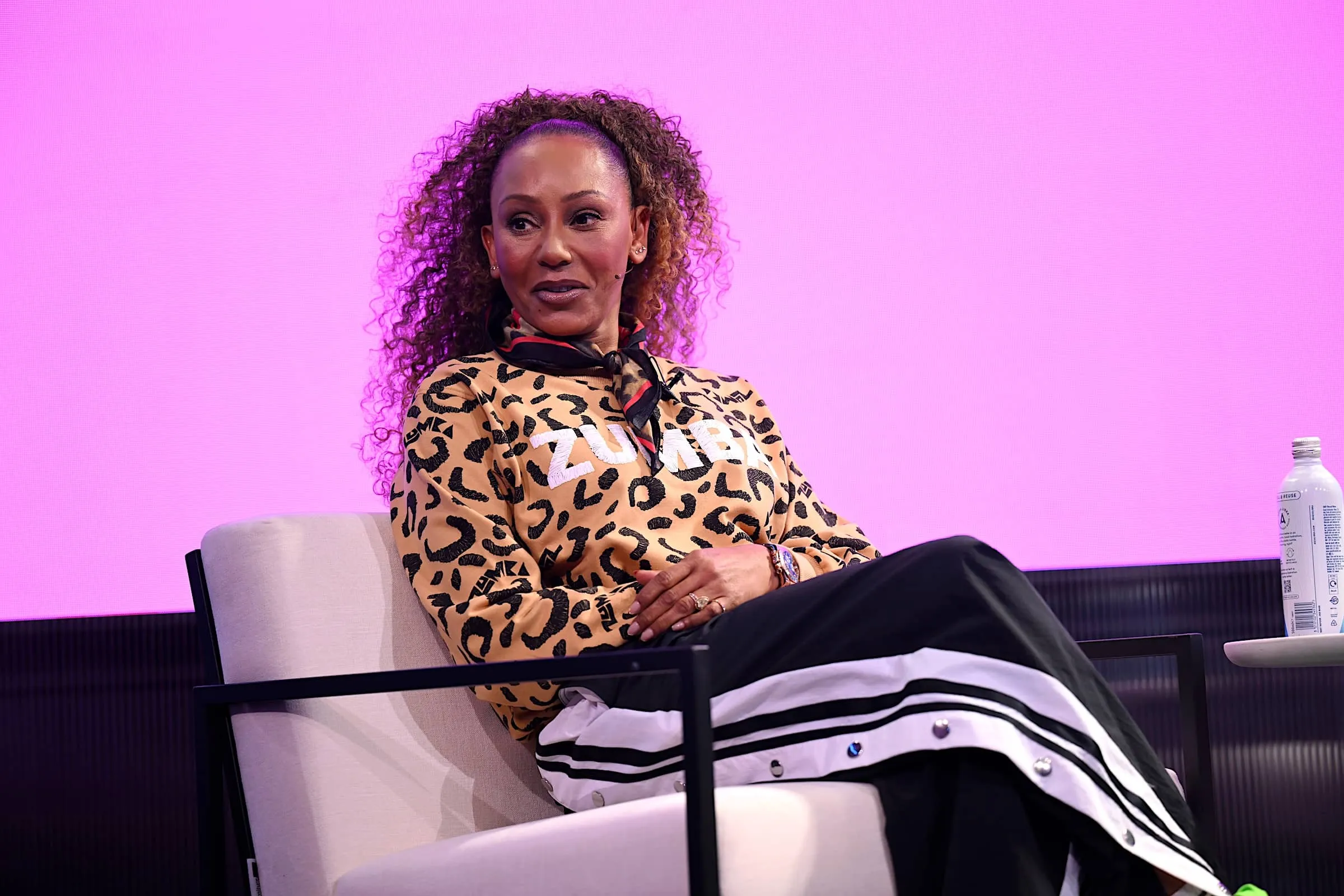
Mel B discusses Zumba, trauma, ADHD and why movement still matters for women’s wellbeing after 30.
Mel B at SXSW London this year was never going to be a hushed little wellness chat with herbal tea and beige intentions. This was Mel B, after all: Spice Girl, survivor, advocate, leopard-print loyalist and a woman who appears physically incapable of entering a room without rearranging its emotional furniture.
At Zumba’s Stay Loud. Stay Well panel, she did exactly that. Before the conversation turned to movement, trauma, mental health and women’s bodies, Mel lit one of her signature sage sticks on stage to “clear the energy”. A lesser celebrity might have opened with a rehearsed line about empowerment. Mel B brought smoke, scent and the faint possibility that the venue’s risk assessment had just developed a nervous twitch.
Then came the serious stuff. And it landed.
Movement Has Always Been Mel B’s Native Language
For Mel, dance has never been a glossy add-on to life. It has been discipline, escape, release, identity and, at times, a kind of internal emergency exit.
She spoke about growing up with severe ADHD, about movement being channelled into dance, about finding independence as a young performer, and later using training and dancing during an emotionally abusive marriage as a form of survival. That is not the sort of fitness story that belongs under “summer body goals”, thank you very much. It belongs somewhere more honest.
Her affection for Zumba sits in that space because it is not built on perfection. Nobody is being asked to look like a protein advert in human form.
“That’s why I love Zumba so much… it’s not so strict. As long as you know the basic sidestep, you can just do your own thing all over it, which is very, very freeing.”
That word — freeing — matters. It is doing a lot of lifting here, and not the kind that requires chalk, mirrors and a man in compression shorts grunting like a malfunctioning tractor.
Trauma, The Body And Going Back To University At 50
Mel also spoke about her decision to study trauma-informed care at Leeds Beckett University, a move driven not by celebrity reinvention but by a need to understand what had happened to her — and what happens to so many others.
“And so apart from me not finishing school, I did want to prove a point at the age of 50 to get accepted back into university for the first time, and I really wanted to understand exactly what trauma looks like in the brain, exactly how to spot trauma, and what we can do for trauma. Because once you’ve admitted it, once you understand it, it’s an ongoing journey.”
It is a revealing line. There is pride in it, yes, but also a stubborn refusal to be reduced to one chapter. Trauma, in Mel’s telling, is not something filed away neatly once life improves. It remains in the body, in the nervous system, in the way a person moves through the world.
She described movement as part of rebuilding that relationship with herself.
“And I think being able to move and being able to look in the mirror and just go, yes, today I’m not going to be down on myself just for today. I’m going to be loving to myself and happy, and I’m going to play my music or my favorite song, and I’m going to get some of my friends to come along with me like I did on my hen do.”
There is nothing tidy or airbrushed about that. It is not wellness as luxury branding. It is wellness as a daily truce with your own reflection.
Why Women Over 30 Need Better Fitness Advice
One of the strongest moments came when Mel turned the conversation towards women’s health in their 30s and beyond.
“I do not think GP’s inform enough of what we’re meant to do as women when we get into our 30s and mid-30s,” she explained.
That line will resonate with plenty of women who have found themselves navigating changing bodies, shifting hormones, new recovery needs and the creeping suspicion that the official instruction manual was left in a drawer somewhere behind the printer.
Mel admitted she has moved away from her old “balls to the walls” approach to fitness. In the past, she said, that meant “six spin classes a week” alongside hot yoga. Eventually, she realised “that isn’t sustainable”.
This is the part of the story that may prove most useful to readers. Mel is not selling the fantasy that discipline must look punishing to be valid. She is arguing for movement that people can actually live with.
Speed walking. Dancing. Cold showers. Ice baths, if you can face the barbaric little baptism. Lifting one of her rottweilers instead of marching into the weights section like a terrified hostage. The point is not glamour. The point is finding something repeatable.
Zumba’s Bigger Case: Community Over Calories
Zumba CMO Carolina Moraes also made the case that movement is not just about exertion. It is about context, company and the emotional chemistry that comes from not doing everything alone.
“What science is finally waking up to is that it’s not only important that you exercise… it’s important how you exercise. Exercising in community, with other people, helps combat isolation and makes people stick to exercise for longer.”
That is where Zumba has always had its advantage. It is not the cleanest, sternest, most intimidating corner of fitness. It is sweaty, communal, noisy and occasionally chaotic in the best possible way. People walk in for a workout and often come out with something closer to a social charge.
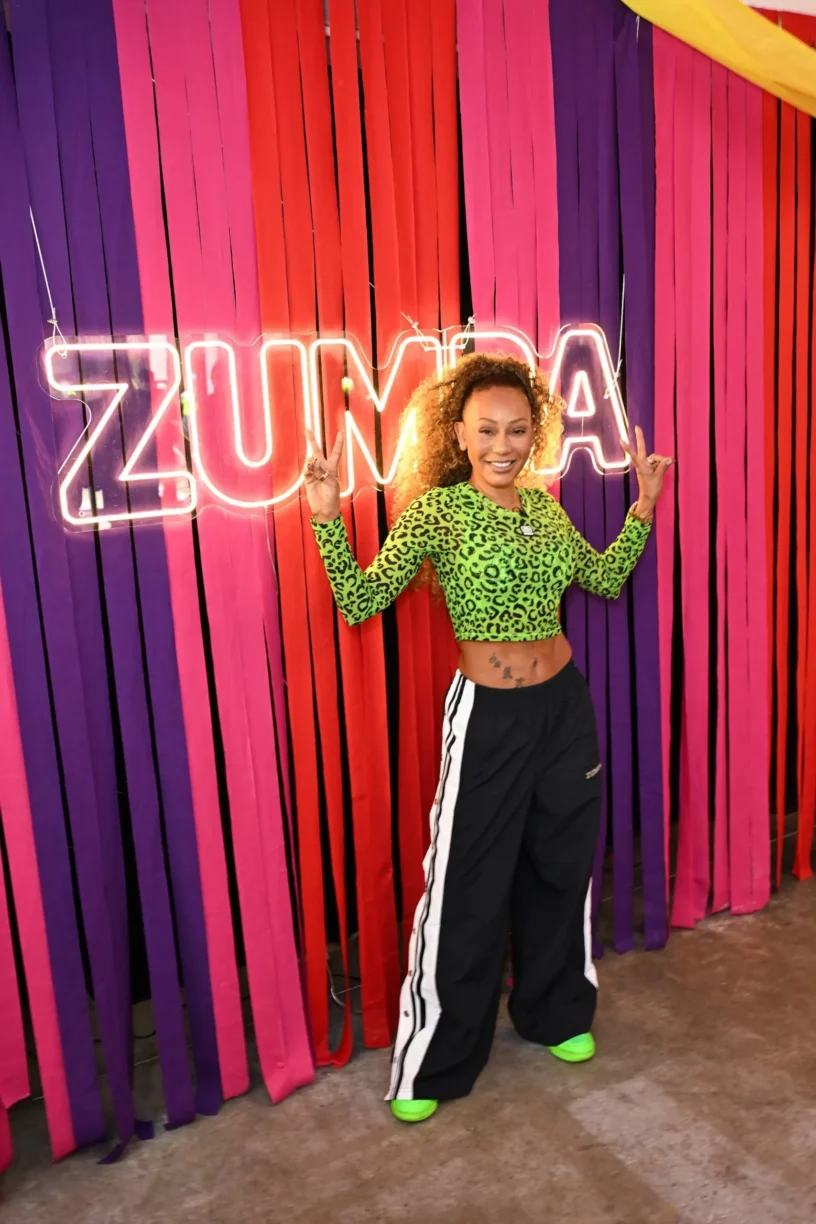
Earlier in the day, Mel had joined a live class at the SXSW Zumba House, learning choreography alongside instructors and dancers while dressed, naturally, in leopard print. There are certain constants in British life: rain at barbecues, train delays, and Mel B making leopard print look less like a pattern and more like a constitutional right.
Rory, Farm Life And The Joy Of Not Choreographing Everything
Away from the stage, Mel’s everyday wellness sounds less like a celebrity biohack brochure and more like an eccentric Leeds farmhouse sitcom with better lighting.
Life with husband Rory McPhee includes infrared home saunas, ice baths, “brain breaks”, animals, fresh air and dancing around the house. Their wedding in Morocco did not feature the usual precision-drilled first dance, the one where couples look as if they have been taken hostage by a ballroom instructor. Instead, they jumped around together to Prince’s I Would Die 4 U.
There was also the hen do, where Mel set and judged a dance competition for 33 women. Of course she did. Some people book a spa. Mel B apparently organises a full-body confidence tribunal with choreography.
But beneath the comedy is a useful truth. Movement does not have to arrive wearing the uniform of self-improvement. It can be messy. It can be social. It can happen in a kitchen, on a dance floor, in a community hall, or halfway through a day when your brain needs the human equivalent of opening a window.
A Fitness Message That Feels Human
The strongest part of Mel B’s Zumba SXSW London appearance was not that she endorsed movement. Plenty of people do that, usually while standing beside a branded water bottle and a suspiciously untouched bowl of quinoa.
The stronger message was that movement can be personal without being precious. It can help rebuild confidence. It can offer structure when life has become frighteningly unstructured. It can be joyful without being shallow. And, crucially, it does not need to begin with punishment.
For Mel B, dance has been a childhood outlet, a career engine, a coping mechanism, a relationship ritual and a form of self-recognition. That is a lot to ask of a sidestep. But then again, the body remembers more than we give it credit for.
Sometimes it remembers pain. Sometimes it remembers rhythm. And sometimes, if you are lucky, it remembers how to move again.