The Longines Global Champions Tour returns home to Valkenswaard as Jan Tops reflects on 20 years of expansion, innovation and ambition.
The Longines Global Champions Tour Valkenswaard round arrives with rather more baggage than the usual collection of tack trunks and flight cases.
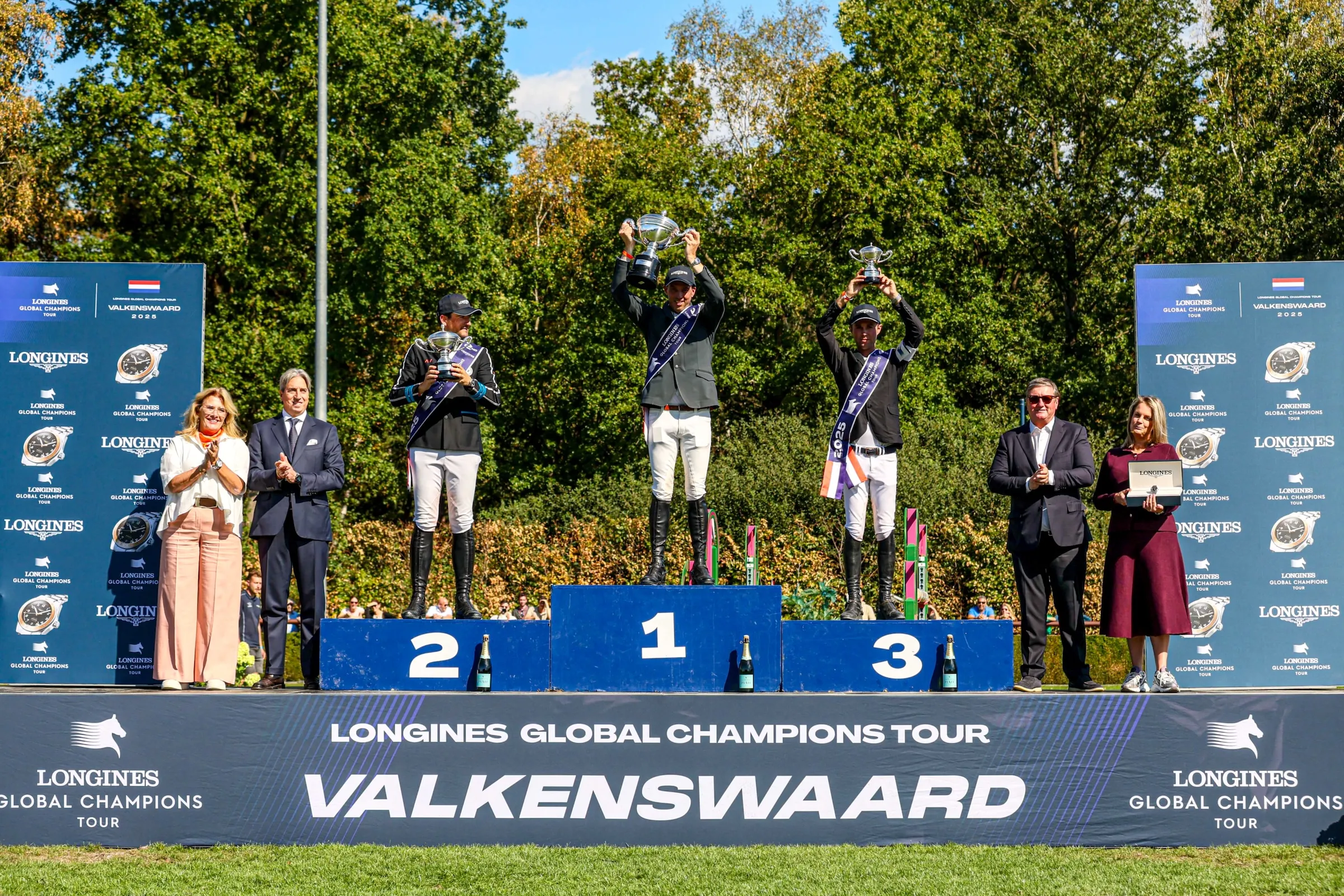
Twenty years after Jan Tops launched the circuit in 2006, the championship is back at the place it regards as home — a fitting setting for an anniversary that says as much about show jumping’s changing ambitions as it does about nostalgia.
Valkenswaard Gives the Anniversary Some Substance
A 20th birthday can be an excuse for cake, speeches and aggressive use of archive photography. Valkenswaard offers something more useful: perspective.
The Longines Tops International Arena has roots stretching back more than three decades, with its first international 5* competition staged in 1994.
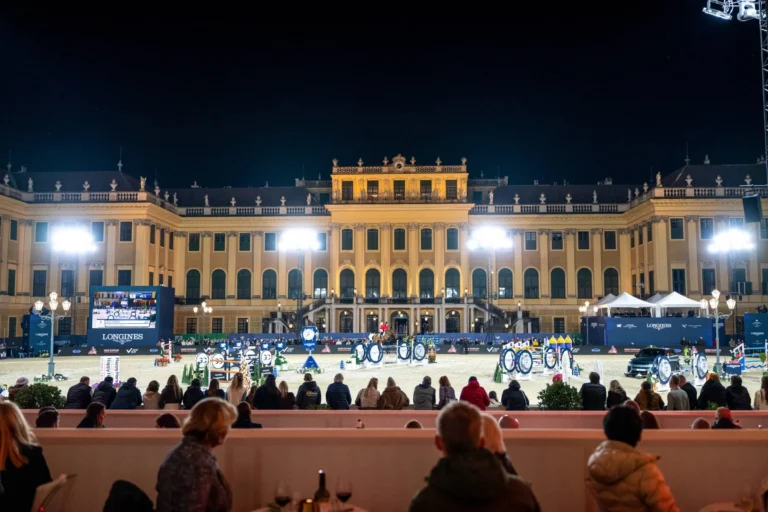
Since then, the Tour has carried elite show jumping into settings that would once have sounded faintly fanciful: beneath the Eiffel Tower, beside Monaco’s Formula 1 pit lane, in Shanghai, in central London and in front of the Pyramids in Cairo.
That expansion is the clearest expression of Tops’ original idea.
“The idea behind LGCT was to create a truly global circuit – taking the best riders in the world to iconic locations and presenting the sport at the highest level, while also giving young talent the opportunity to become the stars of the future,” Tops says.
Valkenswaard, though, is not simply another glamorous pin on the map. It is the base from which the whole exercise makes most sense.
Jan Tops Built the Tour From a Rider’s Viewpoint
Tops’ authority in the sport predates the Tour by decades. An Olympic gold medallist with more than 50 years in equestrian sport, he has framed the championship as a rider-led answer to several old problems: how the sport is presented, how it attracts sponsorship, how it reaches new audiences and how it gives owners and riders a sustainable stage.
“Over the past 50 years, my time as a rider has shaped everything,” Tops explains. “It gave me a deep understanding of what the sport needed – not just from a competitive point of view, but also in terms of presentation, media and sponsorship opportunities, and long-term sustainability.”
The Tour’s legacy is not merely a list of attractive venues, although it has collected those with unusual enthusiasm. The more consequential change has been the attempt to package show jumping as a coherent global season rather than a series of elite events speaking mostly to their own established audiences.
GCL Changed the Season’s Sporting Grammar
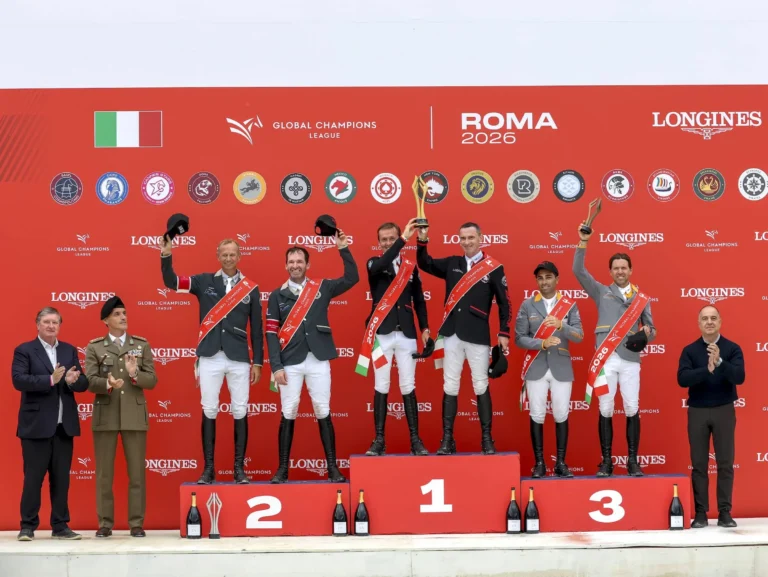
The launch of the Global Champions League in 2016 was the next significant turn. Riders of different nationalities were brought together under team colours, creating a season-long team story alongside the individual championship.
Two years later came the GC Playoffs, with production, entertainment and more than €10 million in prize money across one weekend. Traditionalists may raise an eyebrow at special effects. Sport, however, has rarely suffered from giving people a reason to keep watching.
The U25 policy provides a more substantial measure of the circuit’s long-term intent. Tops points to riders including the Philippaerts brothers, Gilles Thomas and Anastasia Nielsen as examples of young competitors who developed through the Tour before winning at its highest levels.
The Anniversary Field Keeps Sentiment in Check
There will be little room for misty-eyed reflection once the jumping starts. Harrie Smolders, Maikel van der Vleuten, Scott Brash, Edwina Tops-Alexander, Daniel Deusser, Christian Ahlmann, Simon Delestre, Max Kühner, Pieter Devos, Katrin Eckermann, Victor Bettendorf, Denis Lynch, Olivier Philippaerts, Gregory Wathelet and Sanne Thijssen are among those heading to Valkenswaard.
It is an appropriately serious field for a circuit that has spent two decades trying to make elite show jumping look, feel and operate like a genuinely global championship.
The Next 20 Years Are the Harder Part
Anniversaries flatter founders because they turn survival into a statistic. The more interesting test is relevance.
LGCT now has the venues, broadcast relationships, team competition, streaming platform and history. It also has evidence that some of its ideas have travelled beyond its own boundaries, with Tops pointing to countries including Brazil, Australia, Qatar, the United States and Italy as places where the GCL team model has proved influential.
“I always believed in the vision and the plan. What we set out to do was create something that could transform the sport – and today, seeing the global reach, fans we have and impact is incredibly rewarding. It has been an extraordinary journey.”
For one week, Valkenswaard can look backwards. Then the fences go up again.
Twenty years after trying to take show jumping somewhere new, the harder trick is making sure the sport still wants to follow.