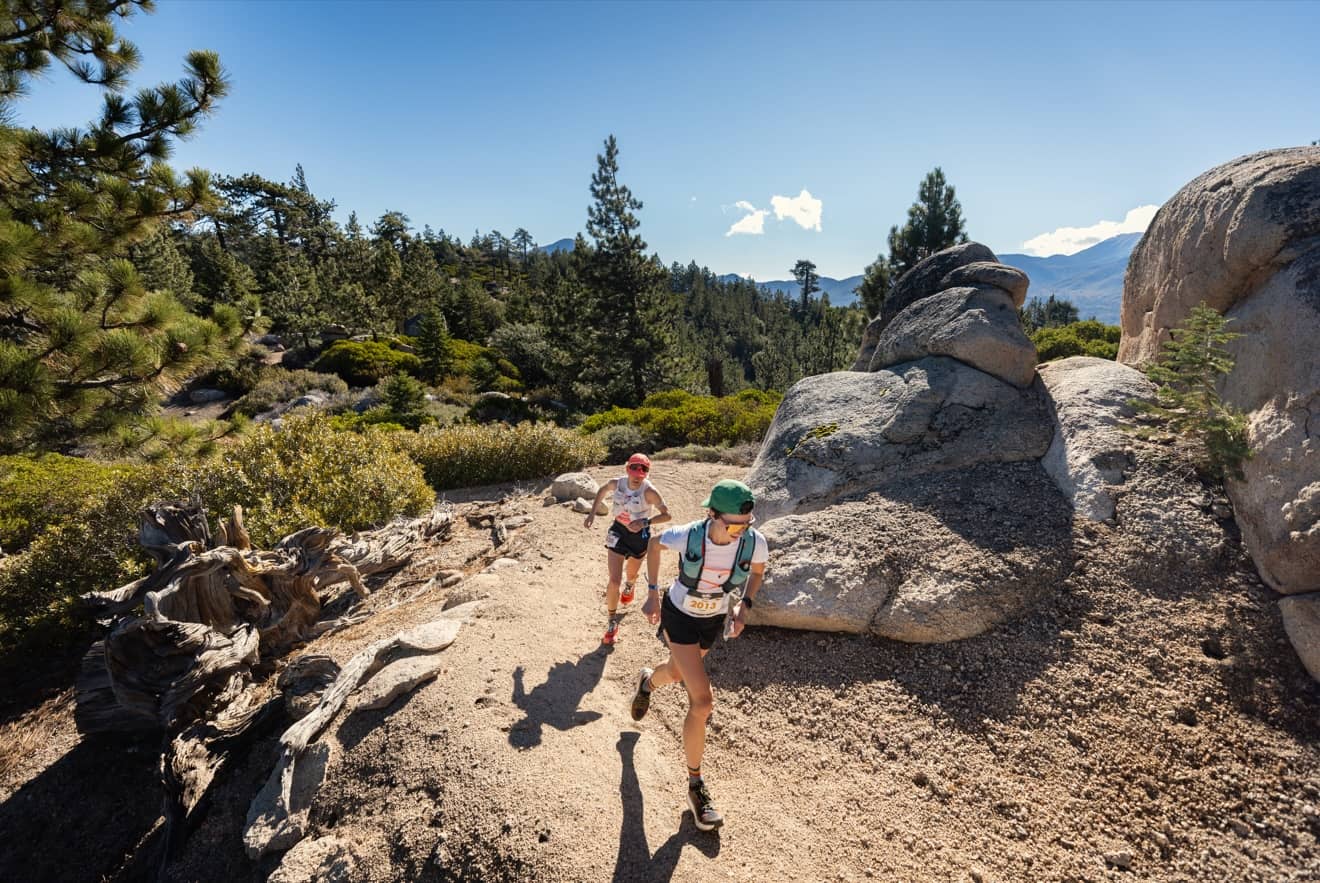
California’s mountain trails will host nearly 2,700 runners this October as HOKA Kodiak Ultra Marathons returns as the UTMB World Series Major in the Americas, bringing elite racing, broader participation and valuable qualification places to Big Bear Lake.
Nearly 2,700 runners, six race formats and 210 automatic places at the 2027 UTMB World Series Finals. There is rather more at stake at the HOKA Kodiak Ultra Marathons 2026 than simply getting around the mountain in one piece.
The event returns to Big Bear Lake, California, from 8–11 October for its 13th edition and its second year as the UTMB World Series Major in the Americas.
That status puts Kodiak in an important position on the international trail-running calendar, but the scale of the weekend is only part of the story. Alongside the 100-mile specialists and highly ranked elite runners will be people lining up for 10K and 20K races, a 50K, 100K and a kids’ event.
It makes for an unusually broad definition of an ultra-running festival.
Big Bear offers six very different ways to race
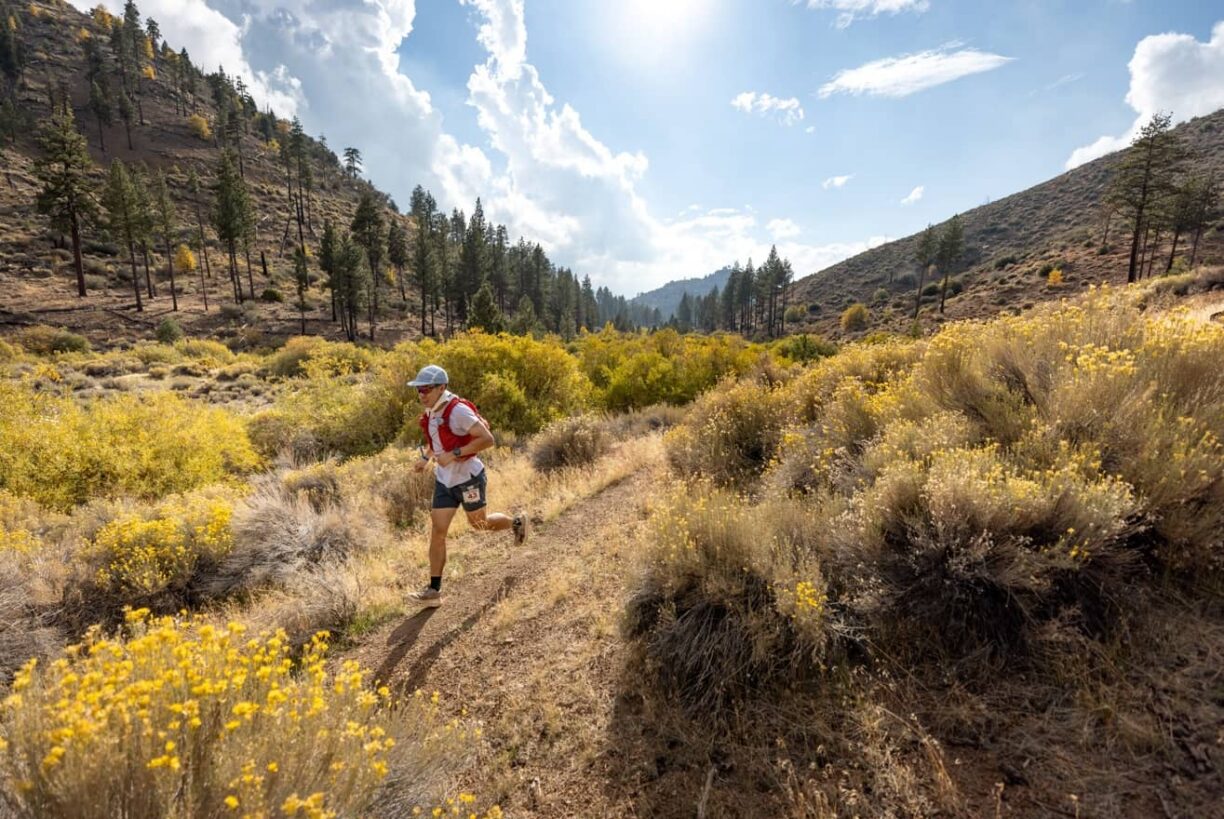
Kodiak’s courses use the terrain surrounding Big Bear Lake, moving through alpine forest, high desert and rugged canyon country, with views towards the lake and Sugarloaf Mountain.
The longest test is the 100M, beginning at Rim Nordic Ski Area, while the 100K and 50K start from Big Bear Lake.
At the other end of the scale, the 10K and 20K provide a considerably more accessible route into the weekend. That breadth matters. Ultra-running can look brutally specialised from the outside; an event accommodating everything from a 10K runner to somebody contemplating 100 miles of Californian trail has rather fewer excuses for behaving like a private club.
The numbers suggest that local and regional participation remain central to Kodiak. More than 74% of entrants come from North America, including 61% from the United States, while 39% of all participants are from California.
Women account for a third of the field
Women make up 33% of total participation, with the proportion rising sharply in the shorter races.
Almost 62% of runners in the 10K are women, alongside 44% in the 20K.
The event is also continuing several practical inclusion measures across race weekend, including feminine hygiene kits at aid stations and an emphasis on equivalent visibility for female and male athletes in editorial coverage, live broadcasting and elite-race reporting.
For a second year, HOKA is also supporting the Renegade collective, which will bring 31 female runners from minority groups to Kodiak. Ten are preparing for the 100K, with another 21 entered in the 50K.
Those are modest numbers compared with the overall field, but they put something tangible behind the much broader conversation about who gets to see themselves belonging in endurance sport.
Why Major status matters for runners
For competitive athletes, Kodiak’s UTMB World Series Major designation carries practical consequences.
Finishers can earn double the number of Running Stones available at standard UTMB World Series Events. Running Stones increase a runner’s chances in the lottery for the UTMB World Series Finals.
More immediately, 210 automatic qualification places for the 2027 Finals will be available across the 50K, 100K and 100M races.
Those places will go to age-group category winners as well as the top 10 men and top 10 women over each distance.
Major status also brings an expanded anti-doping programme, with 20 tests scheduled across the 50K, 100K and 100M races.
Ryan Montgomery heads a deep 100-mile field
The elite fields add considerable competitive interest.
In the 100M, Ryan Montgomery arrives with a UTMB Index of 925 after finishing third at the 2026 Western States Endurance Run. That is the highest index in the field.
Adam Loomis and Colombia’s Jhon Barrera are among the other leading men, while the women’s race includes Addie Bracy, Helen Mino Faukner and Jaclyn Noshay.
The 100K women’s field features Germany’s Lotti Brinks, fifth at the 2026 Western States Endurance Run, alongside New Zealand’s Juliette Soule and American Jenna Bensko.
Among the men, Stephen Kersh, Gavin Prior and Spain’s Jose Angel Fernandez Jimenez carry some of the strongest UTMB Index figures on the start list.
The 50K is scarcely short of pedigree either. Abby Hall, Anna Gibson and Dani Moreno feature in the women’s field, while Switzerland’s Roberto Delorenzi, American Eli Hemming and Spain’s Miquel Corbera Rubio are among the leading men.
Delorenzi brings a UTMB Index of 919, narrowly ahead of Hemming at 916.
Kodiak will have an international audience too
The 50K and 100K will be broadcast internationally on UTMB Live from 2.45pm CET on Saturday 10 October.
Coverage will be available free through UTMB Live in French and English, with race footage, commentary, LiveTrail data, statistics, live chat and guest appearances.
International distribution partners include L’Équipe Live, Eurovision Sport, FloSports, Tencent Sports, iQIYI Sports, RunYeah and DAZN.
For Big Bear Lake, that means a weekend built around a distinctly local landscape will again be given a global shop window.
For the runners, particularly those chasing one of those 210 Finals places, the view may be slightly different. Mountains are charming things until somebody puts a stopwatch on them.