Two days on the slopes can take you from wrestling with your boots to making your first controlled turns. The trick is knowing what progress actually looks like – and why trying to rush it rarely ends well.
Let’s answer this straight away: A weekend is long enough to begin learning to ski, but by no means long enough to finish the job. In two or three days, a complete beginner may learn how the equipment works and master some basics. But what they’re unlikely to gain is automatic technique across changing snow or steeper pistes.
The sensible aim is therefore to leave with safe foundations, a few controlled turns and an idea of whether you want to do it again.
What can you realistically learn?
The first session often feels like negotiating with two long planks that have developed separate ambitions – and that’s perfectly fine.
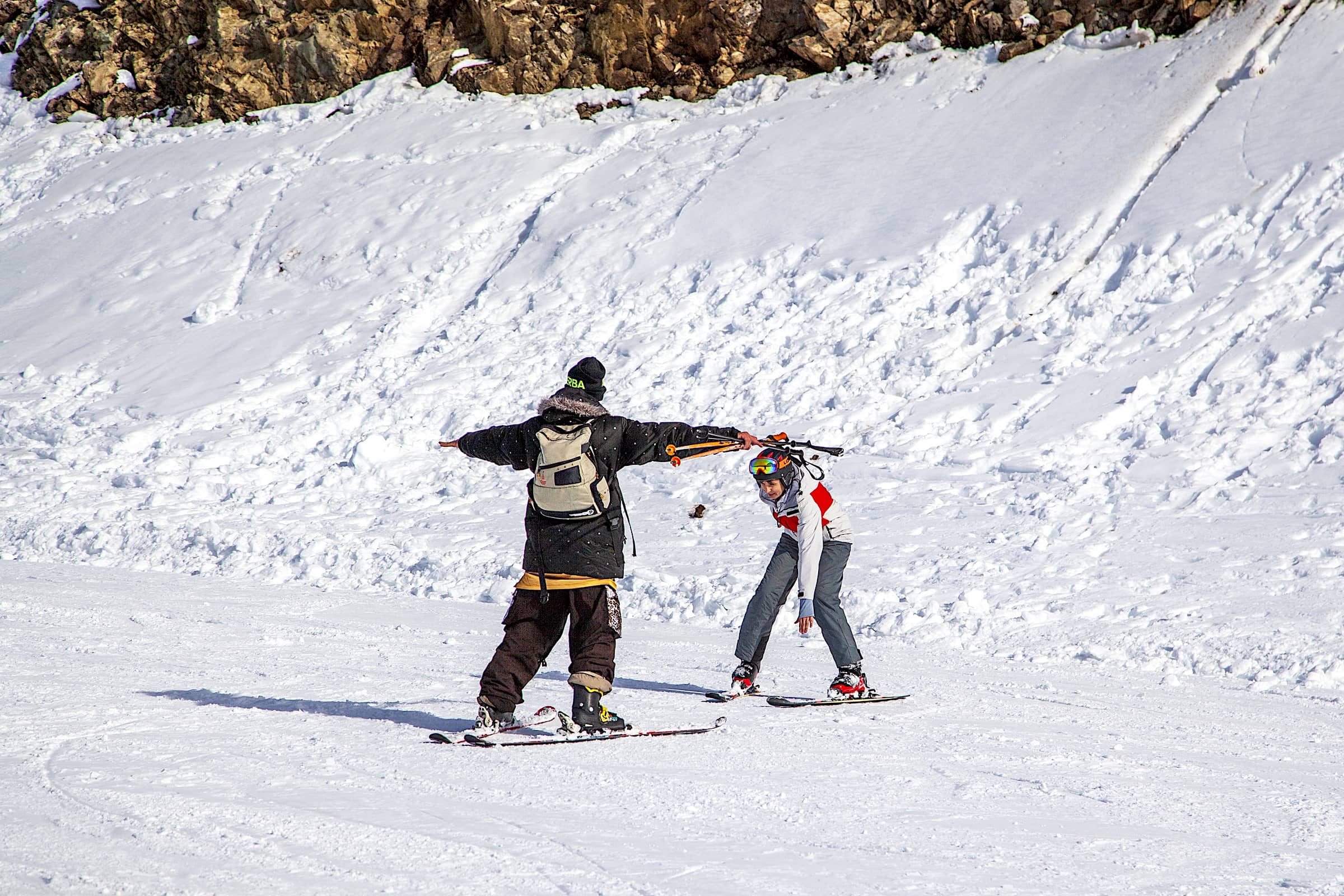
A professional instructor will usually begin with boots, bindings, balance and moving on flat snow before introducing a wedge-shaped stop and basic turns on a nursery slope. Progressively, you may link turns, regulate speed and use a drag or conveyor lift without requiring a small rescue operation each time.
This is possible within a short course, but it’s not guaranteed. SnowDome, for example, structures its three beginner levels across either three two-hour sessions or two intensive three-hour sessions, covering balance, linked turns, speed control, safe slope use and lift skills. That suggests the basics can be introduced in about six instructed hours, but not that every learner will leave at the same standard.
Fitness, confidence, weather, snow conditions and group pace all have a vote.
Lessons are the important bit
That being said, if time is tight, book tuition before worrying about covering kilometres. As our first-time skier’s guide suggests, a qualified instructor can choose suitable terrain and spot unhelpful habits early.
A confident friend may ski beautifully yet explain everything with the reassuring phrase, “Just follow me.” Save that friendship for lunch. Arrive with equipment already fitted if possible, know where the meeting point is and eat beforehand, so the paid lesson isn’t spent queuing in socks.
Some preparation at home can also stop the second afternoon becoming a prolonged conversation with your thighs.
Our practical ski-fit exercises concentrate on balance, core control, lower-body strength and ankle mobility, if you’d like some pointers. They will not teach technique, but being reasonably prepared may help you maintain attention and useful form for longer.
Make the short break easy
For a first ski weekend, convenience is part of the learning plan. Choose a resort with a clearly identified nursery area, a well-regarded ski school and minimal travel between accommodation. A short airport transfer helps, but the smaller distances after arrival matter too when walking in ski boots feels like being a robot on a staircase.
Pre-book lessons and rental equipment, confirm that beginner classes run on your arrival dates, and ask which lift pass is actually required; a full-area pass can be unnecessary while you remain on local slopes.
If the trip allows three ski days, use the first for instruction, the second for another lesson plus careful practice, and the third to consolidate.
An indoor or dry-slope lesson in the UK before departure can make clipping into skis, standing up and using a lift feel less alien.
Know when you become fatigued
Beginners often improve in bursts. Cold, nerves and tired legs can affect concentration and control, so a short break should include actual breaks. Stop before technique unravels, drink regularly, eat enough and treat soreness as information.
Stay on terrain approved by your instructor and don’t let a more experienced group pull you onto a run you cannot confidently manage.
The Ski Club of Great Britain identifies reading piste maps and learning the FIS rules of conduct as key first steps, helping new skiers understand where to ski, how to behave and what to do in an emergency. Proper winter-sports insurance belongs in the plan too.
By the end of the trip, success could mean controlled linked turns on the nursery slope; for someone else, it might mean stopping reliably and feeling ready for another lesson. Both count.
So, is a weekend long enough? Yes, if “learn” means building a safe introduction and enjoying early progress. No, if it means becoming an independent all-mountain skier in 48 hours. But at the end of the day, it is a perfectly respectable start.