Seven simple, low-cost ways to keep the family active during the summer holidays, from cycling and swimming to walks, games and paddleboarding.
Working out how you can keep the family active during the summer holidays need not involve colour-coded exercise plans, expensive memberships or issuing children with a whistle and a clipboard.
Six weeks away from school creates plenty of opportunities to move more simply by making the day itself more active — cycling somewhere, swimming, walking, playing games or trying something none of you is particularly good at yet.
That last category is often the most entertaining.
For parents, the attraction is obvious. Activities that occupy children, get everybody outdoors and do not require a second mortgage before lunchtime are already ahead of much of the summer-holiday field.
Fitness expert Clive Payne, founder of TBKFiT, argues that families can benefit from thinking less about formal workouts and more about movement hidden inside an enjoyable day.
“Parents often think exercise must be planned, but some of the best workouts don’t feel like exercise at all. The summer holidays are about making memories, and if you build movement into those memories, everyone benefits.
Whether it’s exploring the coast, cycling together or playing games in the park, staying active can be fun, affordable and something the whole family looks forward to.”
That is a useful distinction. Children rarely ask how many calories were burned during an afternoon at the beach. They may, however, happily spend two hours racing into the sea, climbing dunes and attempting to throw a frisbee in something resembling a straight line.
Turn family exercise into an adventure
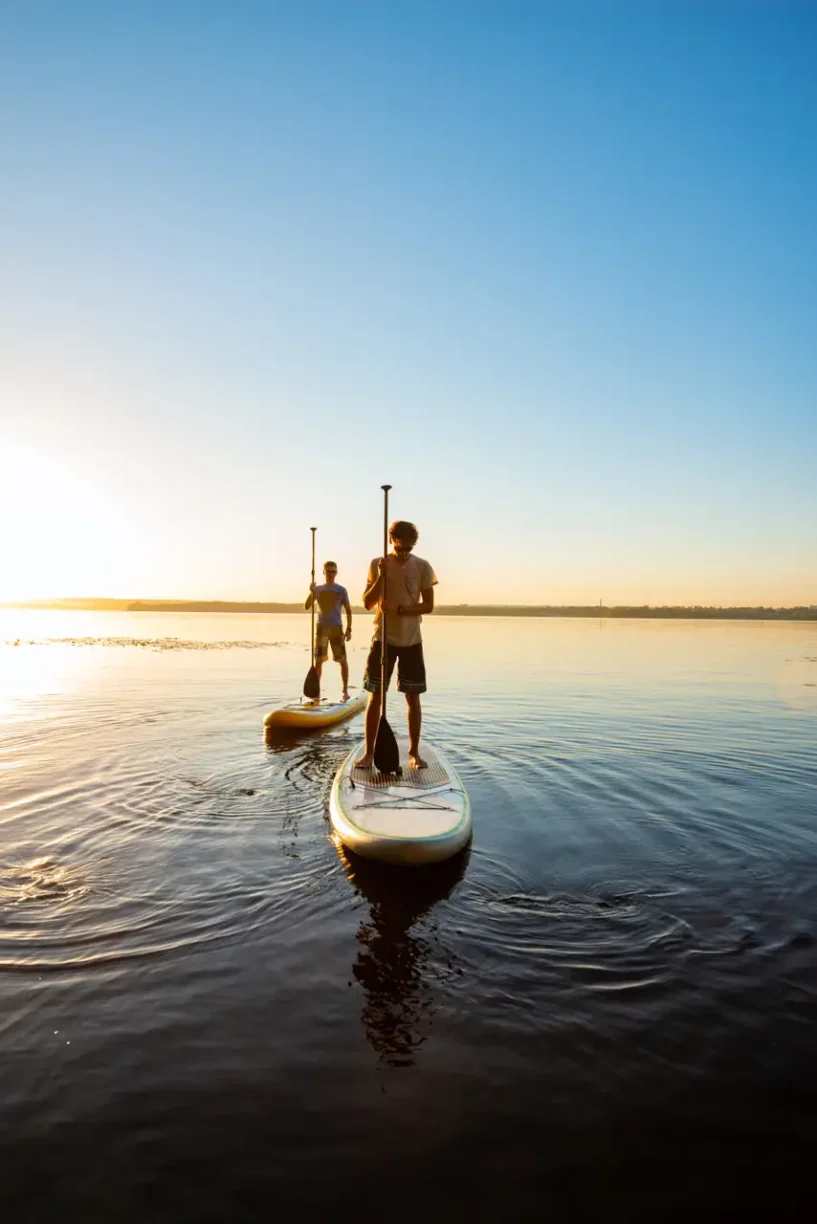
Paddleboarding has become an increasingly familiar sight on lakes, rivers and sheltered stretches of coastline, and it is easy to see the attraction.
It combines balance, coordination and core strength with the considerably more persuasive prospect of being on the water. For children trying it for the first time, there is also the small matter of staying upright, which tends to concentrate the mind wonderfully.
Families taking to open water should choose conditions appropriate to their experience and take water safety seriously. Summer sunshine can make water look rather more forgiving than it is.
Swimming offers a simpler alternative. Sea swimming, outdoor lidos and conventional pools all provide an energetic family activity, while bodyboarding, paddling and games in shallow water can keep children moving without presenting the outing as an exercise session.
Get the bikes out of the garage
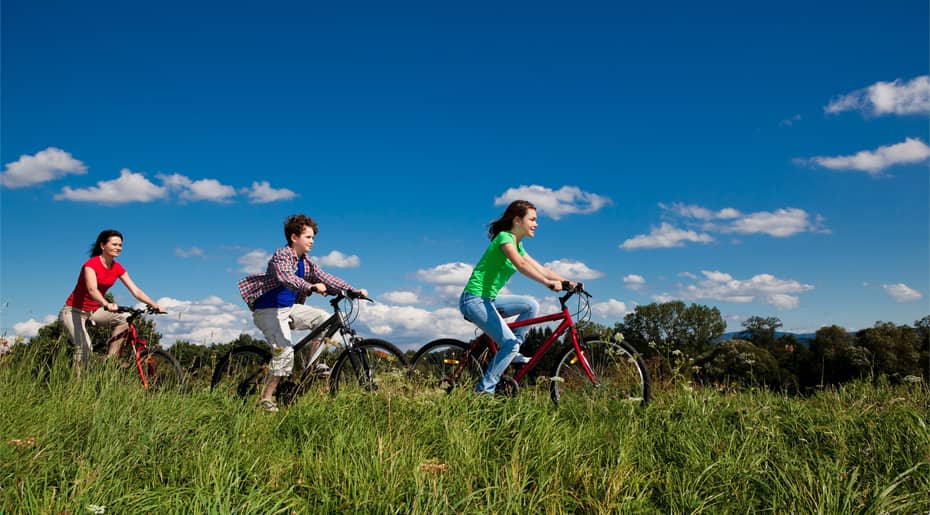
Few pieces of family fitness equipment are more useful than bicycles that have been sitting quietly behind a lawnmower since Easter.
Traffic-free cycle paths, promenades and routes through country parks can turn an ordinary afternoon into a proper excursion. The physical benefits are straightforward: cycling gets the heart and lungs working while building leg endurance.
The less measurable benefit is that children can cover enough ground to feel they have actually gone somewhere.
That sense of exploration matters. An active day becomes far easier to sell when the destination is the point and exercise merely happens along the way.
Rediscover the magnificent simplicity of a ball
Not every summer activity needs equipment that arrives with an instruction manual.
Rounders, football, frisbee and catch remain remarkably efficient ways of getting several generations moving at once. A patch of grass is usually sufficient. Rules can be interpreted with the constitutional flexibility traditional to family games, particularly once grandparents become involved.
There is another advantage: stop-start games naturally mix running, throwing, reaction and coordination rather than asking children to repeat one movement for an hour.
For families interested in something more structured, reaction-based training games can add another competitive element. Payne’s TBKFiT business produces portable equipment called The TBK, designed around reaction, coordination and speed challenges that can be used in gardens, parks and campsites.
It is one option rather than a prerequisite. Chalk lines, improvised targets and a stopwatch can produce a surprisingly serious family contest for considerably less technological drama.
Walk somewhere worth looking at
Walking suffers from an image problem among children largely because adults occasionally announce it as “going for a walk”.
Give the same activity a destination, a woodland trail, wildlife to spot, shells to collect or sand dunes to climb and the marketing department has suddenly done its job.
Beach walks and countryside hikes allow families to accumulate physical activity at a manageable pace while spending time away from phones, tablets and televisions. They also suit mixed-age groups better than many organised sports.
The route does not need to be heroic. A shorter walk with plenty happening along the way is often a better family day than an ambitious trek that ends with everybody resenting both nature and one another.
Use the weather rather than arguing with it
British summer weather remains admirably resistant to forward planning.
Rain, however, does not require the family to surrender immediately to the sofa. Indoor pools, climbing centres, trampoline parks and activity centres can provide useful alternatives when conditions outside deteriorate.
The broader principle is to have a second option rather than abandon movement entirely. An outdoor plan becoming an indoor one is not failure; it is merely July behaving like July.
Aim for daily movement, not perfect workouts
UK physical-activity guidance for school-age children centres on averaging at least 60 minutes of moderate or vigorous activity each day across the week. That does not mean children need a formal one-hour workout.
A cycle ride followed by some swimming, a walk into town, games in the park or an afternoon climbing and running around can all contribute.
This is where family fitness during the school holidays becomes more practical. Instead of adding exercise to an already complicated day, build activity into something the family was going to do anyway.
Put the memory before the workout
Parents can put considerable effort into engineering the perfect school-holiday day, usually shortly before somebody announces that they are bored.
Payne’s central argument is that memorable activity beats immaculate planning.
“The biggest thing parents can do is stop worrying about creating the perfect day added Clive Payne. Children don’t remember whether they went to the gym; they remember paddleboarding for the first time, cycling with their family, playing rounders in the park or laughing together on the beach. Those moments don’t just keep us fit; they’re the memories that last.”
The grammar may not win a prize, but the sentiment has legs.
Children do not need every summer afternoon organised around structured sport. They need reasons to move: somewhere to cycle, something to chase, water to splash in, a hill to climb or a relative whose rounders technique badly needs exposing.
If everybody comes home pleasantly tired and with a story to tell, the workout has already taken care of itself.