Lauren Gregory wins a last-gasp thriller as Frédéric Tranchand masters the heat at HOKA UTMB Mont-Blanc 2026.
The HOKA UTMB Mont-Blanc delivered the sort of finish that makes careful pacing look suspiciously like theatre.
Across 60 km from Orsières, with 3,500 m of climbing, temperatures pushing 30°C in the valleys and stronger winds higher up, Lauren Gregory overhauled Sara Alonso before fighting Naomi Lang all the way to the line.
Frédéric Tranchand took a rather different route to victory: get ahead, trust the terrain he knew intimately and try not to become completely cooked before somebody caught him.
Gregory Leaves It Until the Final Seconds
Gregory arrived at the distance as a debutant and finished in 6:08, but the clock tells only half the story.
The American first had to work her way back towards Spain’s Sara Alonso before finding herself locked in a final battle with Great Britain’s Naomi Lang. The result remained uncertain until the last second, which is not generally the preferred method for keeping one’s heart rate under control.
There was something pleasingly unpolished about Gregory’s description afterwards. No grand manifesto. No solemn lecture about suffering. Just a memorable nickname and an admission that moving up in distance had frightened her.
“Over the past two years, I’ve been afraid to move up to longer distances, but if I can do it, so can everyone else. They call me ‘the fastest turtle’, so I was just trying to be the biggest turtle in the pack! I also really enjoyed running with the men: there aren’t two different UTMBs; we’re all here to run together.”
For a first attempt at the distance, it was a fairly extravagant way to prove the point.
Tranchand Makes Local Knowledge Count
The men’s race developed rather more cleanly at the front.
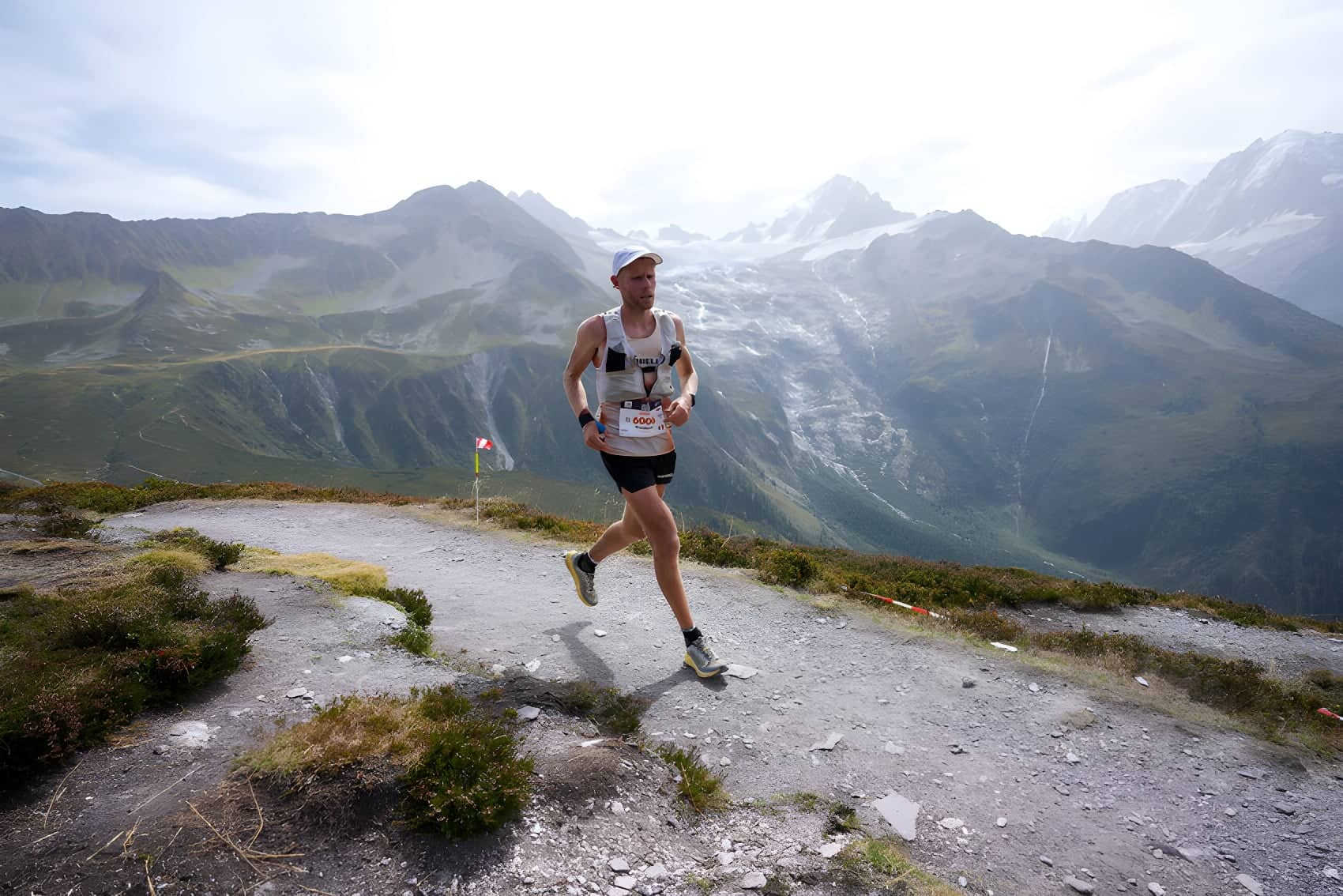
Tranchand, the 2025 Short Trail World Champion and 2026 European Champion, finished in 5:10, several minutes ahead of Kenya’s Nashon Kiplimo.
His advantage was hardly mysterious. The Frenchman knew the closing kilometres intimately and understood that waiting for the flatter running later in the course would favour quicker rivals.
“The last kilometres are my training trails, I know every rock, so that maybe gives me a little extra advantage. I found myself out front quite early because I wanted to play to my strengths: I knew there were a lot of faster runners than me on the flatter section towards the end.”
The judgement was sound. The experience remained unpleasant.
“I had a stitch, I was starting to feel cooked.”
He still had enough in reserve to finish clear of Kiplimo. Behind them, Alain Santamaria Blanco prevailed over Sylvain Cachard in another late fight, this time for third place.
One notable name disappeared much earlier. Pre-race favourite Rémi Bonnet retired in the opening stages.
Heat Turns Pacing Into the Real Contest
Dry summer heat in the valleys and strengthening winds at altitude made effort management central to the day.
Temperatures approaching 30°C at lower elevations are more than an inconvenient backdrop on a route containing 3,500 m of ascent. Poor decisions become steadily more expensive. Enthusiasm, that wonderfully renewable resource at the start line, develops quite a different personality several hours later.
Gregory’s comeback and Tranchand’s front-running approach were opposite strategies, yet both depended on judging effort better than the athletes around them.
For Tranchand, the result also carried significance beyond another line on the competitive record.
“My world championship title will remain the best performance of my life, but in trail running, the UTMB races are the Holy Grail. I’ll remember this for a long time. With the encouragement all along the course, it’s an incredible experience.”
Team Adaptive Adds Another Dimension
The day’s more consequential performances were not confined to the leaders.
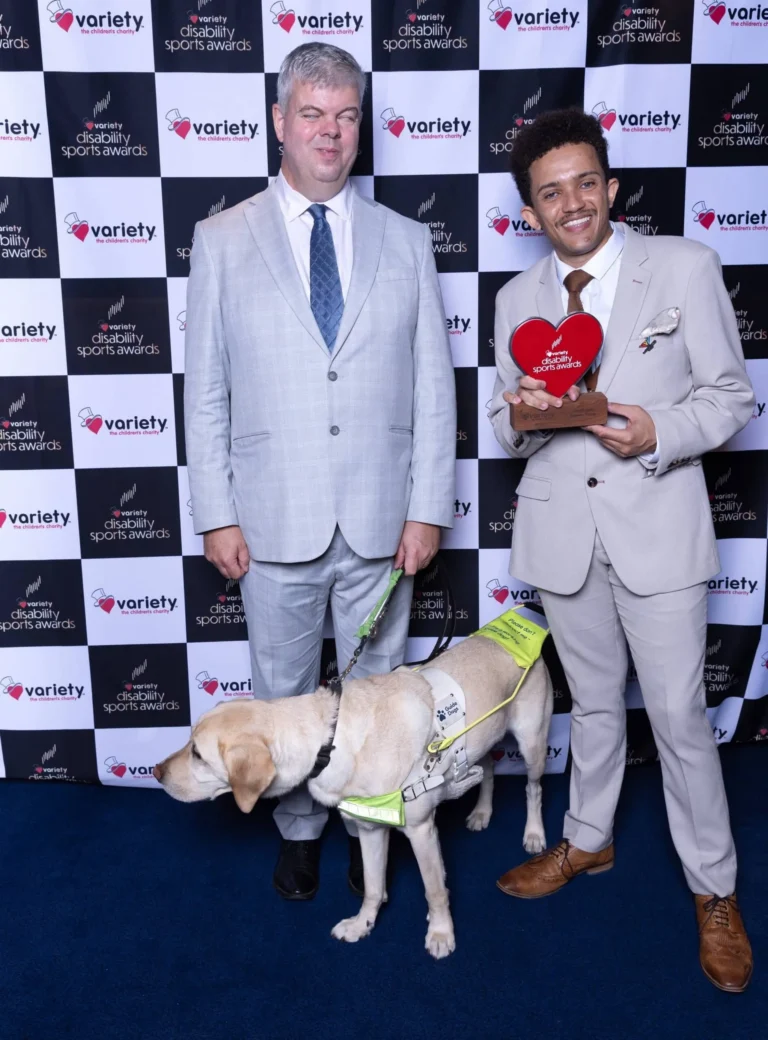
Paralympic athlete Pol Makuri Redolad Garcia, who has cerebral palsy, completed his third participation in HOKA UTMB Mont-Blanc 2026 in 10 h 53, crossing the finish line at 7:08 p.m.
Australian Mick Marshall, who lost the use of both lower limbs following a workplace accident and finished the MCC in 2025, was expected to reach the finish overnight.
There could be further history during the event. Jonathan Naboulet, a quadriplegic athlete, could become the first team using a joëlette to complete the UTMB within the time limits. Julien Veysseyre could become the first amputee athlete to complete it using a transtibial prosthesis.
Yanis Debaud, Sabine Galpin-Ossonce and Fanny Barbara are also due to take the start as part of Team Adaptive.
HOKA UTMB Mont-Blanc Turns Towards the CCC and UTMB
There is little time for the event to admire Thursday’s work.
The PTL, which began on Monday, is expected to reach its conclusion on Thursday evening, with brothers Jules-Henri and Candide Gabioud followed by Nicolas Lehmann and Sébastien Raichon.
The CCC then brings another substantial field. Jennifer Lichter, winner and record holder of the 2026 Western States Endurance Run, and two-time OCC winner Yao Miao are among the leading women. Cristian Minoggio and Benjamin Roubiol feature prominently among the men.
Then comes the UTMB itself.
Courtney Dauwalter returns with three victories from four participations. Riley Brady arrives after finishing second at the Western States Endurance Run in June following Ruth Croft’s withdrawal.
Among the men, Ben Dhiman, Vincent Bouillard and Caleb Olson bring enough pedigree to make confident predictions an occupation best left to somebody with nothing valuable riding on them.
Thursday, though, belonged to Gregory and Tranchand: one waited until almost the final possible moment, the other knew every rock.
Trail running rarely produces a neater contrast. It certainly never promises one.