Handshake anxiety, eye contact and small talk are slipping among Gen Z, with schools urged to rebuild real-world confidence.
The handshake used to be one of those small social rituals that said plenty without making a song and dance about it. A firm grip, a bit of eye contact, a sentence delivered without staring at your shoes, and off you went. Now, if new findings are anything to go by, that simple act is starting to look less like common currency and more like a museum piece among Gen Z.
A survey of 2,000 teenagers found that 24% would struggle to offer someone their hand, while 36% are too shy to maintain eye contact during conversation. That is not a minor wobble in confidence. That is a generation edging toward adulthood while finding even the most basic face-to-face interactions oddly steep and slippery.
The numbers do not get any cheerier from there. A quarter of young people struggle to tell a joke in a group, 59% will do almost anything to avoid small talk, and 75% admit they struggle with social anxiety. It is hard to be breezy about that. This is not just awkwardness at a party. It is a broader discomfort with real-world communication.
A generation raised on screens, not social risk

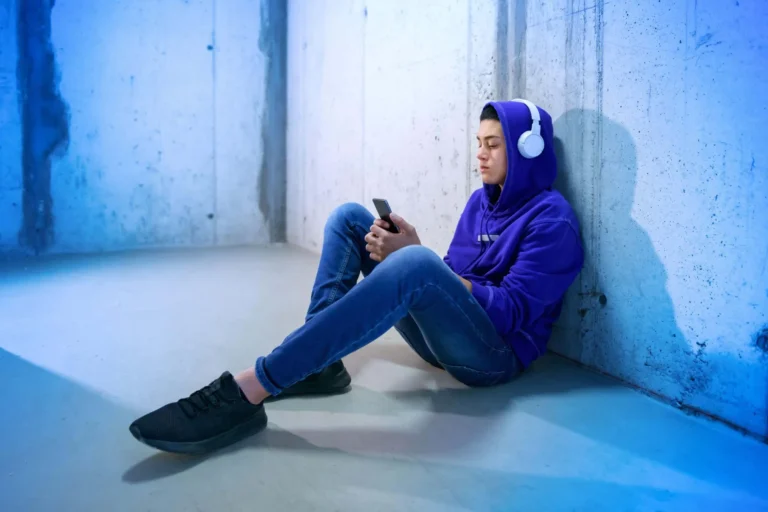
The survey, carried out by ACS International Schools, suggests teenagers are far more comfortable in the soft, padded world of texts and emojis than in the messy business of conversation. A striking 92 % said they feel considerably more at ease communicating through text or emoji than face-to-face.
That may explain why answering the door has become, for some, a test of courage worthy of a war medal. Picking up the phone to an unknown number is another hurdle. Ordering food in a restaurant can feel like public exposure. These are ordinary transactions, the sort of things adulthood throws at you before breakfast, yet they are proving unexpectedly loaded for many British teens.
The old social drills, the bits of life that once taught timing, tone, humour and confidence, seem to be thinning out. The handshake is part of that broader retreat. It is not really about palms and fingers. It is about assurance, presence and the ability to meet another person without hiding behind a screen.
Parents can see the confidence drain
Parents, unsurprisingly, are not exactly glowing with optimism. According to the study, 69% believe the younger generation is less confident than those who came before them. Nearly all surveyed parents, 96%, believe text and emojis are starting to replace face-to-face interactions entirely for their teens.
Many place the blame squarely on digital life. Some 73% believe their teenagers are uncomfortable with social interaction because they spend too much time online. A further 86% say their child is more confident in digital situations than in real ones.
That split matters. Being fluent online is useful, certainly, but it is not the same as being comfortable in a room, reading a face, carrying a conversation, or holding your nerve when a discussion turns awkward. Those are different muscles altogether, and by the look of it, they are not getting much use.
Why eye contact and small talk still matter
There is a temptation to dismiss small talk as fluff and the handshake as old-fashioned theatre. That would be a mistake. These rituals are often the gateway to more meaningful exchanges. A quick conversation with a stranger, a confident order at a restaurant, a calm answer to an unexpected call, these are the tiny building blocks of adult life.
When only 26% of teenagers say they feel totally at ease speaking out if they disagree with someone, the concern goes beyond shyness. It points to hesitation in moments that require backbone, clarity and self-possession. Job interviews, first dates, university seminars, workplace meetings, difficult conversations with colleagues or friends, all of them rely on some version of those same core skills.
A weak handshake is not the crisis. The shrinking confidence behind it is.
Schools are being asked to step in

Many parents now believe schools need to do more. In fact, 81% say communication skills deserve greater attention in education. There is a growing sense that academic performance alone is not enough if students cannot speak with confidence, collaborate in person or hold themselves together in ordinary social situations.
Dr Robert Harrison, Chief Executive Officer, ACS International Schools, and one of the report authors, put it plainly:
“The future belongs not to those who can code or calculate in isolation, but to those who can connect, convince and collaborate in person.
“This generation has not lost the ability to communicate. But they are in danger of losing the confidence that effective communication requires. Schools that understand this distinction and act on it will equip their students to thrive in the world.
“Just as artificial intelligence makes human communication skills more valuable than ever, we are raising a generation that appears to avoid them.”
That is the heart of it. In an age obsessed with artificial intelligence, automation and digital efficiency, the human edge may lie in the very things young people are finding hardest: presence, persuasion, empathy, spontaneity and plain old conversation.
The cost of losing confidence
The most sobering figure in the survey may be this one: 81% of the teenagers questioned are worried that their lack of confidence will hurt their future. They know the problem is there. They can feel it. That self-awareness makes the issue more urgent, not less.
Parents appear to agree on what lies ahead. Some 72 % believe that AI will make human-to-human interaction even more important in future career success. In other words, the more machines do the mechanical work, the more valuable it becomes to do the deeply human stuff well.
That includes the first impression, the eye contact, the back-and-forth, the confidence to disagree respectfully, and yes, the occasional handshake.
This is not nostalgia. It is preparation for life
There is no particular glory in romanticising the past. Nobody needs a lecture about how things were better when people used landlines and wrote thank-you letters. But there is a difference between progress and retreat.
The real warning here is not that teenagers are different. Every generation is. It is that too many young people appear to be entering adult life without confidence in the most basic forms of face-to-face communication. That should worry parents, schools and employers alike.
Because somewhere between the emoji and the awkward silence, the handshake has become a symbol of something larger: a generation still able to communicate, but not always convinced it can do so in person.
And in the years ahead, that confidence may prove every bit as important as any exam result on the wall.