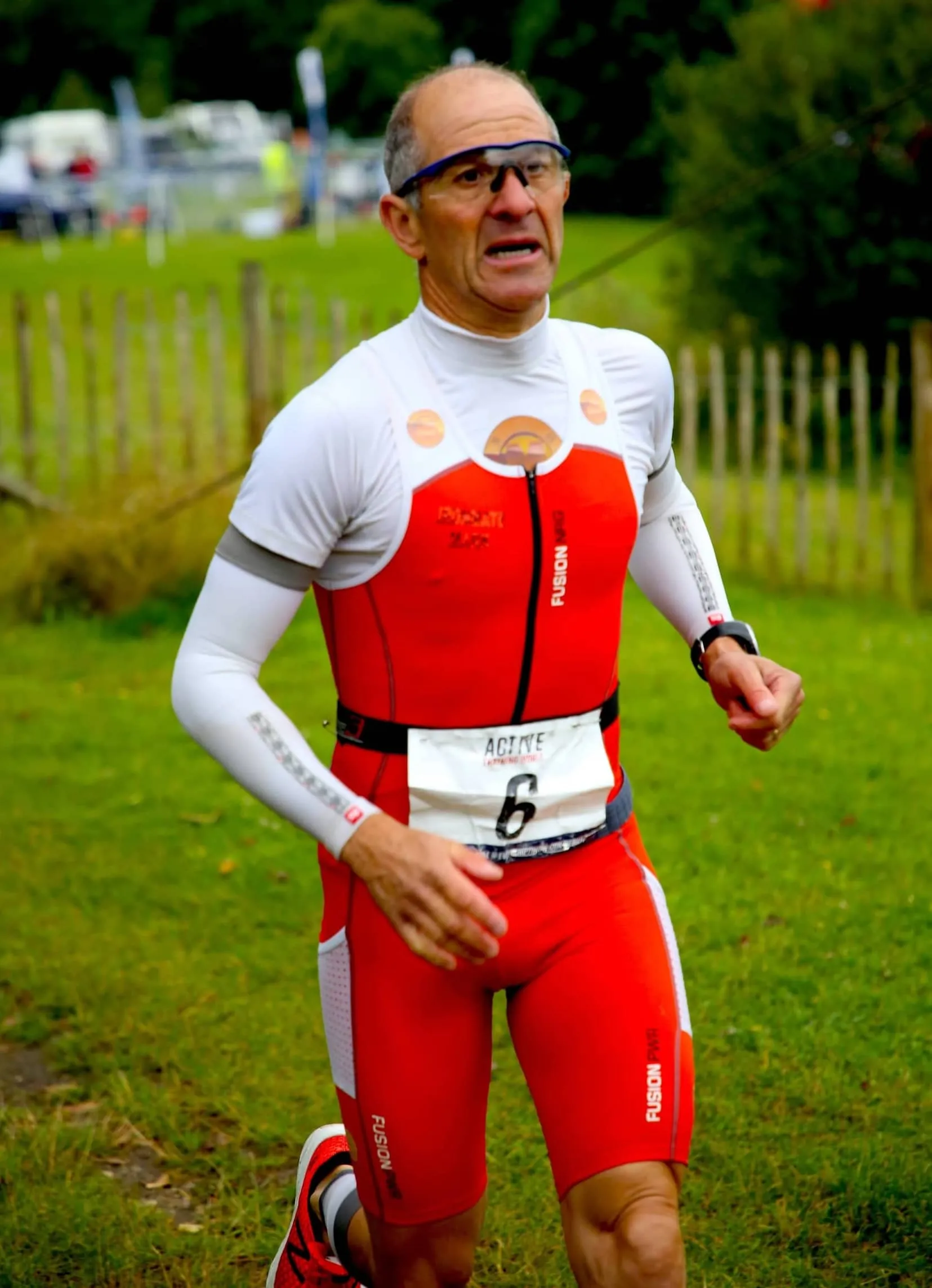
Mark Kleanthous, 65, targets his fastest marathon in 25 years ahead of London after a superb Cambridge Half.
Mark Kleanthous is 65, running faster than many men half his age, and heading to the London Marathon with a rather delicious bit of mischief in his legs. The Leighton Buzzard endurance athlete is targeting a sub-3:20 finish on 26 April, a mark that would give him his quickest marathon in 25 years and confirm what recent results have been shouting for months: this is no sentimental lap of honour. It is a genuine late-career charge.
There is something faintly unnerving about athletes who improve at an age when most people are negotiating with their knees over a short walk to the shops. Yet Kleanthous is not merely hanging on in the masters ranks. He is thriving in them.
Ranked inside the UK top 16 for his age group, and carrying an age-grading of 83.47 per cent, he arrives at London in the sort of form that tends to belong to runners ten or 15 years younger. Better still, he is not doing it by bluff, bravado or social media noise. He is doing it by racing well, pacing smartly and closing hard when others are busy unravelling.
The Cambridge run that turned heads
If there was any doubt about where Kleanthous stands going into London, the Cambridge Half Marathon dealt with it in crisp, unsentimental fashion.
He stopped the clock at 1:29:35, his first sub-90-minute half-marathon in 16 years. That alone is enough to raise an eyebrow. The manner of it raised both. He ran almost four minutes quicker than he had managed at the same race in 2025, held his planned pace through the first 17 kilometres, then pressed the accelerator when most runners are simply trying not to negotiate with the wall.
His closing kilometres told the story plainly: 18km in 4:14, 19km in 4:08, 20km in 4:06, and a final kilometre in 4:03. That is not survival. That is control.
In a field featuring more than 14,000 finishers, Kleanthous won the 65+ category by 3 minutes 45 seconds, finishing almost a kilometre clear of second place. Between 5km and the line, he reportedly reeled in more than 300 runners. Even the overall podium men did not close quicker than they started. Kleanthous did.
That, more than any slogan or supplement label, is the sort of detail that gets the attention of serious runners. Negative splits are the preserve of disciplined pacing, race-day restraint and a body still willing to cooperate when the bill comes due.
Why London now looks different
The London Marathon is rarely kind to dreamers. It is a magnificent race, but it is also a long, public audit of your preparation. By the time runners hit the latter stages, every lazy session, every tactical error and every nutritional gamble tends to step forward and introduce itself.
That is precisely why Kleanthous’s current target carries weight.
He is not chasing a vague personal milestone or merely hoping to better last year. He is trying to run 16 minutes faster than he did in London in 2025 and post his best marathon since the turn of the millennium. For a runner in the masters categories, that is not a small adjustment. That is a serious leap.
What makes the ambition plausible is the shape of the evidence. Recent performances suggest momentum rather than nostalgia. His engine is holding. His closing speed is there. His confidence looks grounded rather than theatrical.
A low-mileage model with sharp edges
One of the more interesting parts of the Kleanthous story is that it does not follow the old script of endless volume and worn-out shoes piled in the hallway like casualties of war.
He describes himself as a low-mileage runner, averaging around 35 to 40 kilometres a week. In endurance sport, that can sound almost suspiciously modest. But Kleanthous has built his training around consistency and marathon-specific work rather than sheer accumulation. The emphasis is on relevant effort, not decorative mileage.
It is the sort of approach that makes sense for an experienced athlete who knows the difference between training and merely being tired. Plenty of runners chase volume as though it were a moral virtue. Kleanthous seems more interested in what actually moves the needle.
The results over the last four months have been difficult to ignore: first in his age group at the Beachy Head Marathon, first at the Dirt Half Marathon, first at the Beds County Cross Country Championships, third overall in his cross-country series age-group standings, and multiple age-group wins at Parkrun events.
That is not a purple patch. That is a pattern.
Where CurraNZ fits into the picture
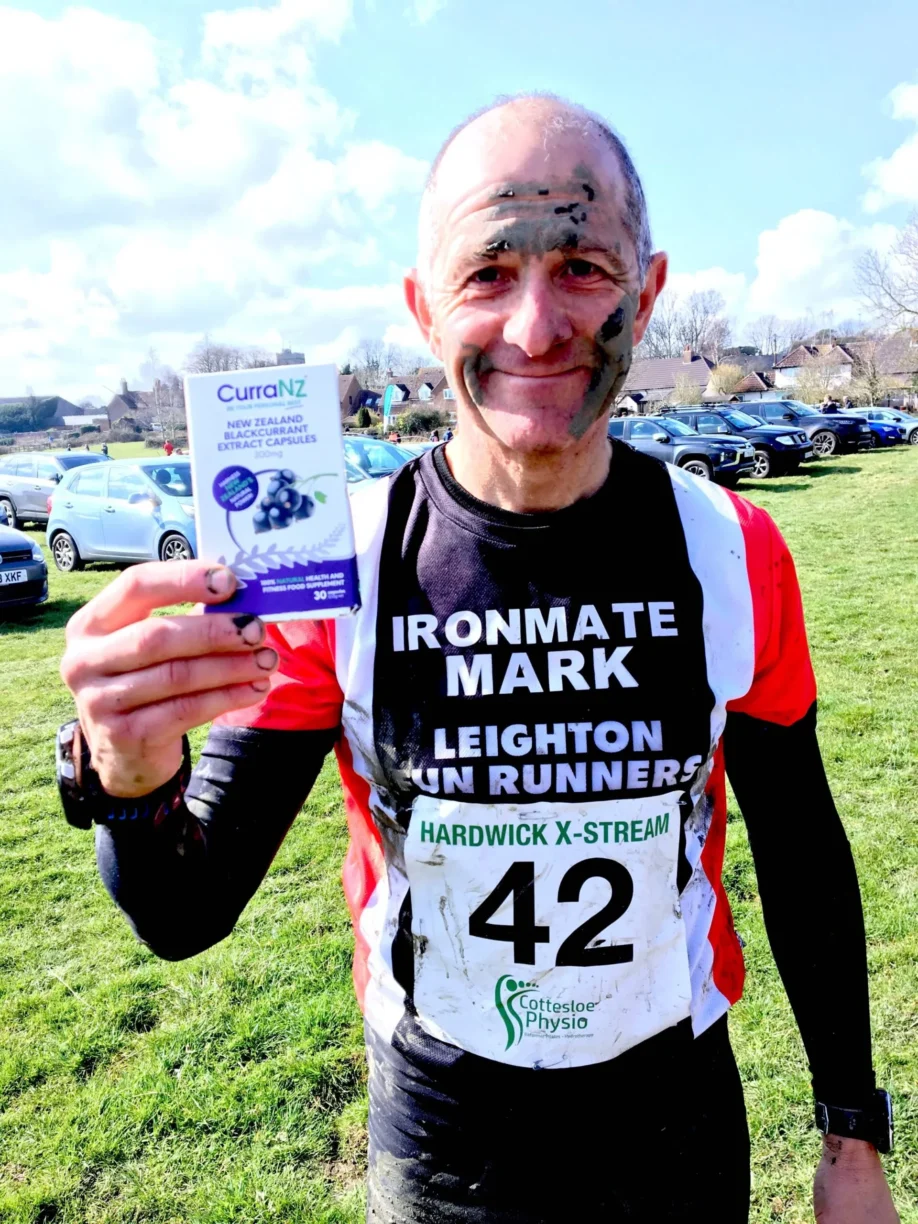
CurraNZ sits at the centre of Kleanthous’s race-week routine, and he credits the New Zealand blackcurrant extract supplement as a major factor in this late-career surge.
The product is positioned as a performance aid aimed at endurance athletes, with claims around improved running performance, greater fat oxidation, enhanced endurance capacity and better muscle glycogen storage. In plain English, the pitch is simple enough: help the body manage fuel better, keep intensity high, and delay the slowdown that ruins so many marathons.
Kleanthous is in no mood to underplay its role. “Without doubt, CurraNZ made a big difference. Not only does it help me sustain a high level of intensity, but it also allows me not to slow down, which in the latter stages of a marathon, is often where all the time is lost.
“CurraNZ helps me burn fat for fuel during training and racing. I am a leaner athlete with more muscle mass and less fat when loading and taking CurraNZ on a regular basis.”
His protocol is meticulous rather than casual: one capsule daily as a baseline, two capsules a day for seven days before key races, then two capsules with breakfast on race morning and one more 90 minutes before the gun.
He believes that strategy helped him settle into a controlled early rhythm at Cambridge before finding another gear late on, which is the sort of race pattern every marathoner wants and very few actually achieve.
He puts it even more bluntly here: ”Runners seek 1.5%-3% improvements from super shoes, but CurraNZ delivers more than this – even year-on-year with the supplement, I’ve improved my half-marathon time by 5%.”
That is a bold claim, and it is clearly one he backs with conviction.
A masters athlete refusing to play the expected role
There is a dreary habit in sport of treating older athletes as inspirational before treating them as competitive. It is well meant, usually, but it can be faintly patronising. Kleanthous does not look especially interested in that bargain.
His recent form suggests a runner who is still properly racing, still measuring himself against the clock, still studying pacing, training effect and performance margins with the seriousness of somebody who expects results rather than applause. The masters label may place him in an age bracket. It does not seem to have placed much of a ceiling on his ambition.
That is what gives this London Marathon attempt its bite.
Kleanthous is not simply trying to complete one of the world’s most famous races. He is arriving with a credible shot at his fastest marathon in a quarter of a century, backed by recent numbers that are more persuasive than romantic.
What a big London run would mean
If Kleanthous delivers the sub-3:20 he is chasing, the result will land as more than a neat age-group statistic. It would mark a striking continuation of an upward trend, confirm his place among Britain’s standout veteran endurance performers, and strengthen the case that smart training, disciplined race execution and targeted support can still move the dial well beyond 60.
He knows it too. “I ran quicker at London in 2025 than in 2024, and it’s looking incredibly likely that 2026 will be faster again – and my best marathon in 25 years,” he says.
That is the beauty of marathon running when it is done properly. It strips away the nonsense and leaves only the truth: pace, patience, courage, fuel and the will to keep going when the road starts asking rude questions.
Right now, Mark Kleanthous appears to have very good answers.