How an early-morning swim, a cleaner called Foster and a little help from the people around him revealed what it really means to belong to a family club.
How a family club turned out to have a family
You can sell a family membership. You can’t sell the feeling that somebody belongs.
Most gyms define a family club through household memberships, junior classes, family swim sessions and a direct debit that lets everyone use the same facilities. That’s a sensible commercial definition, but at my David Lloyd club, I’ve noticed something that isn’t on the membership card. People notice one another. The cleaner is as much a part of the club as the person paying the fee, and people act as if they have some responsibility for one another.
Here is how I came to see that.
Someone worth noticing
Foster is a cleaner at the club. He walks with a pronounced limp, and over about six months, I watched things get harder for him. Not dramatically, but in the quiet way that is easy to miss when everyone is busy getting on with their own lives.
Members pass him every day. His work makes our enjoyment possible, but he can become almost invisible.
One day I decided to do something. I teach at world-class spas and have trained elite athletes, so why not help Foster? Because I can.
I asked Hollie, one of the senior managers, if I could use the pool at five in the morning, before the club opened and before Foster started his shift, to spend some time with him in the water.
David Lloyd calls itself a family club, so I asked Hollie whether a family club could open its pool for one of its own. She said yes.
The next morning I stopped Foster and said, “Foster, I’ve noticed that you’re struggling more, so I asked the club management if I could show you some exercises that may help you. Are you up for it?”
He didn’t even know my name, but his face lit up. Someone had noticed him and offered a little time.
Five in the morning
We met at the ungodly hour of five in the morning the following week. It was dark, cold and pouring with rain, but I went because I said I would be there.
Hollie had come in earlier than usual to open up and give Foster more time. She didn’t have to do that.
It wasn’t until we were in the pool that Foster told me he had severe gout. I kept the session simple: I gave him six exercises, each repeated five times, and at the end of the session he smiled.
As we were saying goodbye, he said:
“Hollie is kind. And I’m so happy that you took your time to teach me.”
Coming from a man of few words, that stayed with me. He credited Hollie, not me, and described my time as something given, not owed.
Word had already travelled through the club. Hollie’s decision had become a story people were sharing.
A card
A week after our early-morning session, Foster told me he was doing the exercises every day, and I could see that he was walking straighter. That was lovely to hear, but the good vibes didn’t stop there.
As I was leaving the club, a member of staff handed me a handwritten card. Across the top, in large letters, it said:
“NOT ALL HEROES WEAR CAPES!”
It was addressed to me and thanked me for the time, care and encouragement I’d given Foster. It said I’d helped him rebuild confidence with his walking and ended with the words:
“You’ve made the world of difference.”
I was a bit uncomfortable. I didn’t think I’d done anything heroic.
But the card also made me think of everyone else who had made that morning possible. Hollie arranged pool access before opening, Foster trusted someone he barely knew and turned up at five, and the club supported something that wasn’t part of anyone’s normal routine.
One person noticed another, but it only happened because others were willing to help.
More than a membership
I’ve seen the same willingness elsewhere. When I approached Georgina, the general manager, about hosting the launch of an event I was involved with, she introduced me to Faye, the events manager, before I’d finished explaining. Faye’s first question wasn’t whether it was possible. It was to ask when I’d have the NHS green light, so she could set a date.
Belonging also shows in friendships. Some of the people I most enjoy spending time with at the club are Charlie and the two Steves. Charlie and I are decades apart, and I’m older than both Steves. I’ve had a beer with both Steves; Charlie is next. Nobody set out to create an intergenerational friendship. We respect one another, enjoy each other’s company and don’t treat age as a reason to keep our distance.
I’m older than them. That’s all.
The difference between membership and belonging
A gym can sell thousands of family memberships without ever becoming a family. The difference isn’t how many generations are allowed through the door. It’s whether people feel seen once they’re inside.
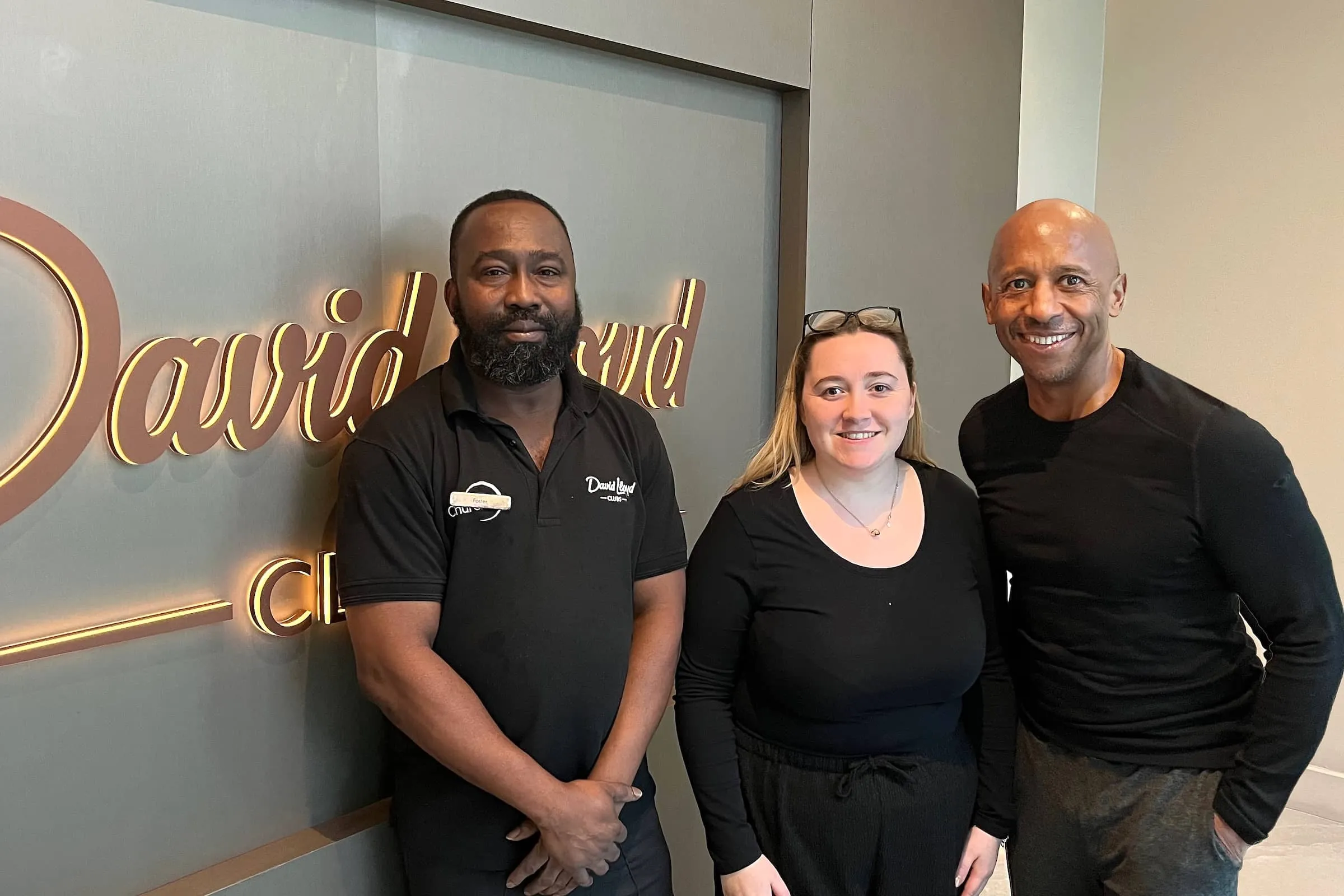
Foster cleans the club. Hollie helps run it. I’m a member. For one morning, those distinctions mattered rather less than our willingness to help one another.
You can sell a family membership. You can’t sell the feeling that somebody belongs.
You can create it, though, through the way people treat one another.