Why British fertility patients choose Danish sperm donors — and why instinct often beats filters, photos and genetic wish-lists.
Finding a sperm donor is often described like an exercise in genetics with better lighting: height, hair colour, eye colour, IQ, ancestry, the whole carefully filtered parade. Yet insights from Danish sperm bank Donor Network suggest British customers are not quite the cool-headed selectors they imagine themselves to be; once the spreadsheets have had their little victory, the final decision can come down to a childhood photograph, a warm smile, or a few lines of personal text that land somewhere inconveniently close to the heart.
Britain’s Fascination With Danish Donor Sperm
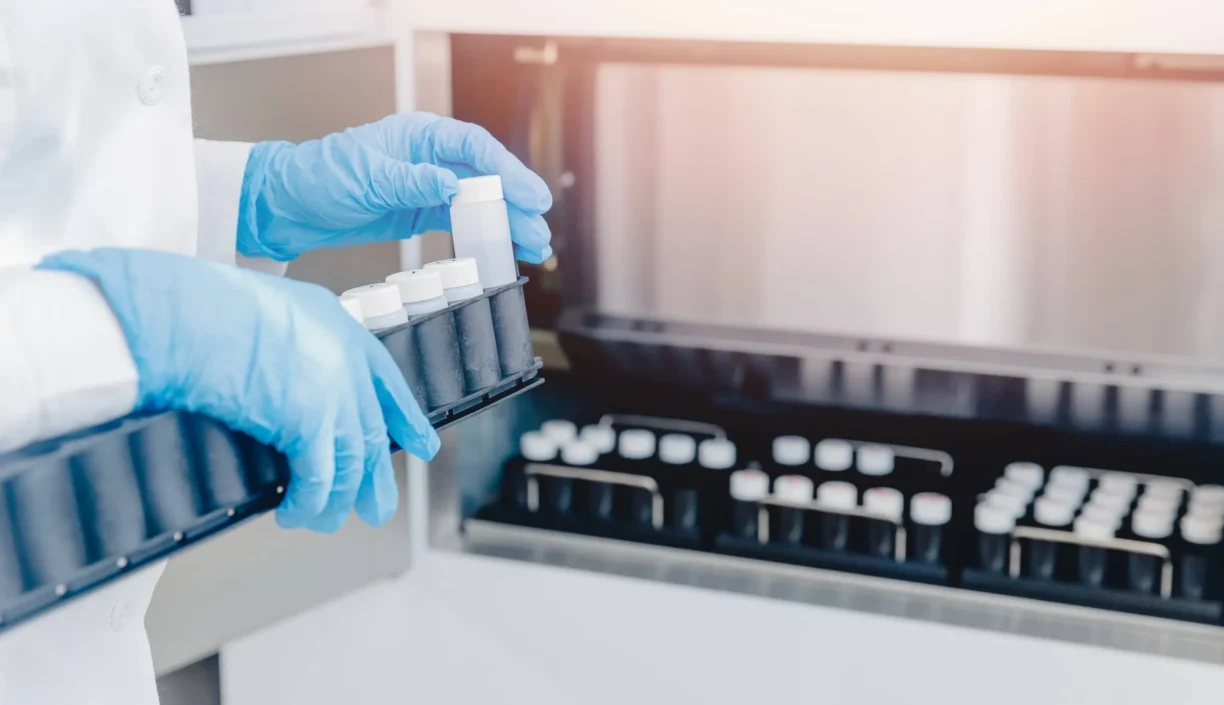
Danish sperm banks have become a familiar part of the UK fertility landscape, with Denmark popular both as a destination for fertility treatment and as a supplier of donor sperm. According to the Human Fertilization and Embryology Authority, up to 2,500 Britons travel abroad each year for fertility treatment, while more than one in five imported sperm donors in the UK comes from Denmark.
There is, inevitably, a certain Nordic mythology at work. The phrase “Viking sperm” does rather sound as though it should arrive by longboat, wearing knitwear and carrying an axe. In reality, the process is more modern, more regulated and more emotionally layered than the shorthand suggests.
British customers, according to Donor Network, often begin with the obvious filters: blue eyes, brown hair, a particular height, IQ above 100. The list is trimmed, sorted and interrogated. Then, just when logic appears to have taken command, something messier and more human wanders into the room.
“There is no doubt that Danish donors are in demand for their physical traits, and we can see that our British customers filter based on appearance. But that is rarely what determines the final choice. Once the filters are set and the list has been narrowed down to a manageable number of donors, something else happens”, says Jakob Schölhammer Knudsen, founder and CEO of the Danish sperm bank Donor Network.
When The Filter List Meets A Human Face
The donor profile may look like a database entry, but prospective parents do not read it like one. They look for resemblance, tone, warmth, possibility. They imagine a future child, a family resemblance, a temperament, a laugh. They search for clues, even where clues may be slippery little things.
This is where donor selection becomes less like ordering from a catalogue and more like reading a room. A profile picture, particularly a childhood photograph, can do what a row of numbers cannot. It can prompt a feeling.
“Many people find it difficult to explain why they ended up choosing a particular donor. They expect to be systematic and methodical but end up choosing based on different criteria. It can be a single image where you perceive a warm smile. It can be a short personal text where you sense the person behind it”, says Jakob Schölhammer Knudsen.
That is the great comic complication of human decision-making: we adore the illusion of being rational. We build the list, polish the criteria, cross-reference the attributes, and then choose the person whose photograph has dimples.
Why Donor Choice Can Feel Like Dating
In Denmark, sperm donation is discussed more openly than in the UK, and the country has a long tradition of research into fertility treatment and its psychosocial dimensions. Psychologist Yoon Frederiksen, a specialist in health psychology who has worked extensively with the psychosocial aspects of fertility treatment, sees a clear parallel between donor selection and dating.
“It’s about what we are attracted to in a person and the values we believe the person has or expresses. When we date, many of us have a list of pros and cons, but in the end, the choice is determined by a feeling that tells us what feels right in our gut, even if everything on paper points in a different direction”, says Yoon Frederiksen.
It is a useful comparison, not because choosing donor sperm is casual — it is anything but — but because attraction and trust rarely move in straight lines. People may say they want one thing, search for another, and choose a third because it feels emotionally coherent.
The donor’s personal text, then, becomes more than a short biographical note. It becomes a small audition for values. A sentence about family. A tone that seems kind. A reason for donating that feels open rather than performative. In an area of life where uncertainty is baked in, even a tiny impression of sincerity can carry unusual weight.
The Psychology Behind The Photograph
Frederiksen also points to the emotional pull of images. Adult photographs matter, but childhood photos appear especially powerful because they allow prospective parents to imagine a future child more vividly.
“Images of a donor often evoke emotions because many of us are highly visual. We attribute certain traits and values to the person in the picture – traits we ourselves have or desire – without actually having any basis for knowing whether that is the case”.
There is a caution tucked inside that observation. A smile is not a personality test. A photograph is not a family history. A personal statement is not a guarantee of temperament, kindness or resilience. But fertility treatment is not lived on a spreadsheet. It is lived in hope, anxiety, projection and imagination.
That does not make the decision foolish. It makes it human.
The Five Details That May Tip The Decision
According to Donor Network, British donor sperm customers are often influenced by five key areas once the initial filtering is done.
Personal text can carry surprising emotional force. A donor’s message may be short, but a phrase, motive or small reflection can make a profile feel more personal.
Description of family also appears to matter. Donor Network notes that the Danish idea of family is associated with equality, which may appeal to British customers used to more conservative family structures.
A Scandinavian outlook on life can be part of the attraction too. British customers are said to respond to donors who appear to radiate trust, openness and confidence in society.
Adult photos still count, though not always in the predictable way. It may not be a specific look that wins the day, but an expression, a spark in the eyes or, yes, the treacherous persuasive power of dimples.
Childhood photos may be the strongest emotional shortcut of all. They help people picture a future child, which means a single image can become the hinge on which the whole choice turns.
Hope, Data And The Future Child In The Mind
The early stage of finding a sperm donor may look highly controlled. Filters are useful. Medical information matters. Family history matters. So do donor availability, clinic guidance and legal frameworks. But the final step often belongs to something less tidy.
“There has been a lot of research into what we might call decision psychology – for example, why we play the lottery. Everyone knows that the odds of winning the lottery are extremely low, yet we still do it. It’s about hope and dreams. We envision the dream: how our future child will fit into our lives, our values, and our future”.
That is perhaps the most revealing point. Donor choice is not only about selecting genetic information. It is about imagining a life not yet visible. The process may begin with eye colour and height, but it often ends with a private act of recognition: this one feels right.
For British fertility patients looking towards Denmark, the appeal of Danish sperm donors may be partly physical, partly cultural and partly practical. But the final decision, according to those watching the patterns closely, is frequently made in the strange country between evidence and instinct.
And in that country, a childhood grin can sometimes beat a perfect spreadsheet by three and two.