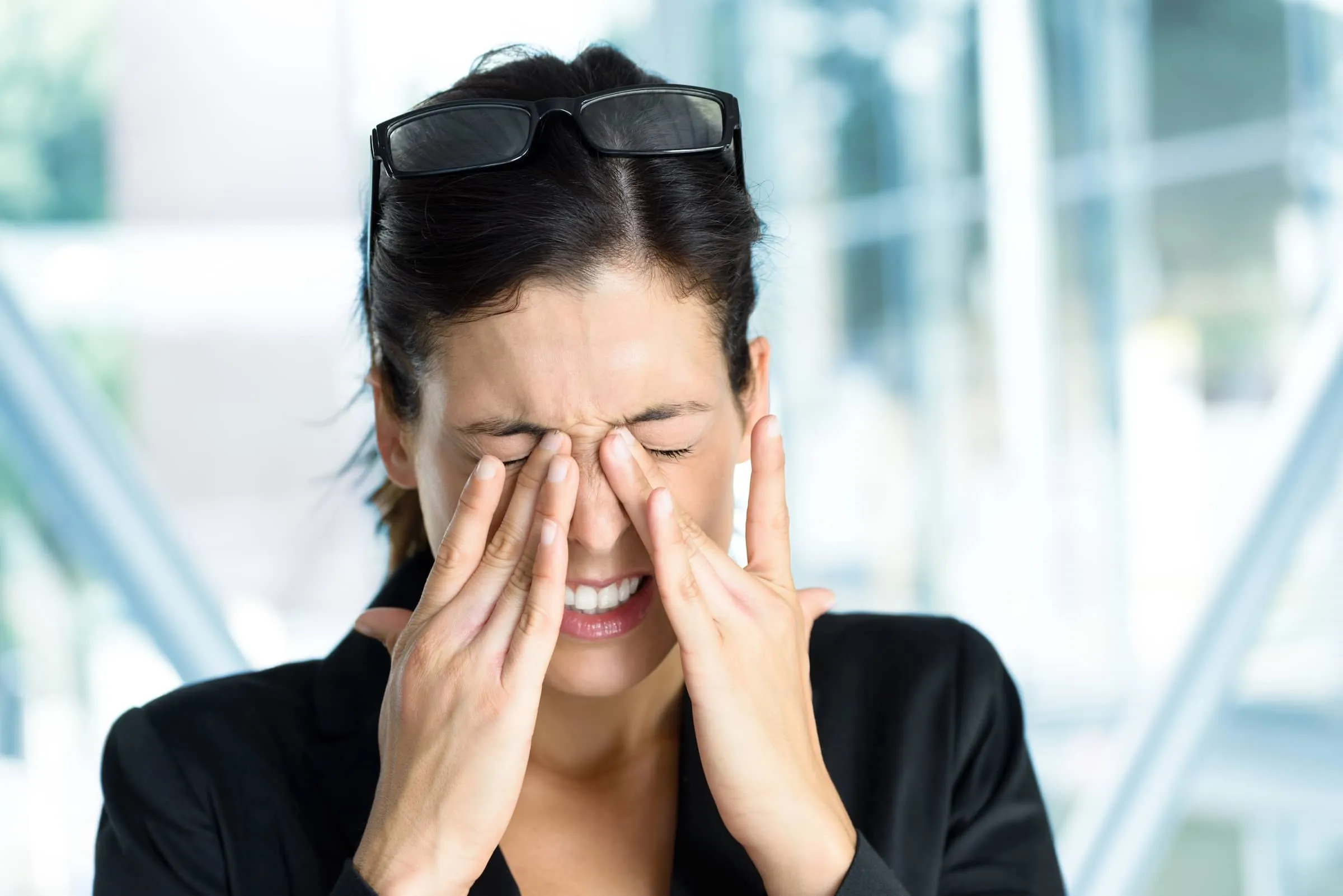
Itchy, red, watery eyes? Learn how pollen, pollution and eye rubbing can worsen eye allergy symptoms, plus when irritation may need attention.
An eye allergy can begin with something deceptively minor: a faint itch, a little watering, the sort of irritation you blame on a screen, a poor night’s sleep or the fact that your face has apparently become irresistible to pollen.
But red, itchy and watery eyes are increasingly being reported across longer stretches of the year, with pollen exposure and air pollution both capable of making an already sensitive pair of eyes decidedly less tolerant.
Why eye allergy symptoms start
The basic mechanism is straightforward. When allergens such as pollen, dust mites, pet dander or other airborne particles reach the surface of the eye, the immune system can release histamine. That response produces the familiar trio of itching, redness and watering.
Pharmacist Noel Wicks, an adviser to GoldenEye, highlights pollen and pollution as two important environmental aggravators. They are not the only ones. Heat, bright sunlight, dehydration, swimming-pool chemicals and poor sleep can all leave eyes feeling more irritated, even if they are not themselves the underlying allergy.
The useful distinction is between irritation and allergy. A gritty eye after a chlorinated swim is not automatically allergic conjunctivitis; equally, repeated itching during pollen season is not something to dismiss simply because it happens every year.
Pollen season is no longer a neat summer problem
For many people, the old mental calendar of hay fever equalling late spring and summer is looking increasingly unreliable. Changes in climate and plant behaviour can alter when trees, grasses and weeds release pollen, extending the period during which susceptible people notice symptoms.
That can mean itchy eyes appearing as early as March and recurring across several months. Research has suggested that up to 49% of the UK population report hay fever symptoms, while another study cited in relation to the issue found that hay fever had trebled over a 20-year period. Individual exposure and susceptibility, of course, vary considerably.
Eyes are particularly unforgiving because pollen does not need an invitation. It lands on the tear film, the immune system notices, and the eyelids soon feel as though they have developed a personal grievance.
Air pollution can make allergic eyes more reactive
Pollution adds another layer. Outdoor pollutants from traffic and industry coexist with indoor irritants including mould, dust mites, cleaning products, paint, pet dander and emissions from new furnishings.
Government guidance examining the relationship between air pollution and airborne allergens has highlighted how pollutants can interact with pollen and potentially reduce the level of exposure needed to provoke symptoms in susceptible people.
That matters outside the laboratory. Someone who copes reasonably well with pollen under one set of conditions may find broadly similar exposure much harder to tolerate beside busy roads or during periods of heavier pollution.
It also explains why eye allergy symptoms cannot always be pinned neatly on one culprit. Pollen may be doing the knocking while pollution helpfully holds the door open.
Allergic conjunctivitis, styes and blepharitis are different problems
Allergic conjunctivitis is the most obvious eye condition associated with allergy. The conjunctiva — the thin membrane covering the white of the eye and lining the eyelids — becomes inflamed after exposure to an allergen. The eyes can look red and feel itchy, gritty, watery or burning.
A stye is different. It is a bacterial infection involving an eyelash follicle or nearby gland, usually producing a tender lump on or inside the eyelid. An allergy does not simply turn into a stye, although irritated eyes and frequent rubbing can create additional trouble around the eyelids. Styes are common and can take up to two weeks to clear.
Blepharitis is another separate condition, involving inflammation of the eyelid margins. Anterior blepharitis affects the base of the eyelashes, while posterior blepharitis involves the meibomian glands, which contribute oil to the tear film.
Symptoms can include soreness, itching, crusting around the lashes and eyelids sticking together on waking.
The practical distinction matters. Red eye is a description, not a diagnosis.
How to soothe itchy, watery eyes
The first rule is the one everybody knows and almost nobody enjoys following: do not rub them. Rubbing may briefly satisfy the itch but can make irritation worse.
A cool compress over closed eyelids can be soothing. Washing the face and hair after heavy pollen exposure, changing clothes after spending time outdoors and wearing wraparound sunglasses may also reduce the amount of allergen reaching the eyes.
Lubricating eye drops can help rinse and soothe the eye surface. Antihistamine or other anti-allergy eye drops may be suitable for some people, although a pharmacist or optometrist can advise on the appropriate option, particularly for anyone using contact lenses or taking other medicines.
If contact lenses are making irritated eyes feel worse, giving the eyes a break until symptoms settle may also be sensible.
When an eye allergy needs proper attention
Typical allergy symptoms tend to be dominated by itching and watering rather than significant pain or loss of vision.
Prompt professional assessment is sensible if there is marked eye pain, sensitivity to light, a change in vision, severe swelling, an eye injury or symptoms that are strongly confined to one eye and unlike the person’s usual allergy pattern.
Persistent discharge, recurrent styes or regular crusting around the eyelashes also merit assessment because treatment for an infection or blepharitis is not the same as treatment for allergic conjunctivitis.
Pollen and pollution may be harder to avoid than they once were. Eye rubbing, at least, remains optional — even if your eyelids are lobbying furiously for the opposite.