Exercise pockets turn spare minutes into simple home workouts, helping busy Brits move more without gym-level motivation.
For many of us, exercise has become another good intention wedged somewhere between replying to emails, making dinner, locating a missing school shoe, and wondering why the washing machine sounds like it has swallowed a brick. The will may be there, but the window often is not.
Recent research from Aviva suggests a quarter of Brits say not having enough time is their biggest barrier to physical exercise. Add in the 31% who say a lack of motivation gets in the way, and more than half of British adults are struggling to keep fitness on the rails.
Meanwhile, Google search data tells much the same story with searches for “quick workouts at home” up 208% over the last three months. In other words, the nation is not necessarily lazy. It is knackered, overbooked, and looking for movement that does not require a clipboard, a whistle, and the emotional resilience of an Olympic rower.
That is where “exercise pockets” come in: small, realistic bursts of home movement that can be tucked into the ordinary corners of the day.
Why Short Workouts Are Having A Moment

The traditional idea of fitness still leans heavily on the one-hour gym session: arrive, warm up, train, stretch, shower, commute home, and somehow still have time to live like a functioning adult.
Lovely in theory. In practice, about as realistic as finding a quiet supermarket on Christmas Eve.
Exercise pockets work because they lower the entry point. Five minutes in the morning. Ten minutes before bed. A quick bodyweight circuit during a lunch break. A stretch in the garden while the kettle considers its life choices.
They are not about perfection. They are about consistency, and consistency is where fitness usually stops being a motivational poster and starts becoming useful.
Will Broome, fitness expert and Director of GymEquipment.co.uk, is advocating for home exercise pockets– small ‘bite-sized’ exercise moments that can fit in with a hectic schedule, are time-friendly and don’t require the motivation of a professional athlete. Will has put together some accessible exercise pocket inspiration here:
The Five-Minute Morning Wake-Up
The first exercise pocket is beautifully simple: five minutes of gentle movement before the day starts chewing the furniture.
Think chin-to-chest stretches, shoulder rolls, arm circles, bodyweight squats, standing toe taps, and side stretches. Nothing heroic. Nothing involving a protein shaker the size of a fire extinguisher.
This short morning routine helps boost circulation, loosen stiff muscles, and wake the body up before caffeine has been asked to perform miracles.
It is particularly useful for parents, desk workers, or anyone whose first hour of the day usually feels like being fired from a cannon into domestic administration.
Core And Calm In Ten Minutes
For anyone spending long stretches at a desk, the midsection often becomes less “core” and more “storage department”. Pilates-inspired movement can help.
A ten-minute core and calm routine built around glute bridges, leg lifts, bird-dogs, forearm planks, and seated spinal twists can improve posture, strengthen stabilising muscles, and bring a little order back to the body.
The beauty is that it needs no equipment. A mat helps, but even that is optional if your carpet is not actively hostile.
This is exercise for people who want to feel stronger without turning the living room into a branch of Sports Direct.
The 15-Minute Breaktime Burner

Some days call for calm. Other days call for sweat.
A 15-minute bodyweight circuit can fit into a work break, a child’s nap window, or that dangerous period when you are waiting for the kettle and considering eating a biscuit you did not even want.
Jumping jacks, lunges, push-ups, mountain climbers, and tricep dips make for a sharp, effective circuit. Three five-minute rounds, short rests, and you are done before your coffee starts behaving like dishwater.
It is not glamorous. It is not complicated. But it gets the heart rate up, trains major muscle groups, and reminds the body that it is not merely a chair accessory.
The Garden Stretch Reset
Wellness does not always have to arrive sweating and gasping for air.
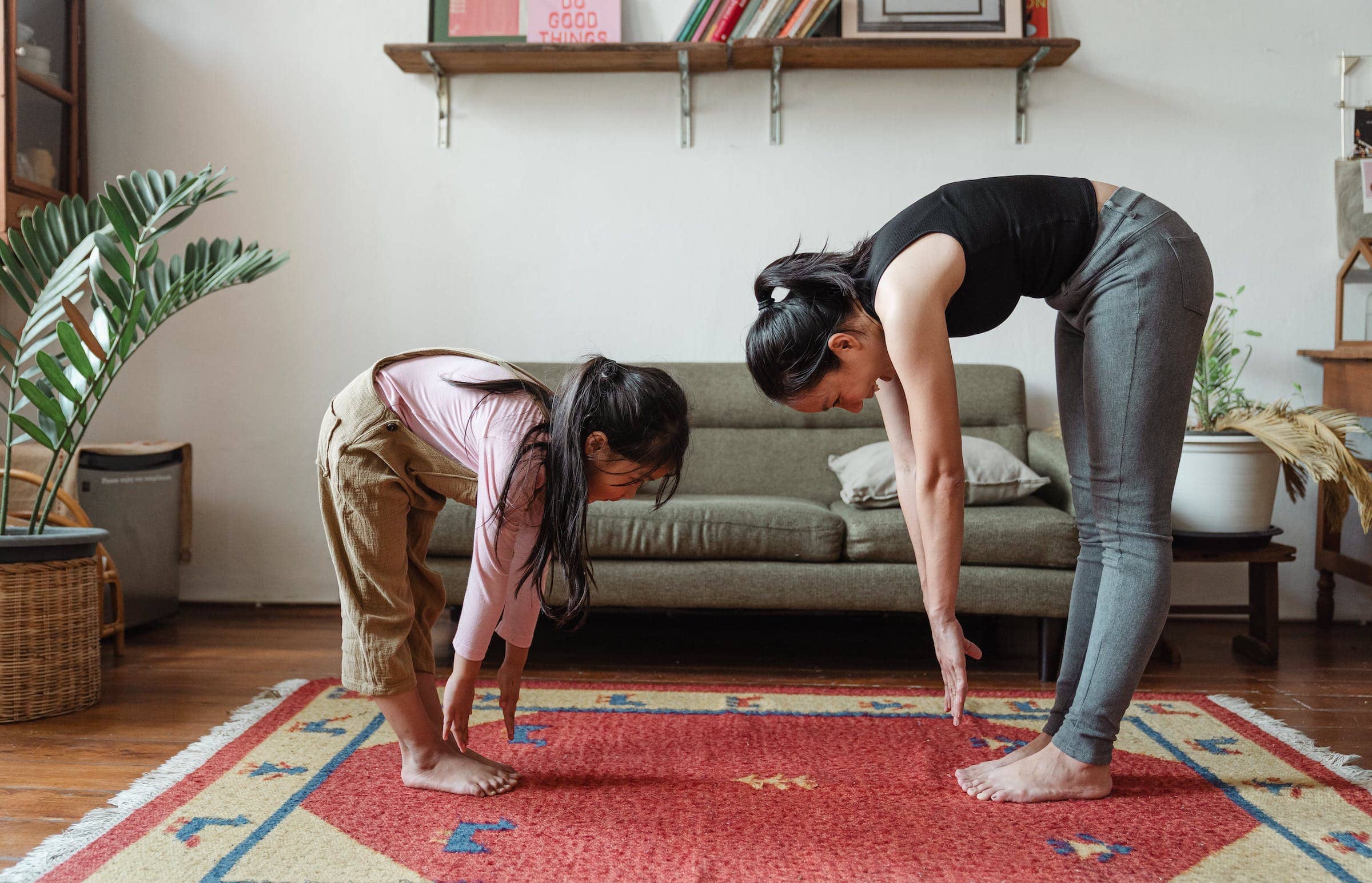
A garden stretch reset, lasting around six to eight minutes, brings mobility, breathwork, and a little outdoor calm into the day. Neck and shoulder rolls, side stretches, forward folds, hip circles, cat-cow stretches, seated butterfly stretches, and slow breathing can help release tension and quieten the nervous system.
And if the sun happens to appear, treat it as a national event.
This kind of gentle exercise pocket is ideal for mid-morning, early evening, or any moment when the brain has begun buffering like a weak Wi-Fi signal.
The Bedtime Wind Down
The final pocket is less about performance and more about switching the system off.
A ten-minute bedtime stretch flow using child’s pose, spinal twists, knees-to-chest stretches, hamstring stretches, seated forward folds, figure-four stretches, and deep breathing can help release tension built up during the day.
It is low-impact, calming, and useful for anyone who gets into bed with the posture of a question mark.
Box breathing can also help: inhale for four, hold for four, exhale for four, hold for four. It gives the mind something simple to follow, which is handy when it is otherwise trying to replay an email from 2017.
Why Home Exercise Works For Busy Lives
The real strength of exercise pockets is that they remove the drama.
There is no commute. No waiting for equipment. No need to summon heroic motivation. You can do them in pyjamas, in the garden, beside the sofa, or in that strange patch of floor between the coffee table and the dog bed.
Compact kit can help too. A yoga mat, resistance bands, light dumbbells, or a Pilates ball can make a small home workout space feel more intentional without taking over the house.
But the real equipment is a decision: five minutes counts.
Expert View: Small Sessions, Big Consistency
Commenting on finding exercise pockets throughout the day, Will says:
“Quick sessions like these can be just as effective as longer workouts when done consistently. Disciplined activities such as Pilates, which focus on control, breath, and building strength from within are ideal for short time slots and can be done in small spaces with minimal equipment.
There is a growing interest in compact, versatile equipment, especially from those who want something that works around their busy lifestyle. The goal isn’t to do an hour at the gym, it’s to make movement fit seamlessly into their day.
Creating a designated home workout space is another game-changer. Whether it’s a converted corner of the living room or a purpose built garden studio, a chosen area helps maintain consistency and mentally separates fitness from the chaos of everyday home life. Simple additions like a yoga mat, resistance bands, or a Pilates ball can transform a space and a wellness routine.
With digital workouts on demand thanks to social channels like TikTok, Pilates videos, and the rise in bite-sized self care, fitness from home is something I predict to have lasting longevity.”
Five Exercise Pockets To Try At Home
1. Morning Wake-Up: 5 Minutes
Start with gentle stretches, squats, arm circles, and toe taps. This is the “please restart the body” option, perfect before the day gets loud.
Try:
Chin to chest – 30 seconds
Shoulder rolls – 30 seconds
Arm circles – 30 seconds
Bodyweight squats – 1 minute
Standing toe taps – 1 minute
Standing side stretches – 1 minute
Finish with a few slow breaths: inhale for four, exhale for six.
2. Core And Calm: 10 Minutes
This Pilates-inspired routine is ideal for desk workers, commuters, and anyone whose posture has been personally victimised by a laptop.
Try two rounds of:
Glute bridge – 10 reps
Leg lifts – 10 reps per leg
Bird-dog – 10 reps each side
Forearm plank – 30 seconds
Seated spinal twist – 30 seconds each side
Repeat once, then finish with deep breathing.
3. Breaktime Burner: 15 Minutes
A short, sweaty bodyweight circuit for when you want something more energetic.
Try three rounds of:
Jumping jacks – 30 seconds
Bodyweight lunges – 10 per leg
Push-ups – 10 reps
Mountain climbers – 30 seconds
Tricep dips – 10 reps
Rest – 30 seconds between rounds
Put the kettle on before you start and you will likely be finished before your tea has given up on being hot.
4. Garden Stretch Reset: Under 10 Minutes
Step outside and use a quick mobility session to reset your body and mind.
Try:
Neck and shoulder rolls – 1 minute
Side stretch – 30 seconds each side
Standing forward fold – 1 minute
Hip circles – 30 seconds each direction
Cat-cow stretch – 1 minute
Seated butterfly stretch – 1 minute
Breathwork – 2 minutes
Add bare feet on grass and a warm drink, and suddenly you are dangerously close to becoming one of those people who says “grounding” without irony.
5. Bedtime Wind Down: 10 Minutes
A calm stretch flow to help the body release the day’s tension.
Try:
Child’s pose – 1 minute
Supine spinal twist – 1 minute each side
Knees to chest stretch – 1 minute
Hamstring stretch – 1 minute per leg
Seated forward fold – 1 minute
Figure four stretch – 1 minute per leg
Deep breathing or meditation – 2 minutes
A pillow or bolster can make the routine more comfortable, especially around the hips and lower back.
Is Exercise In Small Bursts Really Worth It?
Yes, provided it is done regularly.
Exercise pockets are not pretending to replace structured strength training, long runs, sport-specific conditioning, or properly programmed gym sessions. But for many people, the biggest health challenge is not choosing between perfect and good. It is choosing between something and nothing.
And something, repeated often enough, has a way of becoming quite powerful.
For time-poor Brits, the best workout may not be the one with the most impressive name, the flashiest kit, or the greatest social media soundtrack. It may simply be the one that fits between breakfast and bedtime without demanding a lifestyle transplant.
Five minutes here. Ten minutes there. A bit of movement before the kettle clicks.
That is not a shortcut. That is real life.