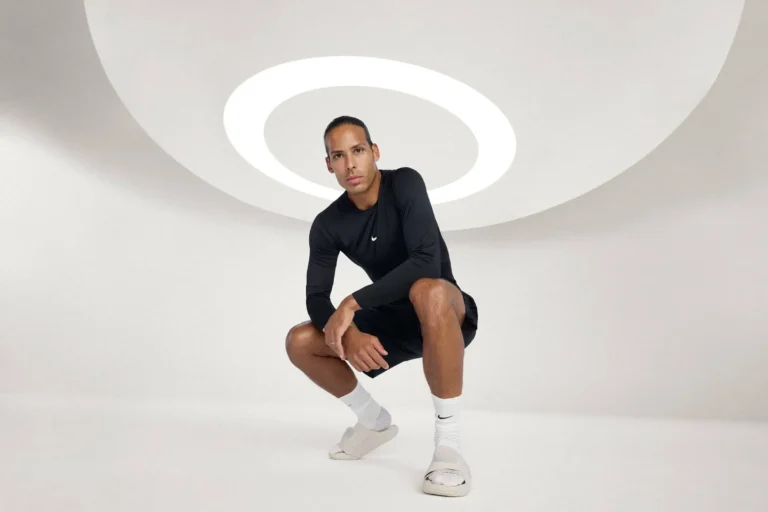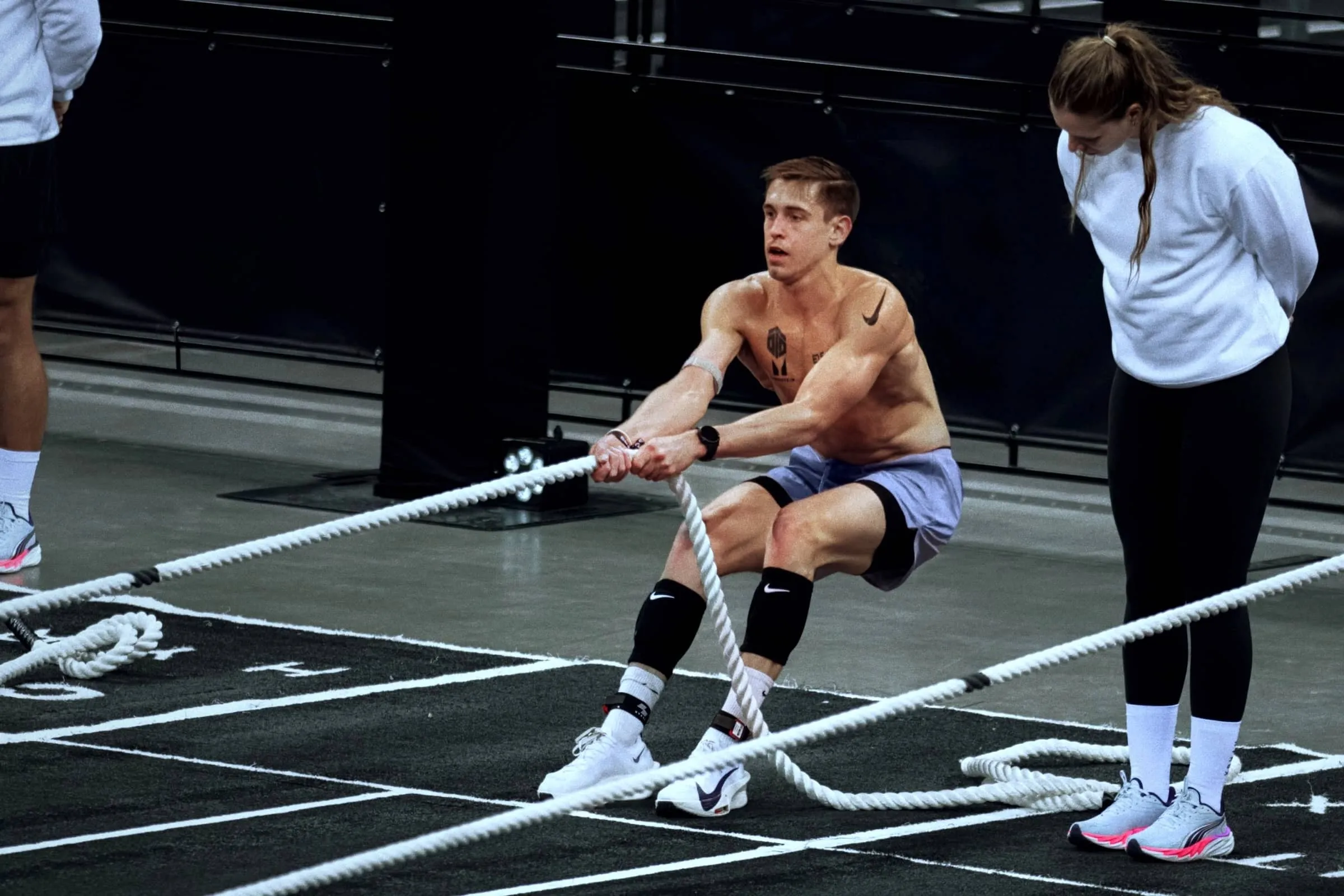
Nike athlete Dylan Scott returns to the HYROX World Championships in Stockholm chasing the individual title after a remarkable comeback.
Dylan Scott reaches this week’s HYROX World Championships in Stockholm with the mildly awkward air of a man who found third place perfectly respectable, broadly educational and entirely unacceptable. The Nike athlete stood on the individual podium in Chicago last year, but not on the step he wanted. Now Stockholm offers the next question, and it is not a small one: can he finish the climb?
There are athletes who burst into a sport like a firework, all noise, dazzle and questionable aftertaste. Scott has been different. Since entering HYROX in 2021, he has competed at every World Championship and edged closer each time, as though quietly moving his chair nearer the trophy while everyone else argues about who owns the room.
He is not a novelty act, not a comeback footnote and not a sentimental pick in expensive shoes. He arrives as a genuine contender, carrying the sort of competitive patience that can make a man deeply inconvenient when the race begins to bite.
From Ninety Six To The World Stage
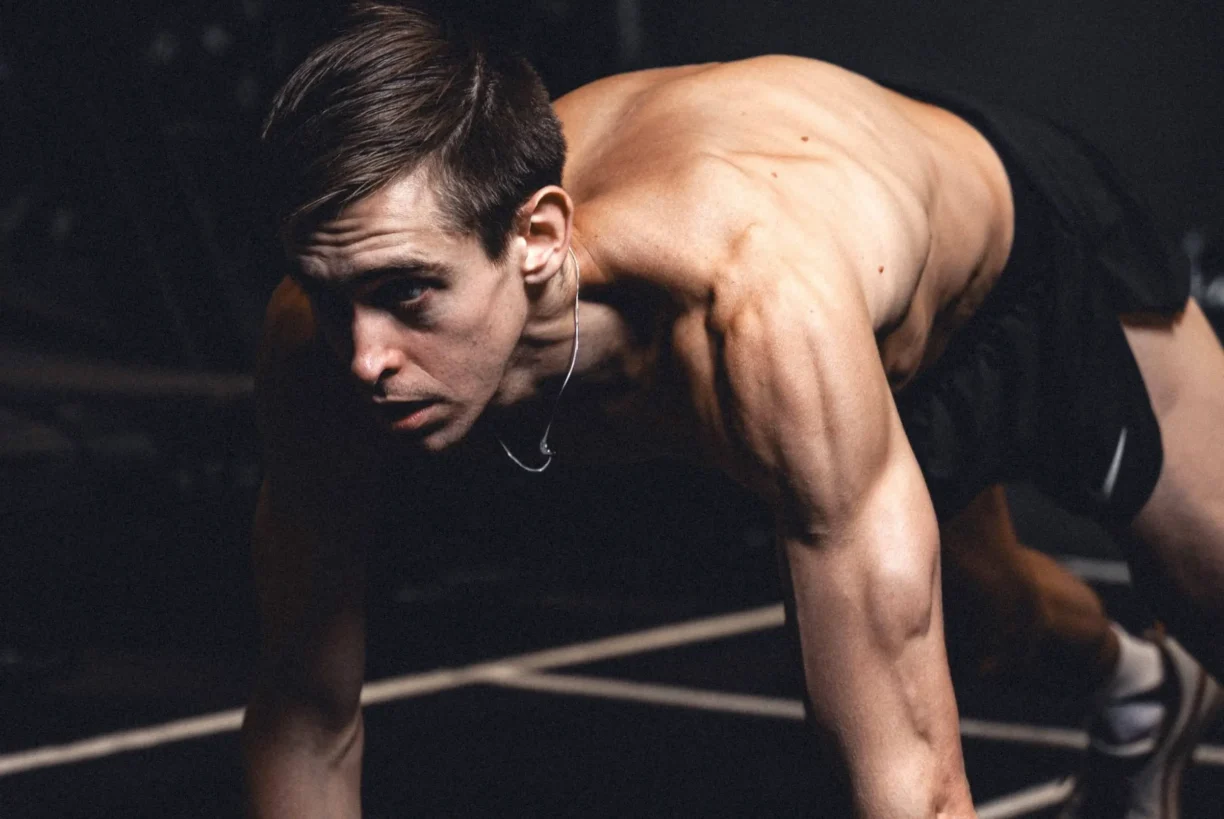
Scott’s story starts in Ninety Six, South Carolina, a town of around 2,000 people and the kind of place where resilience is less a slogan than a practical necessity.
It is a Revolutionary War battleground, and Scott spent years training around the historic site. This was not the sanitised theatre of modern performance culture. There were no pristine glass walls, no boutique lighting, no influencer-friendly corner with a fern in it. His high school track, by his own account, was not even a full six lanes. It was five and a half, because part of it fell off a hill.
The weight room had rusty weights. Training involved tractor chains in the yard. Some athletes are assembled in elite institutes with biometric dashboards and carefully portioned quinoa. Scott sounds as if he was put together in a shed during bad weather.
That matters in HYROX. For all its global polish, booming arenas and slick production, the sport has a brutal habit of finding out who has substance beneath the singlet. It does not care how good you look walking in. It is more interested in what happens when your lungs start behaving like an overdrawn account.
Scott, plainly, kept paying.
The Injury That Took Running Away
Before HYROX, before Nike, before world podiums, Scott was a runner. Not a jogger with a drawer full of optimistic socks, but a runner in the deeper sense. Running was his identity, his emotional outlet, his social world and his measure of self.
Then, shortly before he turned 18, it vanished. A treadmill accident while watching the Prefontaine movie left his right foot completely dead within 15 minutes. His senior year of high school was spent on crutches, in a cast and, at times, in a wheelchair.
That is a savage interruption at any age, never mind 17. Most teenagers are still trying to understand laundry, heartbreak and the suspicious economics of car insurance. Scott was being forced to reconstruct who he was without the thing that had defined him.
“I got injured, and my sense of purpose was stripped away. I had to sit down and ask, ‘Who am I? What do I like? What else is going to occupy this space?’”
The recovery took years, both physically and emotionally. Yet the injury appears to have done something more complicated than simply delay him. It forced a recalibration. Scott has spoken about being thankful for what the experience eventually created in him, though that is not the kind of gratitude that arrives quickly or politely. It usually comes after a fair bit of wrestling with the furniture in the darker rooms of the mind.
Why Nike Matters To Dylan Scott
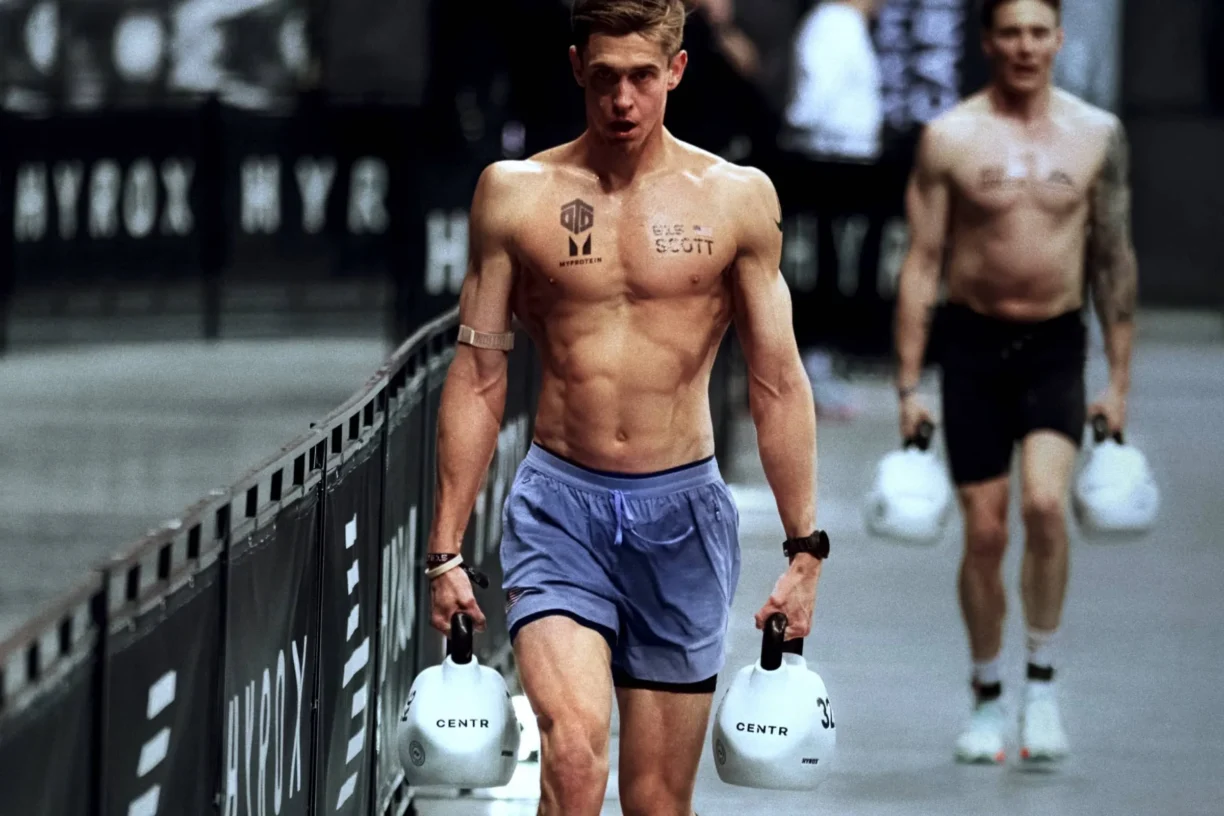
Scott’s relationship with Nike is not merely a matter of kit, footwear and photographs that make suffering look suspiciously cinematic. For him, it carries the weight of an ambition rerouted.
The original dream was to earn that kind of recognition through collegiate running. The injury wrecked that road. Years later, HYROX opened another.
Scott had nearly allowed the Nike ambition to fade. The fact that it did not entirely disappear says plenty about the wiring. Last year, he signed with the brand he had admired for years, giving his HYROX rise a commercial and emotional milestone.
There is practical value too. Scott has worked at the LeBron James Innovation Center, where performance testing offered insights he could not replicate at home. In a sport decided by pacing, durability, compromised running and the ability to remain civilised while in considerable discomfort, those details matter. Marginal gains may sound decorative until the final station, when everyone is negotiating with their central nervous system and the title is still available.
Winning Without The Circus
The appealing thing about Scott is that he does not appear drunk on his own highlight reel. He will tell you he is not the fastest or the strongest, which sounds modest until you realise it is also tactically accurate.
HYROX does not reward single-note athletes. It is not a 10k with accessories, nor a strength test with a bit of jogging thrown in to annoy the powerlifters. It is a full-menu examination: running, sled push, sled pull, burpee broad jumps, rowing, farmer’s carry, sandbag lunges and wall balls, all arranged with the emotional warmth of a tax audit.
Scott’s currency is grit, but not the performative sort. He is not trying to turn the sport into pantomime. He wants to win, of course. Desperately, one suspects. But he wants the win to be clean: hard racing, honest competition, respect for the field and none of the cheap theatre that modern sport occasionally mistakes for personality.
There is something almost radical about that now. Imagine wanting to beat people without first auditioning as the villain.
The Dangerous Luxury Of Suffering
HYROX rewards suffering, but Scott has learned that suffering, like whisky, wedge advice and online comment sections, should be handled with caution.
“I’ve always been willing to go to a dark place in training, but I’ve learned not to go there too often. A lot of athletes in sports like HYROX really value the ability to suffer and sometimes test it too much.”
That is one of the sharper observations in endurance sport. The capacity to hurt is useful. The addiction to proving it can become ruinous.
Scott understands the well is not bottomless. Visit too often and you do not become tougher; you become cooked. Still, he has also admitted that when he no longer wants to go to those places in training, that will be the sign it is time to retire.
For now, the fire is still lit. Not wild, perhaps. Better than that. Controlled.
Family, Perspective And A Better Boat
There is another part of Scott’s rise that feels less cinematic but may be just as important: home.
He credits his wife, Maria, with pushing him away from the false security of clinging to the past. He had been working a corporate job and was reluctant to leave the stability it represented. She encouraged him to take the step.
Scott’s own framing is wonderfully plain. The old life had leaks in the ship. The new boat sails better. Fewer holes.
Then there is his son, August, who has brought a perspective no performance lab can provide. Children are famously unimpressed by podium architecture. To August, the hierarchy is beautifully simple: Dada is Dada. First, third, champion, almost champion — all secondary concerns when a hug is available.
For an elite athlete, that may be priceless. Before a race, when the emotional weather starts doing odd things, Scott has found that holding his son for a few seconds can reset the whole system. It is not the sort of marginal gain usually listed in a sports science manual, but perhaps the manual needs updating.
The Stockholm Question
Scott’s HYROX career has had the shape of a climb rather than an explosion. He has competed at every World Championship since entering the sport in 2021. He has already been a Doubles World Champion. In Chicago last year, he finished third in the individual contest.
Now, at the HYROX World Championships in Stockholm, the next step is obvious.
“I kept moving up the podium; the mindset has shifted from just doing something and happening to be good at it to committing to and pursuing being a world champion.”
That sentence lands because it captures the strange transition many elite athletes eventually face. At first, success is a surprise. Then it becomes evidence. Eventually, it becomes responsibility.
Scott is too close now to pretend any of this is accidental. The bricks have been stacked. The work has been done. From tractor chains in the yard to Nike testing rooms, from injury and identity loss to world podiums, the through-line is not glamour. It is application.
At Stockholm, Dylan Scott does not arrive as a charming subplot. He arrives as a contender with unfinished business, a clean competitive code and one remaining step in front of him.
And if he does reach it, one suspects there will be no grand performance, no manufactured thunder, no theatrical nonsense. Just the work, the pain, the handshake — and the last half-lane that used to fall off the hill.